There was cautious optimism after rebel leader Ahmed al-Sharaa ousted Assad two years ago. Where does Syria stand today?
The crossroads at which Syria finds itself is embodied by interim president Ahmed al-Sharaa. A former jihadist leader linked to al-Qaeda in Iraq, who drove Assad from power and reinvented himself as a moderate statesman and has sought to strengthen ties with the West. He became the first Syrian president to be received at the White House, developing a ‘bromance’ with Donald Trump. Is al-Sharaa turning Syria into a functioning state with a place in the international order? With Syrian political scholars and journalists who fled their country, we take a look inside Syria.
The challenges facing Syria are immense. After years of kleptocracy under the Assad regime and fourteen years of civil war, the country must re-inmagine itself. Meanwhile, mass graves dating from the Assad era continue to be uncovered across the country, Alawites and Druze have fallen victim to sectarian massacres, and Israel is occupying part of the country.
How do you rebuild a country after a devastating war and years of being stripped bare by an authoritarian regime? It is a challenge that more countries will face sooner or later. What can Syria, now two years into transition, teach us?
Speakers
Peshmerge MoradResearcher and advocate
Mais KattInvestigative Journalist
Mohammad KanfashPhD, the Centre for Conflict Studies at Utrecht University
Jouman FattalPlaywright
Jorg ZinkenSpecial envoy to Syria
De Balie in je mail, werkt geestverruimend
Image: Ahmed al-Sharaa meets Donald Trump in the Oval Office / ANP
do 15 okt / 20:00
Emancipatie & Identiteit
Is menstruatiemeten weten?
Over de cyclus, vrouwelijke gezondheid en de rol van data
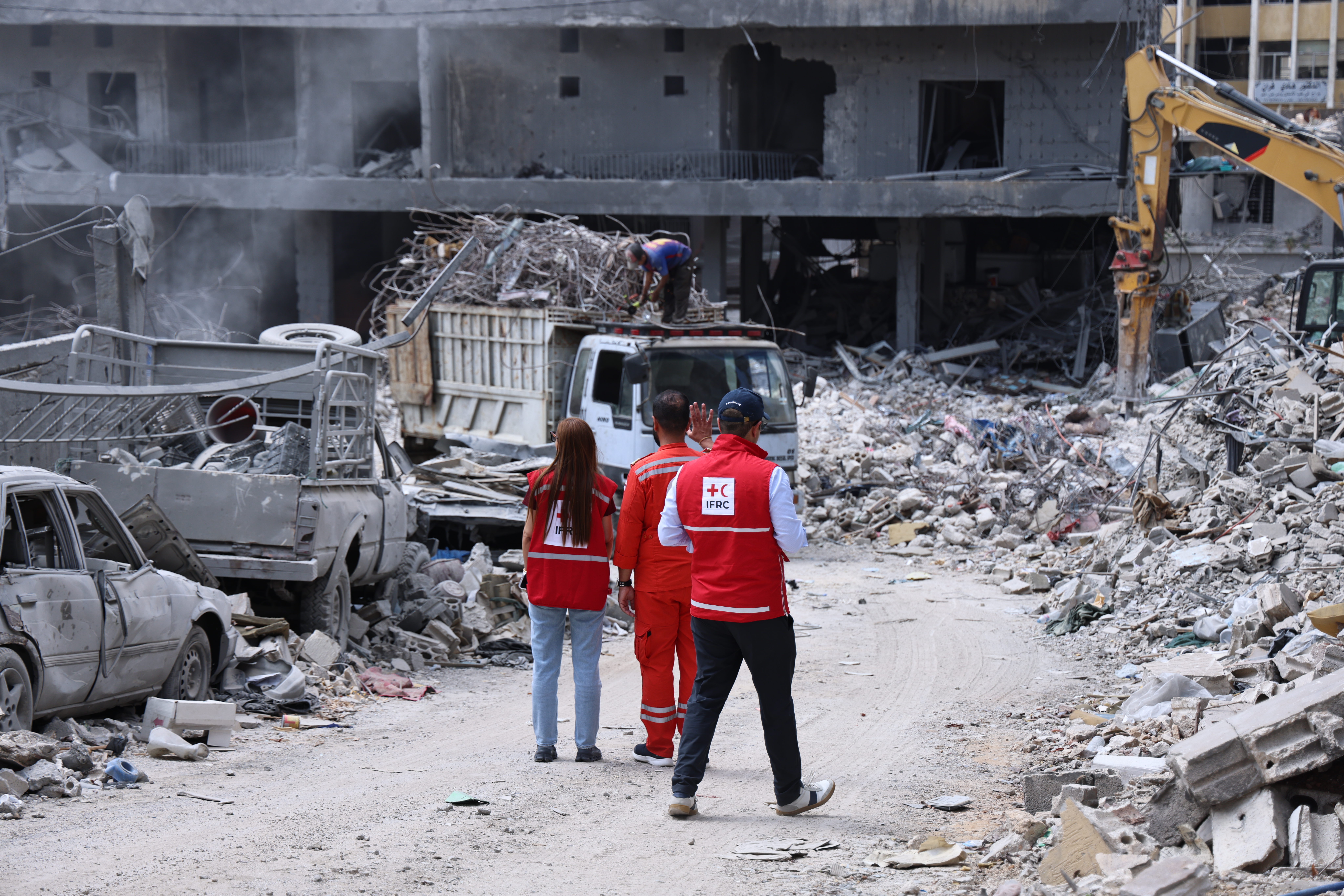
Hulp bieden in oorlogsgebied is de afgelopen jaren aanzienlijk gevaarlijker geworden. Partijen voelen zich steeds minder aan het internationaal recht gebonden en steeds vaker worden ook hulpverleners aangevallen. Wat is ervoor nodig om het internationaal recht in stand te houden en daders niet straffeloos te laten gaan? Het Rode Kruis-symbool hoort hulpverleners in oorlogsgebied te