- Director
- Mohammad Rasoulof
- RUNTIME
- 90′
- Country of Origin
- Iran
- RELEASE YEAR
- 2005
- Language
- Persian
- Subtitles
- ENG
A community living aboard a stranded ship is held together by a charismatic captain whose paternal authority slowly reveals itself as a system of control.
A rusting oil tanker stranded in the Persian Gulf has become an unlikely home for a community of poor and displaced families. Here, children go to school, marriages are arranged, livelihoods are built from scrap metal and oil, and Captain Nemat presides over it all. Charismatic, paternal and increasingly authoritarian, he keeps the fragile community together while quietly dismantling the very ship on which they live.
In Iron Island, Mohammad Rasoulof turns the tanker into a miniature society and a powerful allegory of life under authoritarian rule. The Captain offers protection and stability, but demands obedience in return. When the young Ahmad falls in love with a girl whom Nemat has promised to another man, his refusal to accept the rules of the community brings the Captain’s authority into sharp focus. Meanwhile, the ship itself is slowly sinking beneath them.
Made in 2005, Iron Island already contains many of the themes that would define Rasoulof’s later work: the mechanisms of power, obedience and punishment, the relationship between individual freedom and collective order, and the ways ordinary people become complicit in systems that ultimately threaten them. The film premiered at Cannes in the Directors’ Fortnight.
On 4 September, Mohammad Rasoulof joins us at De Balie for The Aesthetics of Tyranny, a conversation about the representation of power and oppression in his work. In the weeks that follow, we present a small retrospective of Rasoulof’s films, offering the chance to discover his remarkable body of work on the big screen.
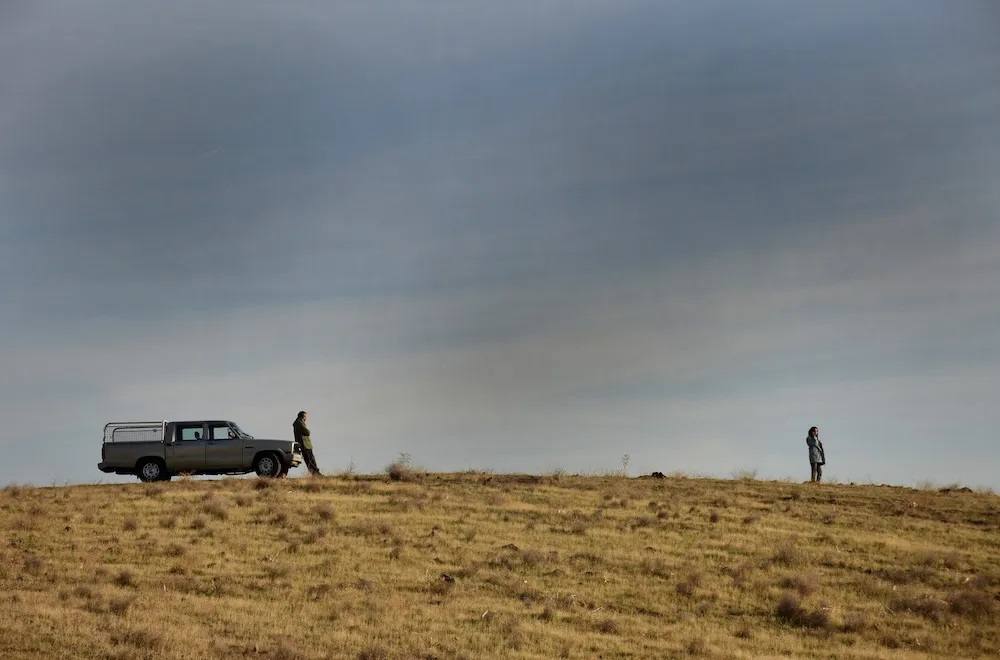
Four stories reveal the human cost of Iran’s death-penalty system, as ordinary people are forced to choose between obedience, resistance and moral responsibility. A husband returns home after a night shift. A young soldier struggles with an order he cannot accept. A man living in isolation carries the consequences of a decision made years earlier.
When a judge’s service pistol disappears, mounting political unrest turns a Tehran family against itself as suspicion, fear and authoritarian power invade their home. Iman is appointed as an investigating judge at Tehran’s Revolutionary Court. His promotion brings both prestige and a new burden – as protests erupt across the country, he is expected to