What the Rise of Evgeny Lebedev Teaches Us About the Modern Oligarchy
The New Oligarchs – a New Four-part Series
If it looks like an oligarch, walks like an oligarch and quacks like an oligarch… yet Evgeny Lebedev insists: don’t call him an oligarch. The Russian-born British billionaire cuts an unusual figure among today’s ultra-wealthy. His rise teaches us a lot about the modern oligarchy, which is the subject of a new four-part series by De Balie.
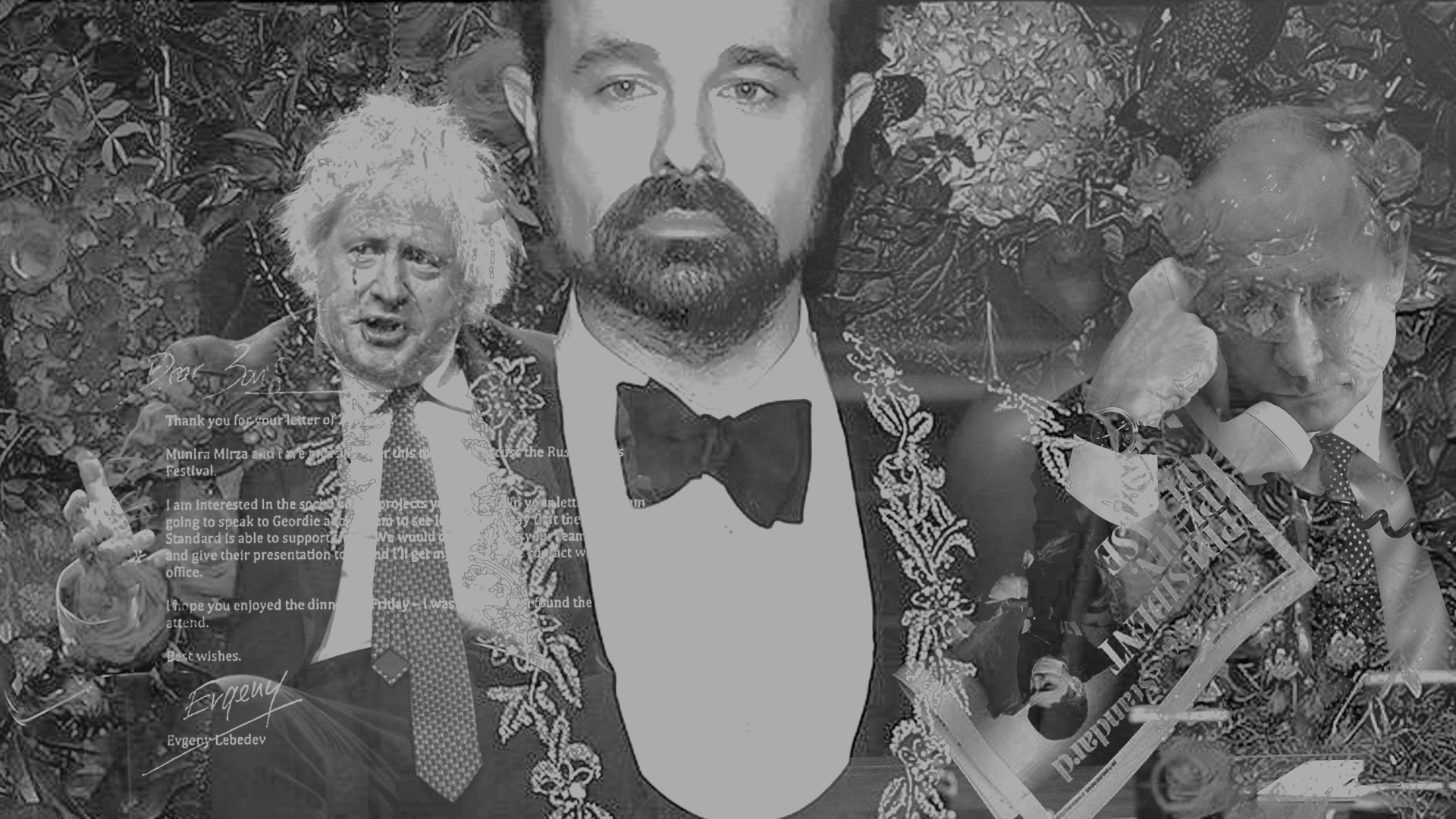
To know who Evgeny Lebedev is, you have to know his father, Alexander Lebedev. Lebedev Sr. followed a more familiar path to oligarch status: a career in the Soviet KGB and later the FSB, followed by the accumulation of vast wealth as a banker during Russia’s turbulent 1990s. After falling out with Putin, Lebedev Sr. moved to London in 2008 – at a time when the city still welcomed wealthy Russians with open arms, earning it the nickname ‘Londongrad’. He brought his son Evgeny with him and bought him the struggling yet prestigious newspapers The Evening Standard and The Independent.
It’s unreasonable to expect individuals to spend millions of pounds on newspapers and not have access to politicians
Evgeny Lebedev
Financially these news papers contribute very little. And it must be said that editors have never complained of interference from Evgeny Lebedev. So what do the Lebedevs want with them? Journalist Paul Caruana Galizia, who has written extensively on Lebedev’s rise, argues these news papers offer Lebedev the same thing as the lavish parties he hosts for British politicians and celebrities such as Salman Rushdie, Elton John and Helen Mirren: a proximity to power. As Lebedev himself has put it: ‘It’s unreasonable to expect individuals to spend millions of pounds on newspapers and not have access to politicians.’
One frequent guest at these parties was Boris Johnson. In 2020, the former prime minister appointed his friend Lebedev to the House of Lords. The decision sparked considerable controversy, not least because Lebedev’s father is suspected of maintaining links to Russian intelligence services. Nevertheless, Johnson pressed ahead, and Evgeny Lebedev now holds the title ‘Baron Lebedev, of Hampton in the London Borough of Richmond upon Thames and of Siberia in the Russian Federation.’
The Lebedev case illustrates that oligarchy is not simply a matter of overt corruption, but is also rooted in more subtle dynamics such as access to influential networks. As Paul Caruana Galizia wrote: ‘The Lebedevs’ ascent reveals how easy it was for Britain to be bought.’
On May 31, we welcome Paul Caruana Galizia in De Balie to delve deeper into the case of Alexander Lebedev, the Orbán clan, and the Trumps, and what these names teach us about modern oligarchy.
About The New Oligarchs
Welcome to the age of oligarchy, where money buys you influence, where the rich and powerful like to mingle and party and where self-enrichment, corruption and tax evasion are commonplace. Where democracy is threatened by the ultra-wealthy. In a new four-part series we explore the shadowy network of billionaires, politicians, celebrities, and intellectuals – we introduce you: the new oligarchs. With on May 31 the first episode with investigative journalist Paul Caruana Galizia and Pieter Omtzigt, about the Lebedevs, Orbán and Trump.