- In collaboration with
- Winteravonden aan de Amstel
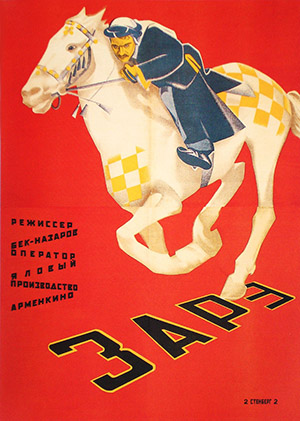
A thriller and melodrama at the same time: the silent film Zare (1926) is a landmark in (Armenian) film history. At a time when cinema portrayed the East primarily as an exotic backdrop of belly dancers and caravans, film pioneer Amo Bek-Nazaryan turned his lens on the harsh, oppressed lives of Kurds and Yazidis.
1915, on the slopes of Mount Alagyaz, part of the Russian Empire. The First World War is raging. While her beloved has been conscripted into the army, Zare is abducted by a village elder and forced into marriage.
Zare is the second Armenian film ever made, directed by filmmaker Amo Bek-Nazaryan. It is one of the first films to offer an authentic portrayal of the lives of the Kurdish and Yazidi peoples.
Live music
A live score will be performd by the Marmoucha Quintet. In an intimate ensemble, the Marmoucha Quintet breathes new life into this silent film. Each of the five musicians comes from a different background, but they share a love of music from the Mediterranean and the SWANA region (Southwest Asia and North Africa, stretching from Iran to Morocco). For Zare, they combine traditional pieces with original compositions, specially arranged for the film.
Project leader and arranger Maripepa Contreras composed the score, bringing together new compositions and adapted pieces from the orchestra’s repertoire. Together with Armenian-Iranian musician Arin Keshishi, she drew inspiration from the rich tradition of Armenian folk music. Contreras herself plays the duduk, a traditional Armenian double-reed flute. She has also left room in the score for scenes in which the musicians improvise freely, making the soundtrack different every evening: dynamic and full of emotion.
More about the Marmoucha Orchestra
The Marmoucha Orchestra was founded in 2019 under the umbrella of the Marmoucha Foundation. It is a versatile ensemble of internationally acclaimed musicians, each bringing their own musical background and distinctive style. The orchestra forms the artistic heart of the organisation and has developed into a distinctive voice in the contemporary music scene.
The ensemble moves freely between musical traditions from Southwest Asia, North Africa and the Mediterranean, and contemporary styles such as jazz, pop and electronic music. Bridging tradition and innovation, the orchestra explores a broad musical spectrum, ranging from traditional and acoustic forms to crossovers with improvisation, electronics and visuals.
The Marmoucha Orchestra distinguishes itself through its unique, collective approach. Artistic director Arin Keshishi fosters an open and egalitarian working environment in which every musician has room for their own creative input and artistic signature. This freedom, combined with a shared sense of responsibility and mutual trust, gives rise to a musical dialogue that strengthens the collective whole. This democratic way of working forms the foundation for the close-knit energy on stage and the orchestra’s distinctive sound.
The Marmoucha Orchestra moves effortlessly between large-scale productions and intimate ensembles, serving as an artistic platform for composition, reinterpretation and improvisation. As a meeting place for musicians and audiences, the orchestra builds bridges between cultures and musical worlds.
With its open outlook and inclusive character, the Marmoucha Orchestra reaches a broad and diverse audience, using music as a universal language that connects people and creates space for new perspectives.
Music by
Director: Amo Bek-Nazaryan
Country: Armenia
Year: 1926
Hoe activistisch mag de ambtenarij zijn? Met o.a. Sandra Palmen en Tom Lash

Vanavond herontdekken we het even analytische als poëtische oeuvre van Johan Goudsblom. Hoe kunnen zijn theorieën over onderlinge afhankelijkheid ons helpen om de maatschappelijke en sociale crises anno nu te lijf te gaan? Hoe heeft de beheersing van het vuur de menselijke beschaving geordend? Dat was een van de grote vragen die socioloog Johan Goudsblom