TV NL EN

IDFA: La Maison de la Radio

Director
Nicolas Philibert
Length
103′
Country
France, Japan
Language
French
Subtitles
English

Nicolas Philibert follows various employees at Radio France, which manages several French public radio networks, over a 24-hour period. This entertaining tribute puts a face to the passionate voices behind the scenes.

It’s early morning, and journalists, presenters, and technicians are streaming into the Maison de la Radio. This iconic building in the heart of Paris, overlooking the Seine and the Eiffel Tower, is home to Radio France, the broadcasting organization that runs France’s public radio stations. We follow the unfolding of 24 hours of radio broadcasting, distilled into slightly less than 100 minutes by Nicolas Philibert (Être et avoir, Sur l’Adamant) from footage shot over the course of six months in every corner of the radio building—from the reception area to the library—and beyond. A succession of brief impressions builds a picture of what goes on behind the scenes at the radio stations. An aspiring presenter receives feedback on his submission, editorial staff scour the internet for newsworthy stories, producers brainstorm ideas, and technicians ensure that the sound quality is perfect.

The work is intense and tireless in the editorial offices and recording studios—but there is laughter in the corridors as well. La Maison de la Radio paints a compelling portrait of a medium that derives its popularity from the very absence of images.


IDFA: Militantropos

Bekijk trailer
Director
Nicolas Philibert
Length
103′
Country
France, Japan
Language
French
Subtitles
English

Solidarity, grief, and defiance have defined daily life in Ukraine since the very first day of the Russian full-scale invasion. This powerful account shows how war inevitably infiltrates every aspect of life and the human psyche. 

Militantropos, the opening text explains, is “a persona adopted by humans entering a state of war.” It’s the title of this film exposing how the Russian full-scale invasion has permeated all facets of life in Ukraine. Starting from the moment the first evacuation trains depart from Kyiv’s central station, the film pieces together everyday lives transformed by war. We see civilians train in combat skills, men head to the front, crops wither, and mothers and young widows grieve. And we hear that constant, ominous rumble in the distance.

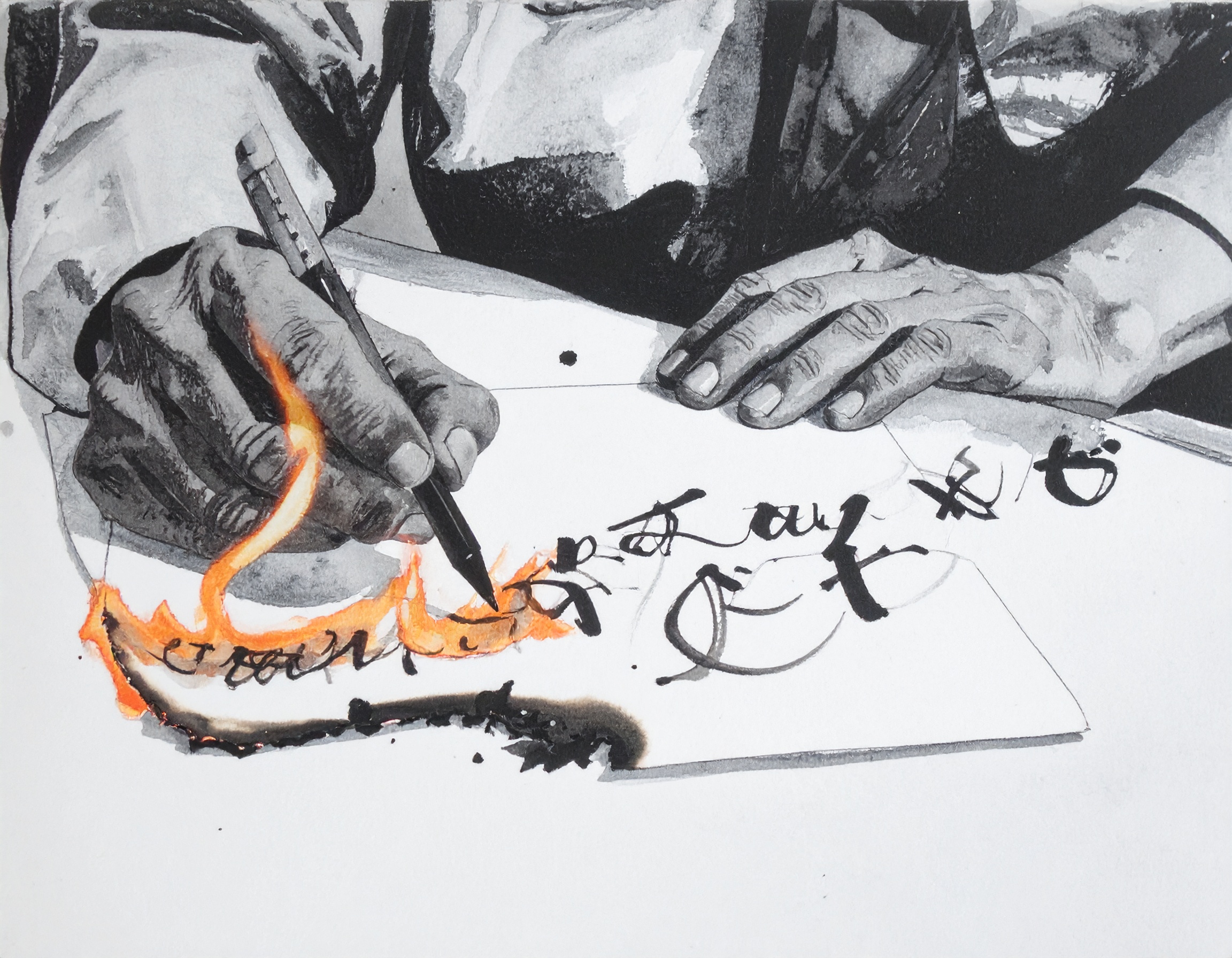
In thoughtfully crafted scenes, we witness the evolution of an instinct to survive, and an enduring need for compassion. Some scenes—like when a swarm of press photographers in bulletproof vests try to capture images of an old woman carrying a shopping bag—have an absurd quality. Others—like the soldier writing a poem for his beloved—are deeply moving. During brief lulls in the fighting, we see young men in the trenches watch the Soccer World Cup. Gradually, a picture emerges of how the human psyche adapts to a new reality: People become part of the war—and the war becomes part of them. 


IDFA: Monikondee

Bekijk trailer
Director
Tolin Erwin Alexander,
Lonnie van Brummelen,
Siebren de Haan
Length
103′
Country
Suriname, Netherlands
Language
Sranan Tongo, French, Dutch, Chinese, Haitian Creole
Subtitles
English

Climate change and gold mining steadily erode the sources of life for the Indigenous and Maroon communities in Suriname. During a trip along the Maroni river we learn of the pressures they face and their resilience, evoked in stories and songs.

The Maroni River forms the border between Suriname and French Guiana, and is home to Indigenous peoples and Maroons, descendants of Africans who freed themselves from Dutch enslavers. Climate change and gold mining steadily erode their sources of life: land, forest, and river.

Through stories and songs, Monikondee evokes the pressures  these communities face, and their resilience. We encounter them through Boogie, a Fiiman (“free man”) who delivers freight to the villages along the shore in a motorized dugout canoe. While the communities increasingly depend on his supplies, his provision of fuel to gold miners makes him complicit in the very forces threatening their livelihood—an uncomfortable reality that several women firmly confront him with. Summoned by community leaders to a hearing concerning his nephew, Boogie begins a journey upriver. Along the way he reflects on old and new ways of life. 


IDFA: Palimpsest: The Story of a Name

Bekijk trailer
Director
Mary Stephen
Length
109′
Country
France, China, Taiwan
Language
English, French, Chinese
Subtitles
English

For someone from an ordinary Chinese family, Mary Stephen is an unusual name. Why did her parents choose it? A nuanced essay on the need to reinvent yourself and rewrite your own story.  

Filmmaker Mary Stephen comes from a typical Chinese family, yet her uncommon surname often confuses people who have not met her before. In this intimate film, she explores the origins of her English name. Why did Mary’s parents choose it, and how has it shaped their—and her—fate, social status and identity?

The Stephens led a fascinating life, navigating a turbulent period in the history of China and their hometown of Hong Kong—with its strong British influence—before eventually relocating to Canada. Mary Stephen worked for many years as an editor with French nouvelle vague director Éric Rohmer. The film reflects this experience, particularly in the existential themes she explores, her blending of reality and subjectivity, and the many unexpected twists and turns.

Stephen effortlessly weaves well-documented personal and collective histories into a rich essay on a wide range of topics. Beyond her profound love of cinema, she reflects on colonialism, migration and the human need to reinvent oneself and rewrite one’s own story.  


IDFA: The Six Billion Dollar Man

Director
Eugene Jarecki
Length
129′
Country
United States, Germany
Language
English
Subtitles
English

From secret recordings to interviews with former heads of state, this account leaves no stone unturned in showing how Julian Assange made enemies at the highest levels. Tense, detailed and disturbing.

Relentless in his mission, Julian Assange made enemies at the highest levels. The Six Billion Dollar Man shows the information revolution that the Australian WikiLeaks founder unleashed and details what happened behind the scenes to stop him.

Filmmaker Eugene Jarecki (Why We Fight, The Trials of Henry Kissinger) begins his account in 2010, the year in which a series of high-profile data dumps definitively put the whistleblower website WikiLeaks on the map. The world began to realize not only the scale of the abuses committed by the US military, but also how for years we had been looking at smokescreens put up by world leaders.

Alongside friends and colleagues—some with hidden agendas—former ministers and heads of state appear on camera. Secret footage from the embassy where Assange was hiding underscores the extreme pressure he lived under for years. Jarecki’s film continues to resonate as a warning of a universal problem: if you want the truth, you have to fight for it. 


IDFA: Steal This Story, Please!

Director
Carl Deal, Tia Lessin
Length
101′
Country
United States
Language
English
Subtitles
English

An impressive portrait of the New York-based independent investigative journalist Amy Goodman, who reports courageously on global injustices. At a time when press freedom in the US is under threat, these are hitting closer and closer to home.

New York-based independent investigative journalist Amy Goodman has been reporting from hotspots around the world for decades: from East Timor to Morocco, Nigeria, and Gaza, and closer to home during 9/11 and the Iraq War. Goodman and a small group of colleagues present the daily online, TV, and radio news program Democracy Now!, which has been on the air since 1996 with no government funding, thanks to contributions from donors, foundations, and news consumers.

Goodman’s motto is “steal this story, please” and share it with the world—an idea that has only gained urgency since US president Donald Trump declared the press an enemy of the people. With admirable perseverance, Goodman has become a watchdog of democracy, in the increasingly rare role of investigative journalist.

Interviews with colleagues and  clips from her career are interspersed with conversations with Goodman, who recounts how she was introduced to journalistic principles and censorship as a child through her brother’s family newspaper. In addition to her life story, this film shows the alarming history of the commercialization of media and attacks on press freedom in the US.


IDFA: True North

Bekijk trailer
Director
Michèle Stephenson
Length
96′
Country
Canada, United States
Language
French, English
Subtitles
English

Personal testimonies and previously unseen footage help to shed light on a crucial chapter in the history of the Black liberation movement in Canada, which culminated in a prolonged student occupation in Montreal in 1969.

The struggle for equal rights in Canada is an under-explored chapter in the history of the Black liberation movement. True North looks at key events in late-1960s Montreal, when Canada became a refuge for Haitians and other immigrants from the Caribbean. We see how the Black minority experienced discrimination and exclusion in this period—from the Canadian public, media, institutions, and government authorities.

In 1969, frustration with these injustices boiled over, leading hundreds of students to occupy part of Sir George Williams University after the board refused to address allegations of racism. Among the activists was Roosevelt Douglas, the later Prime Minister of Dominica. The occupation ended in a violent eviction and arrests.In personal interviews, the still-committed activists reflect on the period.

With dynamic editing and a gripping score, the largely unseen footage vividly brings the historical moment to life. 


IDFA: We Were Left Alone

Director
Adrián Canoura
Length
82′
Country
Spain
Language
Galician
Subtitles
English

An at times experimental film that initially appears to be about life aboard a fishing boat. Gradually it becomes clear that the filmmaker’s intention is to get to know his father better, a man who spent more time at sea than with his family.

Adrián Canoura’s first feature-length documentary initially seems to be about life aboard a fishing boat. The video recordings are made by fixed cameras installed in the hold and wheelhouse, and on the mast. Is there actually a cameraman present?

In this at times experimental film, the focus slowly shifts to the skipper and his work. It becomes clear that the journey is an attempt by the director to get to know his father Raúl better. Piece by piece the puzzle comes together, and We Were Left Alone becomes more personal. We see photos and letters that Adrián’s father sent home, as well as old films of fishing life shot by the crew themselves. Raúl would often spend long periods at sea, away from his family. In the process of making the film, father and son learn more about each other and each other’s professions. 


IDFA: When I Get Jailed

Director
Anastasiia Vedenskaia
Length
65′
Country
France
Language
Russian
Subtitles
English

Russians wanting to commemorate opposition leader Navalny are arrested and convicted. In scenes that rarely reach the public eye, we see how peaceful protests are continuing in Russia, despite Putin’s ruthless repression.

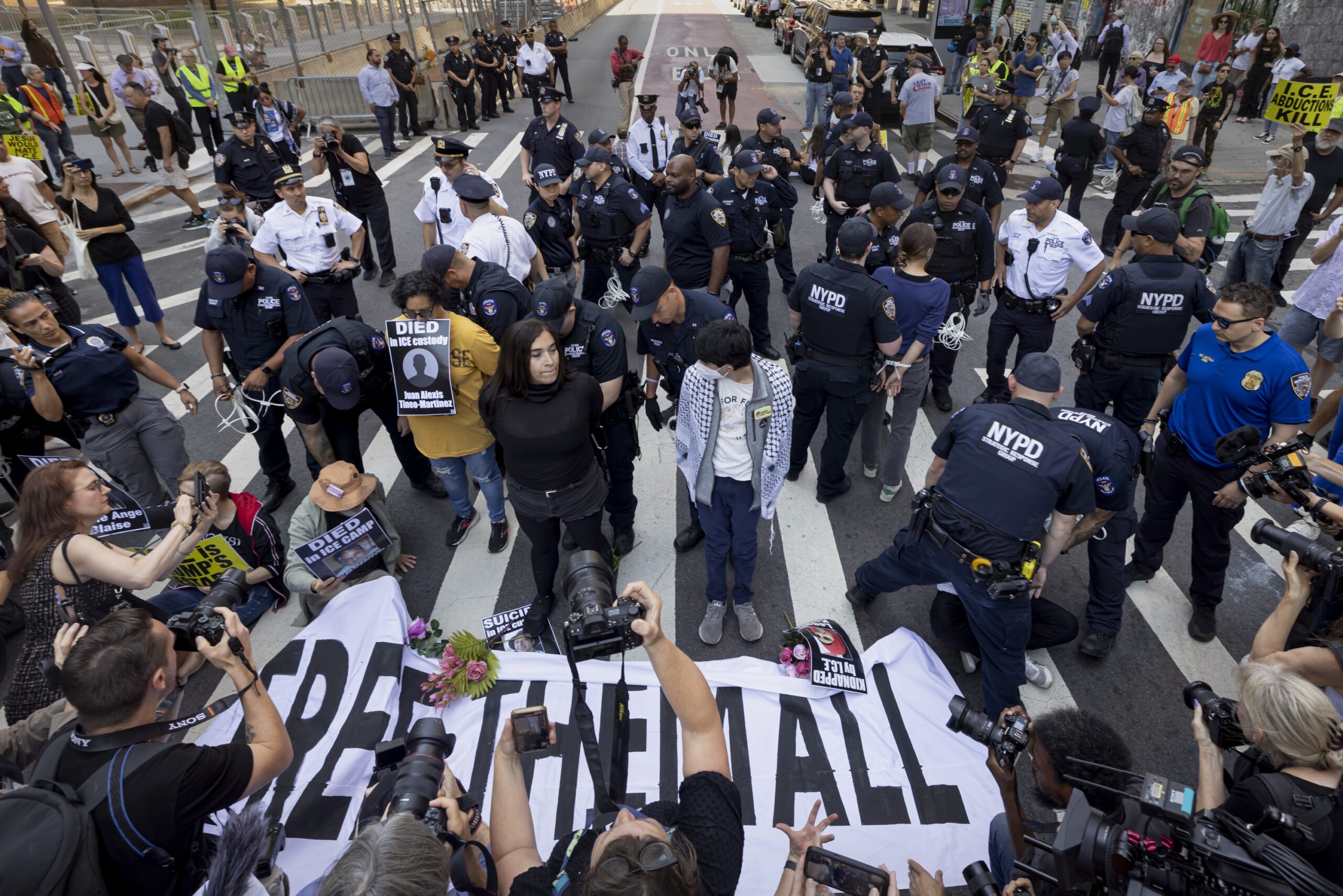
Inevitable as it seemed, the premature death of Russia’s main opposition leader Alexei Navalny on 16 February 2024 still came as a shock. Immediately afterwards, his supporters went to the monument that President Putin himself unveiled in 2017 for the victims of Stalin’s political oppression. The large crowds laid flowers, which were instantly removed by police.

Over time, the commemorations continued and merged with opposition to the Ukraine war. Arrests followed, and peaceful protest has been brutally suppressed. Among the demonstrators is Alyona, a young woman with blonde curls and a pink coat. She refuses to be silenced by police batons and is taken away. Facing absurd charges, she must undergo a trial and risk an excessively harsh sentence. Her terrified mother begs her to passively endure the political repression, and avoid getting into further trouble.

Scenes revealing Alyona’s act of resistance and its consequences—all captured up close and presumably often filmed in secret—show how Putin’s Russia has become a police state, and how many ordinary Russians are still resisting, despite the risks.  


Clara Haskil – Le mystère de l’interprète

Regisseur
Pascal Cling, Prune Jaillet
Speeltijd
Land
Zwitserland, Frankrijk
Taal
Frans
Ondertitels
Engels

Precies 65 jaar geleden overleed de Roemeense/Zwitserse pianiste Clara Haskil, een van de meest gevoelige en integere musici van de twintigste eeuw. Haskil’s leven was getekend door tegenslag en ziekte, maar haar spel bleef een toonbeeld van zuiverheid en eerlijkheid.

Clara Haskil stond bekend om haar ongekende vermogen om de muziek zelf te laten spreken. Zonder effectbejag, zonder virtuoze opsmuk – alleen de componist, de partituur, en haar onnavolgbare gevoeligheid. Haar interpretaties van Mozart, Schumann en Beethoven behoren tot de meest verfijnde ooit opgenomen, maar haar naam is vandaag nog te weinig bekend buiten de kringen van kenners.

Om haar nalatenschap te vieren en opnieuw onder de aandacht te brengen, verzorgt muziekjournalist Hans Heg een inleiding over haar leven en werk. Hij zal enkele zeldzame opnames laten horen en vertellen over de unieke artistieke integriteit die Haskil haar hele leven kenmerkte.

Na de inleiding vertonen we de documentaire Clara Haskil – Le Mystère de l’interprète (2018), waarin de fragiele maar briljante geest van een vrouw wordt afgebeeld die de essentie van muziek belichaamde.

Op 7 december vindt een speciale vertoning plaats waarbij muziekcriticus Hans Heg het werk van Clara Haskil zal inleiden.