TV NL EN

De Republiek

EEN PROGRAMMA GEMAAKT DOOR
De Republiek

Het kunstenaarscollectief ‘De (Eerste) Republiek’ wordt begin jaren negentig opgericht door een aantal Amsterdamse toneelspelers en hun gezelschappen, schrijvers, dichters, journalisten, beeldend kunstenaars, grafici en ontwerpers.

Elke eerste maandag van de maand is er een presentatie waarin gelezen, voorgesteld, geïnterviewd, gespeeld en over van alles gesproken wordt. In ons meer dan dertigjarige bestaan zijn we op veel plaatsen samengekomen om vanaf de vroege jaren van deze eeuw steeds elke maand van het seizoen in De Balie post te vatten. Iedereen is ten allen tijde welkom. Het programma, het nieuwe repertoire wordt op de avond zelf voor aanvang door de dan aanwezigen vastgesteld. Er worden geen toegangsprijzen geheven.

waar ook maar

waar ik ook maar ben, op welke plek op aarde ook,
houd ik voor de mensen mijn overtuiging verborgen
dat ik niet van hier ben.
alsof ik ben gestuurd om zo veel mogelijk kleuren,
smaken, geluiden, geuren in mij op te nemen, alles
gewaar te worden wat de mens ten deel valt,
het ervarene tot een toverregister
te transformeren en daarheen te brengen vanwaar
ik ben gekomen. 

–czeslaw milosz

‘daar’ uit: ‘dat’ 2000
verzameld in: ‘gedichten’
vertaling: gerard rasch 2003

we verwachten zoals altijd plotseling nieuwe bijdrages, discussies en reacties.

Een geïllustreerd verslag van de avond op 3 maart jl. vindt u hier

De republiek (open kunstenaarscollectief sinds 1992)

Reacties: riserv@gmail.com

European Literature Night: Against Indifference

Forum on European Culture 2025

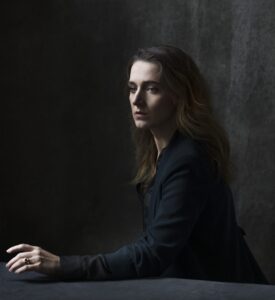
Program maker and moderator
Veronica Baas
Veronica Baas
moderator
Viola Karsten
In collaboration with
EUNIC Netherlands

Indifference is the fuel of autocracy. What role does literature have in creating a culture of care? During the European Literature Night we examine the political potential of literature.

‘Art can serve many purposes and take on many forms. But one of the key characteristics of a work of art is that it stimulates the mind and the heart’ – writes Alicja Gescinska in her essay Empathy against Indifference: On Totalitarianism and Art as a Moral and Political Force. During the European Literature Night we examine the political potential of literature. Can we improve ourselves in the act of caring through caring art?

About The European Literature Night
The European Literature Night is organized by De Balie and EUNIC Netherlands, the network of European national institutes of culture and national bodies engaged in cultural activities. This year the Goethe Institut, the British Council, the Institut français, Polish Culture NL, the Embassy of Ukraine, the Embassy of Greece, the Embassy of Estonia, and Vlaams Cultuurhuis De Brakke Grond contribute to the event.

Forum on European Culture

Who’s afraid of art? Now that tyrants are on the roll and more and more people in the West seem to be falling for the autocratic alternative, the Forum on European Culture 2025 (June 25 – June 29) brings together international artists, writers, and thinkers to celebrate the subversive power of art and literature.

Speakers

Alicja GescinskaAt the invitation of Polish Culture NL
MathuraAt the invitation of the Estonian Embassy
Philipp OehmkeAt the invitation of Goethe-Institute Netherlands
Yousra BenfquihAt the invitation of De Brakke Grond
Olesya KhromeychukAt the invitation of Embassy of Ukraine
Dimitra KolliakouAt the invitation of Embassy of Greece in the Hague
Lauren BastideAt the invitation of Institut français NL

Forum on European Culture: Art Against the Tyrants

Five days, 30+ programs, 40+ international artists, writers & thinkers, art installations, film screenings, talks and more

Who’s afraid of art? Now that tyrants are on the roll and more and more people in the West seem to be falling for the autocratic alternative, De Balie brings together over 40 international artists, writers, and thinkers. During Forum on European Culture, we celebrate the subversive power of art and literature.  It is no

Meer Info
zo 29 jun / 10:30
Idee & Verbeelding

I Give Up: Arnon Grunberg Meets Adam Phillips

What if giving up isn’t a failure, but a form of resistance? Arnon Grunberg meets the British writer and psychoanalyst Adam Phillips. Together they talk about letting go of control, ambition and certainty.

Meer Info Tickets
do 26 jun / 17:30
Idee & Verbeelding

In conversation with Tash Aw

How does movement, across borders and social class, shape one’s sense of belonging? In conversation with writer and essayist Tash Aw about the social changes each generation faces and the role of memory in preserving our roots. 

Meer Info Tickets

Anne Applebaum: How Autocracy Became a Business Model

Brainwash Festival x De Balie x TivoliVredenburg

Moderator
Merlijn Geurts
Merlijn Geurts
In collaboration with

Historian, journalist, and Pulitzer Prize winner Anne Applebaum dissects modern dictatorship. What threat do the growing autocracies pose?

When thinking of a dictator, one often imagines a malicious villain – someone we know from an action movie. Historian, journalist, and Pulitzer Prize winner Anne Applebaum challenges this image. In her latest book Autocracy, Inc., she describes how autocratic regimes are intertwined in intricate, international networks with the primary goal of self-enrichment. Autocrats are doing more business with each other than ever before, protecting each other and working together to destabilize the democratic order. What threat do these modern dictatorial networks pose?

About the collaboration
This Brainwash Special with Anne Applebaum is a collaboration between De Balie, TivoliVredenburg, and Brainwash Festival, and is part of the Forum on European Culture 2025 in Amsterdam.

About Anne Applebaum
Anne Applebaum (1964) is a historian and writer specializing in Eastern European and Soviet history. She has written several award-winning books, including Gulag: A History, which won the Pulitzer Prize, and her latest Autocracy, Inc. The Dictators Who Want to Run the World. Applebaum is also a staff writer at The Atlantic and a senior fellow at the Agora Institute at Johns Hopkins University. Her work provides critical insight into the rise of authoritarianism and the fragility of democracy.

Speaker

Anne Applebaum FoEC
Anne Applebaum Historian, journalist, and Pulitzer Prize winner

Supra, a feast with Nino Haratischwili

Forum on European Culture 2025

Nino Haratischwili, renowned author of The Eighth Life (for Brilka) and director, invites you to take a seat at her supra at Forum on European Culture.

The Supra is a traditional Georgian feast table, playing a central role in social life. It is the place where meaningful conversations take place and therefore the perfect opening of the Forum on European Culture. Georgian food, wine, and polyphonic singing are essential elements of this tradition.

The supra has largely developed within a male, patriarchal tradition – although women have always been celebrated for their beauty and culinary skills. Haratischwili explores this tradition from a female perspective, together with you. Georgian musicians and actresses will join the table. They will eat, drink, sing, share stories of women. Take a seat and experience the supra with Nino Haratischwili.

About Forum on European Culture

Who’s afraid of art? Now that tyrants are on the roll and more and more people in the West seem to be falling for the autocratic alternative, Forum on European Culture 2025 (June 25 – June 29) brings together international artists, writers, and thinkers to celebrate the subversive power of art and literature.

About Nino Haratischwili

Nino Haratischwili, born in 1983 in Tbilisi, is a Georgian-German author, playwright, and director. She gained international recognition for her multi-generational saga The Eighth Life (for Brilka), which has been translated into over 25 languages and has won numerous literary awards. Haratischwili has written over 20 plays and several novels, often exploring themes of history, identity, politics, and personal trauma. Her novels include Juja (2010), Mein sanfter Zwilling (My Gentle Twin, 2011), Die Katze und der General (The Cat and the General, 2018), and Das mangelnde Licht (The Lack of Light, 2022).

Credits

Nino HaratischwiliText and direction
Laina SchwarzCast
Nata MurvanidzeCast
Ela CosenCast
Sophie GelovaniSinging
Keti KlimiashviliSinging
Nino GuliashviliSinging and Piano
Nino TskitishviliSinging and guitar
Julia B. NowikowaStage and video


Artikel

‘Peope rarely drink in Georgia without toasts’

Nino Haratischwili invites you to her supra

Lees meer
Schrijver Nino Haratischwili leunt tegen een hoog raam

Forum on European Culture: Art Against the Tyrants

Five days, 30+ programs, 40+ international artists, writers & thinkers, art installations, film screenings, talks and more

Who’s afraid of art? Now that tyrants are on the roll and more and more people in the West seem to be falling for the autocratic alternative, De Balie brings together over 40 international artists, writers, and thinkers. During Forum on European Culture, we celebrate the subversive power of art and literature.  It is no

Meer Info
vr 27 jun / 20:30
Politiek & Democratie Idee & Verbeelding

Georgi Gospodinov: the Weaponization of Nostalgia

How is nostalgia used as a political weapon? The acclaimed Bulgarian writer Georgi Gospodinov (Time Shelter, The Physics of Sorrow) explores the relationship between collective memory and identity in contemporary Europe.

Meer Info Tickets

Želimir Žilnik: Cinema of the Marginalized

Forum on European Culture 2025

Moderator
Stefan Malešević
Supported by

The films of Serbian director Želimir Žilnik are as humanist as they are subversive. Stefan Malešević speaks with Želimir Žilnik about how cinema can present a form of resistance.
This program features an introduction by Bojan Fajfrić, and a special screening of Žilnik’s ground breaking short film Black Film (Crni Film, 1971, 17min).

Born in a concentration camp and raised in communist Yugoslavia, Želimir Žilnik remained dedicated to politically engaged cinema throughout his career. Žilnik was one of the pioneers of the Yugoslav Black Wave cinema; an influential underground film movement inspired by Italian neorealism and French New Wave. Žilnik’s films, characterized as ‘docu-fiction’, offer a deeply humane perspective on those at the margins of society, whether it be migrant workers in Berlin in the short film Iventur – Metzstrasse 11, (1975) or trans people in Belgrade in the taboo-breaking Yugoslav queer feature Marble Ass (1995).

Introduction to the conversation will be providedby filmmaker Bojan Fajfrić, who will reflect on how Žilnik inspired different generations of filmmakers, artists and activists on the Balkans and wider.

Film curator Stefan Malešević will engage in conversation with Žilnik about cinema as a form of resistance. How can cinema expose the mechanisms of control? What role does storytelling play in preserving historical memory and countering state propaganda? And in an era of rising authoritarianism, what can we learn from the artistic strategies of the past?

About Želimir Žilnik
Želimir Žilnik (1942) is a Serbian filmmaker and key figure of the Yugoslav Black Wave-movement. His award-winning work, including Early Works (Golden Bear Berlinale, 1969) and Kenedi Goes Back Home (2003), continues to influence new generations of filmmakers.

Bojan Fajfrić is a visual artist and filmmaker whose work investigates how personal memory intersects with collective history. Drawing from his experience growing up in Yugoslavia and living in the Netherlands, he focuses on overlooked events and marginal figures to explore how political time is embodied and remembered. His work has been exhibited and screened at Centre Pompidou and Palais de Tokyo (Paris), de Appel (Amsterdam), the Museum of Contemporary Art Belgrade, and the International Film Festival Rotterdam.

About Forum on European Culture

Who’s afraid of art? Now that tyrants are on the roll and more and more people in the West seem to be falling for the autocratic alternative, Forum on European Culture 2025 (June 25 – June 29) brings together international artists, writers, and thinkers to celebrate the subversive power of art and literature.

Speakers

Želimir Žilnikfilmmaker
Bojan Fajfrićvisual artist
Stefan MaleševićModerator
Artikel

Želimir Žilnik: grandmaster of Serbian avant-garde cinema

Forum on European Culture 2025

Lees meer
zo 29 jun
Cinema

Eighty Plus, including talk with Želimir Žilnik and Geert Mak

After more than ten years, Želimir Žilnik returns to narrative filmmaking with Eighty Plus. Following the screening, Geert Mak will engage in conversation with Žilnik.

Meer Info Tickets
zo 29 jun
Cinema

Želimir Žilnik: Early Works

Early Works, Želimir Žilnik’s first feature film, recounts an allegorical story of young people who took part in the 1968 student demonstrations in Belgrade.

Meer Info Tickets
zo 29 jun
Cinema

Želimir Žilnik: Marble Ass

Set in mid-1990s Belgrade, Marble Ass is a comedic docufiction that highlights the city’s LGBTQ+ community as they challenge the toxic masculinity dominating their surroundings.

Meer Info Tickets

Forum on European Culture: Art Against the Tyrants

Five days, 30+ programs, 40+ international artists, writers & thinkers, art installations, film screenings, talks and more

Who’s afraid of art? Now that tyrants are on the roll and more and more people in the West seem to be falling for the autocratic alternative, De Balie brings together over 40 international artists, writers, and thinkers. During Forum on European Culture, we celebrate the subversive power of art and literature.  It is no

Meer Info

Anne Applebaum x Volodymyr Yermolenko

On Ukraine’s past, present and future

Program Maker

Pulitzer prize-winning author Anne Applebaum and Ukrainian philosopher Volodymyr Yermolenko engage in conversation about Ukraine’s past, present and future. With an introduction from Ukrainian writer Andrey Kurkov.

‘The bad guys are winning’, Anne Applebaum wrote in an essay in The Atlantic in 2021. If the twentieth century was about the rise of liberal democracy, the twentieth-first sofar has been about the opposite. The fight for democracy is nowhere as pressing as in Ukraine. Anne Applebaum and Ukrainian philosopher and writer Volodymyr Yermolenko discuss Ukraine’s ongoing struggle for freedom, and the stakes for the future – not just for Ukraine, but also for democracy in Europe. 

About the speakers
Anne Applebaum (1964) is a historian and writer specializing in Eastern European and Soviet history. She has written several award-winning books, including Gulag: A History, which won the Pulitzer Prize, and her latest Autocracy, Inc. The Dictators Who Want to Run the World. Applebaum is also a staff writer at The Atlantic and a senior fellow at the AGORA Institute at Johns Hopkins University. Her work provides critical insight into the rise of authoritarianism and the fragility of democracy. 

Volodymyr Yermolenko (1980) is a Ukrainian philosopher, writer, and journalist. He is the editor-in-chief of UkraineWorld, a multimedia platform, and author of several books on Ukrainian identity and European philosophy. He is the current president of PEN Ukraine and he has been a powerful voice for Ukraine during the ongoing war, offering a nuanced understanding of the cultural and historical context behind the conflict.

About Forum on European Culture

Who’s afraid of art? Now that tyrants are on the roll and more and more people in the West seem to be falling for the autocratic alternative, Forum on European Culture 2025 (June 25 – June 29) brings together international artists, writers, and thinkers to celebrate the subversive power of art and literature.

Speakers

Anne Applebaum FoEC
Anne Applebaum historian and writer
Volodymyr Yermolenko philosopher, writer, and journalist
Andrey KurkovUkrainian writer

Forum on European Culture: Art Against the Tyrants

Five days, 30+ programs, 40+ international artists, writers & thinkers, art installations, film screenings, talks and more

Who’s afraid of art? Now that tyrants are on the roll and more and more people in the West seem to be falling for the autocratic alternative, De Balie brings together over 40 international artists, writers, and thinkers. During Forum on European Culture, we celebrate the subversive power of art and literature.  It is no

Meer Info
vr 27 jun / 20:30
Politiek & Democratie Idee & Verbeelding

Georgi Gospodinov: the Weaponization of Nostalgia

How is nostalgia used as a political weapon? The acclaimed Bulgarian writer Georgi Gospodinov (Time Shelter, The Physics of Sorrow) explores the relationship between collective memory and identity in contemporary Europe.

Meer Info Tickets
za 28 jun / 16:30
Politiek & Democratie

Art Against the Tyrants: Interview Marathon

With Nino Haratischwili, Beatrix Ruf, Ece Temelkuran, Volodymyr Yermolenko, Želimir Žilnik, Gosia Wdowik and more

During our Interview Marathon, the Forum on European Culture invites writers, artists and thinkers to reflect on the role of art in the fight against tyranny.

Meer Info Tickets

Art Against the Tyrants: Interview Marathon

With Nino Haratischwili, Beatrix Ruf, Ece Temelkuran, Volodymyr Yermolenko, Želimir Žilnik, Gosia Wdowik, Daria Bukvić and more

Moderator
Azu Nwagbogu
Programme maker & Moderator
Programme maker

What does the future of Europe look like in an era of rising authoritarianism, renewed oligarchy, and democratic values under siege? During our Interview Marathon, the Forum on European Culture invites writers, artists and thinkers to reflect on the role of art in the fight against tyranny.

It may seem that art is powerless against weapons, yet history tells us otherwise. Autocrats and dictators fear artists and intellectuals — why else would they feel compelled to censor, imprison, and persecute them? It is the freedom of thought they seek to extinguish, the critical reflection they dread, and the plurality of voices they aim to silence. Art disrupts the singular narratives authoritarian leaders impose, making it a force of defiance.

 During this Interview Marathon, the Forum on European Culture gathers writers, artists, thinkers, and activists for conversations on resistance, identity, and the power of culture in confronting oppression. Can Europe uphold its democratic ideals in times of crisis? What role do artists and intellectuals play in the fight against tyranny?

During the interview marathon, guests take turns joining one after another for about an hour each. Visitors can walk in and out of the room and occasionally stretch their legs. The full marathon lasts from 5:00 PM to around 1:00 AM.

About the guests

Matej Drlička (1976) is a Slovakian musician and the former director of the Slovak National Theatre. On the 6th of August 2024 Matej Drlička was suddenly and for political reasons dismissed by the Slovakian minister of culture.

Nino Haratischwili (1983) is a Georgian-German author, playwright, and director. She gained international recognition for her multi-generational saga The Eighth Life (for Brilka)

Daria Bukvić (1989) is a Bosnian-Dutch theatre and film director. Since June 2021, she has been the artistic director of Theater Oostpool.

Beatrix Ruf (1960) is a German art curator. She is the former director of het Stedelijk Museum Amsterdam. She is currently director the Hartwig Art Foundation, which is developing a new museum for modern art in Amsterdam.

Łukasz Twarkowski (1983) is a polish theatre director. He creates multimedia performances combining theatre and visual arts. His projects are being programmed at the most important festivals and stages around the world. His performance ROHTKO was shown in Amsterdam at Holland Festival this week. 

Dries Verhoeven (1976) is a Dutch theatre maker and visual artist. He is known for his disruptive and controversial installations, performances and interventions in public space. At this forum on European Culture he will stage the intervention Do not go gentle into that good night.

Andrey Kurkov (1961) is a Ukrainian writer, journalist and public intellectual. His novels, including Death and the Penguin, Grey Bees, and The Silver Bone. His books are full of black humor, post-Soviet reality and surrealism.

Želimir Žilnik (1942) is a Serbian filmmaker and key figure of the Yugoslav Black Wave-movement. His award-winning work, including Early Works (Golden Bear Berlinale, 1969) and Kenedi Goes Back Home (2003), continues to influence new generations of filmmakers.

Ece Temelkuran (1973) is a Turkish journalist and writer. In 2012, she was fired from the Turkish newspaper she was working for at the time, for writing critically about the Erdogan government. In 2019, she published How to Lose a Country: The Seven Steps from Democracy to Dictatorship.

Naeeda Aurangzeb (1974) is a Dutch-Pakistani presenter, documentary maker, and writer. In 2005 she wrote the book Verdreven Palestijnen, a collection of stories from Palestinian refugees in camps in Lebanon, Syria, Jordan, Gaza, the West Bank, and Israel.

Christian Guerematchi (1981) is a Slovenia born creator and performer with a background in ballet and contemporary dance. His work is strongly artivistic, exploring how fragments of history continue to shape and carry Black culture forward. At this forum on European Culture he will present the dance performance Loved2Death.

Bektour Iskender is a journalist, free speech activist and co-founder of Kyrgyz news platform Kloop. A large media platform that trains young journalists and uncovers what others wouldn’t touch: stolen billions, rigged elections, environmental devastation and much more. His work reached far beyond Kyrgyzstan, revealing corruption networks stretching from the Caucasus to Western capitals.

Tash Aw (1971) is a Malaysian writer and essayist, based in Paris. He gained international recognition with his books The Harmony Silk Factory (2005) and Five Star Billionaire (2013) which were longlisted for the Man Booker Prize. His works often examine themes such as colonialism, immigration, class dynamics and cultural displacement.

Renzo Martens (1973) is a Dutch artist, documentary- and filmmaker. He is well-known for his documentaries Episode I and Episode III: Enjoy Poverty, where he
delves deep into colonial relations and the mechanics of the art world. His main themes include decolonialization, poverty, crimes against humanity, and the role of art in reshaping society.

Luka Gviniashvili (2000) is a Georgian activist currently taking part in the anti-government demonstrations in Tbilisi following the pivotal parliamentary elections on October 26, 2024.

Caroline de Gruyter (1963) is a journalist and political analyst. She is a European Affairs correspondent and columnist for the leading Dutch newspaper NRC and a regular contributor to Foreign Policy, EUobserver and De Standaard. She spent more than twenty years covering Europe, from different corners of the continent.

Gosia Wdowik (1988) is a theatre maker and an member of GILDIA (Union of Polish Theater Makers). Her work explores topics like burn-out, shame, radical individualism and digital violence. At this forum on European Culture she will present the gripping project I Will Bleed For a Better Reason Next Year.

Volodymyr Yermolenko (1980) is a Ukrainian philosopher, writer, and journalist. He is the editor-in-chief of UkraineWorld, a multimedia platform, and author of several books on Ukrainian identity and European philosophy.

Jaap Scholten (1963) is a Dutch writer, currently living in Hungary. He is the author of several novels, including Tachtig, De wet van Spengler, and Kameraad Baron. He is initiator of the volunteer-based humanitarian foundation Protect Ukraine.

Anton Varga (1989) is a Ukrainian artist who’s part of the Ukrainian artists’ collective Open Group founded in August 2012. They are known for their exploration of displacement, memory, and the social consequences of war. During Forum their work Repeat After Me II will be shown in De Balie.
About Forum on European Culture

Who’s afraid of art? Now that tyrants are on the roll and more and more people in the West seem to be falling for the autocratic alternative, Forum on European Culture 2025 (June 25 – June 29) brings together international artists, writers, and thinkers to celebrate the subversive power of art and literature.

Artikel

‘Contemporary art has, in many ways, built echo chambers. We speak in silos‘

Azu Nwagbogu hosts the first edition of ‘In Our Time’

Lees meer
Artikel

‘Peope rarely drink in Georgia without toasts’

Nino Haratischwili invites you to her supra

Lees meer
Schrijver Nino Haratischwili leunt tegen een hoog raam

Forum on European Culture: Art Against the Tyrants

Five days, 30+ programs, 40+ international artists, writers & thinkers, art installations, film screenings, talks and more

Who’s afraid of art? Now that tyrants are on the roll and more and more people in the West seem to be falling for the autocratic alternative, De Balie brings together over 40 international artists, writers, and thinkers. During Forum on European Culture, we celebrate the subversive power of art and literature.  It is no

Meer Info

You Can Kill the Messenger, but not the Message

Techdenkers on Journalism in the Danger Zone

Programme maker
Moderator
Marcia Luyten
Supported By
Adyen
Adyen

‘You can kill the messenger, but not the message’ is the slogan of news platform Forbidden Stories. We speak with founder Laurent Richard about the opportunities and challenges technology brings when working in the danger zone.

107 journalists were killed during their work last year. Very often because of their work. With his organisation Forbidden Stories, French journalist Laurent Richard completes the news stories of journalists who were murdered. Under the slogan ‘you can kill the messenger, but not the message’, Forbidden Stories published about forced labour in Turkmenistan, captagon trafficking in Syria and deforestation in Cambodia.

Before Forbidden Stories, Richard was involved with the Panama Papers, a project that published millions of documents that exposed offshore financial constructions.

Technology helps Richard in his investigative journalism, but comes with its own dangers. How do you communicate safely with your sources? How do you verify your facts online? And how do you work together with other organisations to finish a story? In this edition of Techdenkers we speak with Laurent Richard and other journalists about the opportunities and challenges technology brings when working in the danger zone.

About Techdenkers

Technology has become an inseparable part of our lives, but do we pay enough attention to it? During Techdenkers we explore the ethical implications of technological innovation. What influence does the arrival of AI have on our lives? How are we going to solve the climate crisis with the help of technology? And do we want algorithms to determine our choice of partner?

The Techdenkers series is provided and broadcast by De Balie and is part of our partnership with Adyen.

Speakers

Laurent RichardJournalist and founder Forbidden Stories
Thomas MuntzEditor-in -chief Investico
About Forum on European Culture

Who’s afraid of art? Now that tyrants are on the roll and more and more people in the West seem to be falling for the autocratic alternative, Forum on European Culture 2025 (June 25 – June 29) brings together international artists, writers, and thinkers to celebrate the subversive power of art and literature.

vr 27 jun / 12:00
Politiek & Democratie

Anne Applebaum x Volodymyr Yermolenko

On Ukraine’s past, present and future

Pulitzer prize winning author Anne Applebaum and Ukrainian philosopher Volodymyr Yermolenko engage in conversation about Ukraine’s past, present and future. 

Meer Info Tickets
vr 27 jun / 17:30
Politiek & Democratie

How to Lose a Democracy – with Marietje Schaake and Ece Temelkuran

How are the tech oligarchs shaping our democracies? In conversation with former EU-parliament member Marietje Schaake and journalist Ece Temelkuran.

Meer Info Tickets