TV NL EN

‘Het persoonlijke is politiek tijdens het Vrijdenkersfestival’

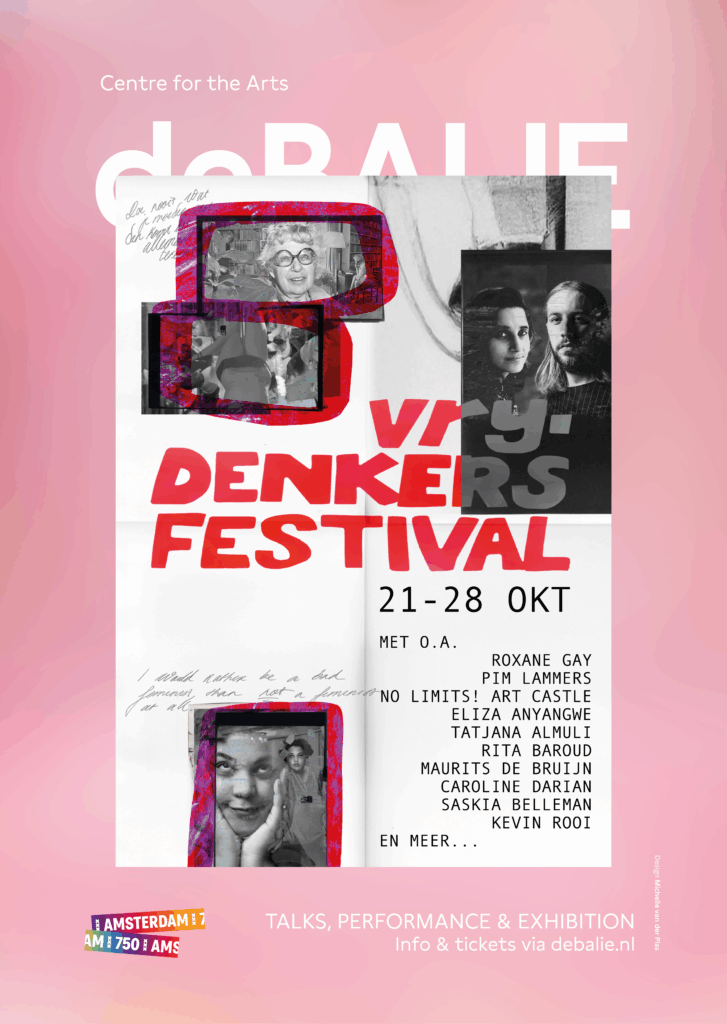
Van 21 tot en met 28 oktober vindt het Vrijdenkersfestival plaats, waar we de de Amsterdamse traditie van vrijzinnigheid eren, bevragen en voortzetten. Programmamaker Rokhaya Seck over wat we kunnen verwachten: ‘we hopen een creatieve ruimte te creëren waar mensen samenkomen en waar ideeën uitgewisseld worden op het podium.’

‘Het persoonlijke is politiek tijdens het Vrijdenkersfestival. Onze sprekers hebben dit jaar bijzondere verhalen te vertellen. Verhalen die stuk voor stuk het particuliere overstijgen – of dat nu gaat om Rita Baroud die vertelt over haar ervaringen tijdens de genocide in Gaza of om Caroline Darian, die naar aanleiding van de Pelicot-zaak in Frankrijk opkomt voor slachtoffers van seksueel misbruik. Met het delen van hun ervaringen dragen onze sprekers bij aan maatschappelijke verandering. Niet zelden ten koste van persoonlijke offers.

Eerlijk: vaak begint het mooiste gesprek pas zodra de microfoons uit zijn

Amsterdam is van oudsher altijd al een stad geweest waar mensen in clubjes en vergaderingen samenkwamen om sociale verandering in gang te zetten. In kroegen, debathuizen of op plekken als De Dageraad, de vrijdenkersvereniging waar Multatuli en Wilhelmina Drucker bij aangesloten waren. De Amerikaanse dichter Allen Ginsberg schreef in 1957 aan zijn vriend Jack Kerouac over Amsterdam dat hij een ‘great town’ had gevonden met dichterscafés en bebopbars, waar hij de ruimte voelde om te experimenteren. Dat nostalgische beeld  liet me niet meer los.  

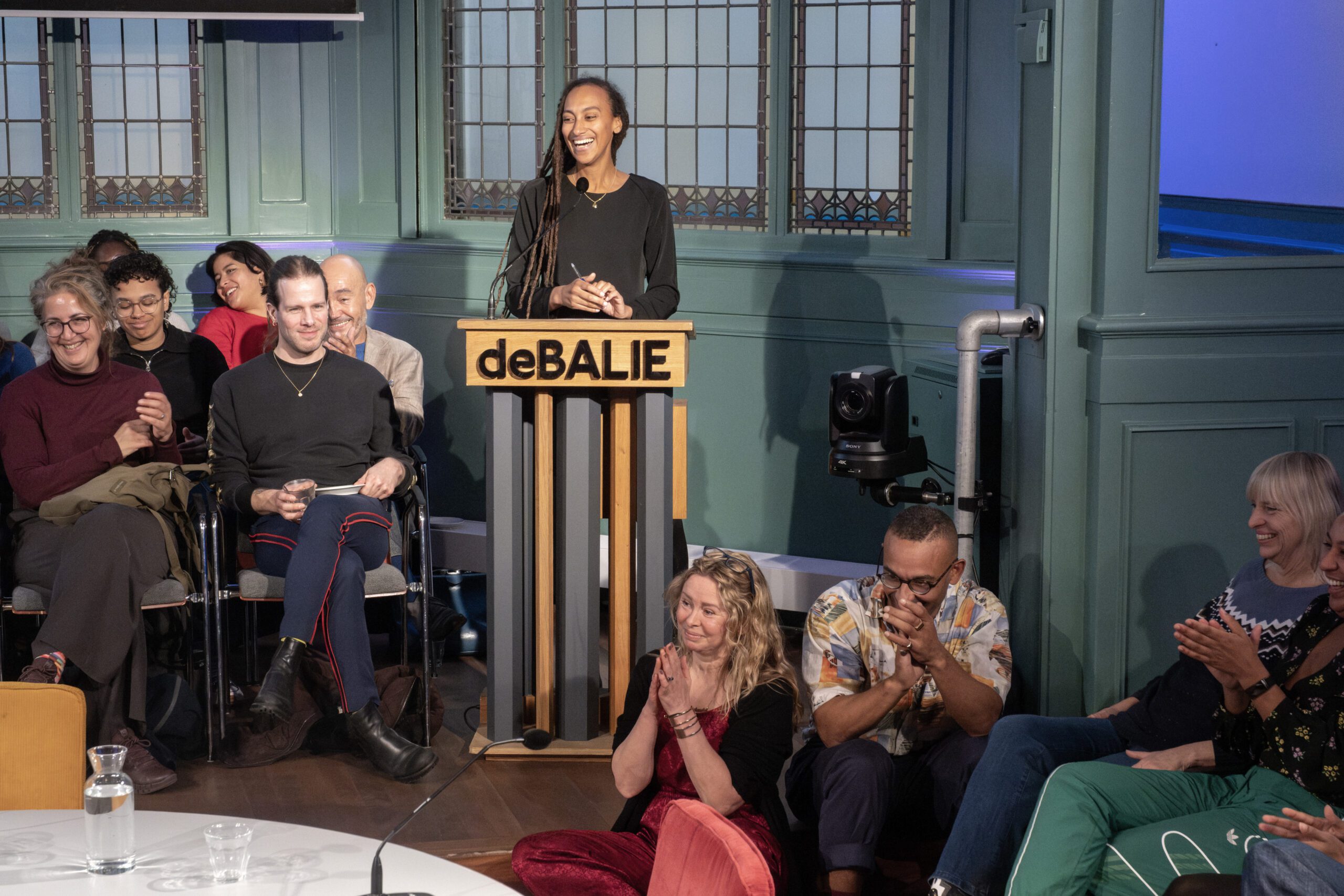
Maar, bedacht ik me: dat hoeft niet alleen bij nostalgie te blijven. Tijdens het Vrijdenkersfestival hopen we een creatieve ruimte te creëren waar mensen samenkomen en ideeën uitgewisseld worden op het podium. En eerlijk: vaak begint het mooiste gesprek pas zodra de microfoons en camera’s uit zijn, aan de bar. Dat is waar de eerste vuurtjes van verandering gaan branden.’

De Balie in je mail, werkt geestverruimend

Vrijdenkersfestival

Roxane Gay, Pim Lammers, Rita Baroud, Maurits de Bruijn, De dolle mina’s en Femke Halsema

Met Roxane Gay, Pim Lammers, Rita Baroud, Jan Hoek, Maurits de Bruijn, Tatjana Almuli, De dolle mina’s, Mieke Aerts, Marianne Braun, Femke Halsema en Kevin Rooi 21 – 28 okt bij De Balie, OSCAM, Podium Mozaïek en DAT!school mede mogelijk gemaakt door: De Amsterdamse traditie van vrijzinnigheid wordt geëerd, bevraagd én voortgezet tijdens de zesde

Meer Info
do 23 okt / 20:00
Emancipatie & Identiteit Vrijdenkersfestival

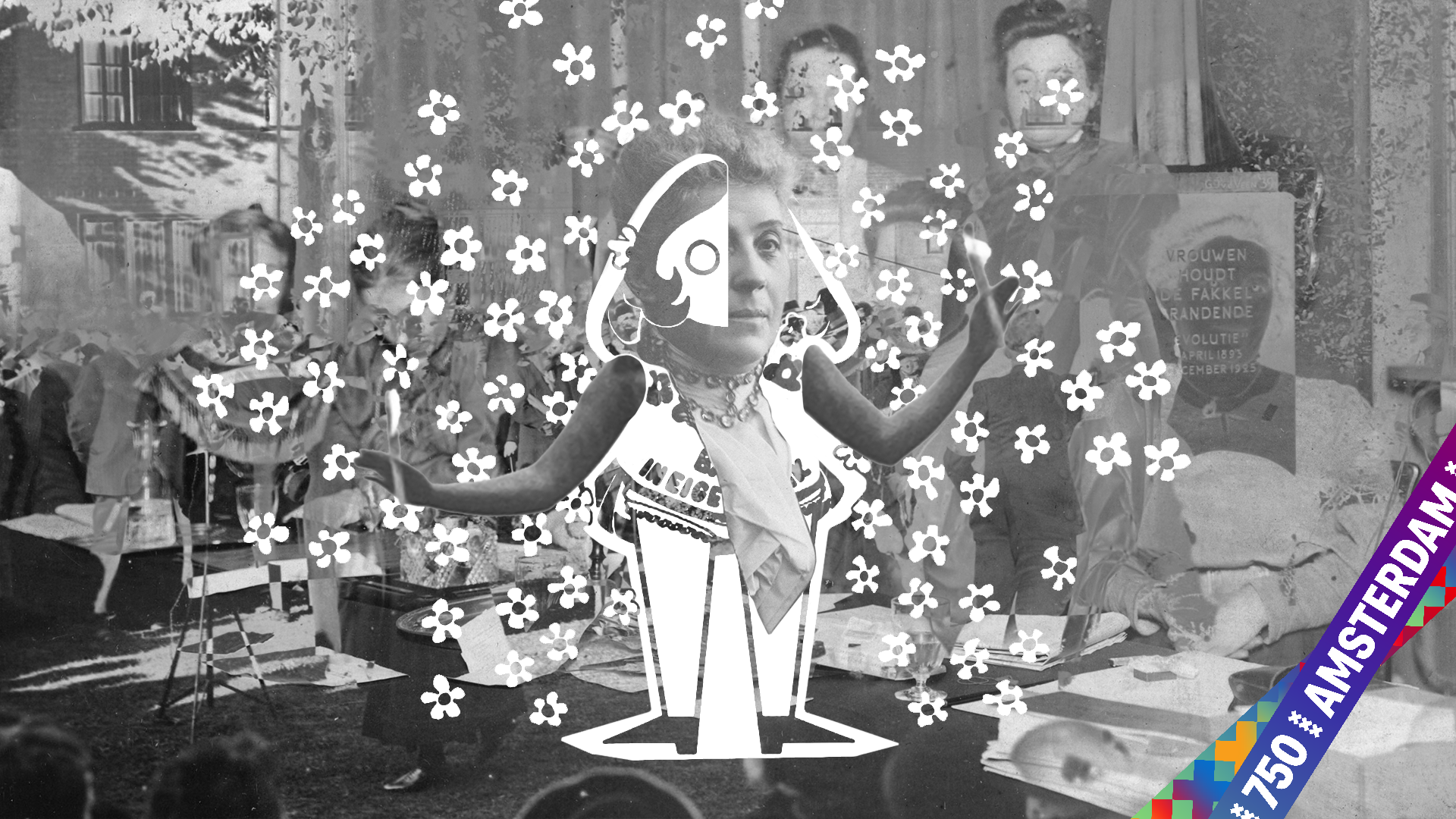
Van Wilhelmina Drucker tot de Dolle Mina van nu

Met o.a. De dolle mina’s, Mieke Aerts en Marianne Braun

Wilhelmina Drucker was het boegbeeld van de eerste feministische golf in Nederland. Ze stond aan de wieg van het vrouwenstemrecht in 1917 en vormde een inspiratiebron voor de naar haar vernoemde actiegroep Dolle Mina. Toch is haar naam, honderd jaar na haar sterven, in het collectief bewustzijn op de achtergrond geraakt. Tijd voor eerherstel. Wat heeft het gedachtegoed van ‘ijzeren Wil’ het hedendaags feminisme te vertellen?

Meer Info Tickets
vr 24 okt / 20:00
Idee & Verbeelding Vrijdenkersfestival

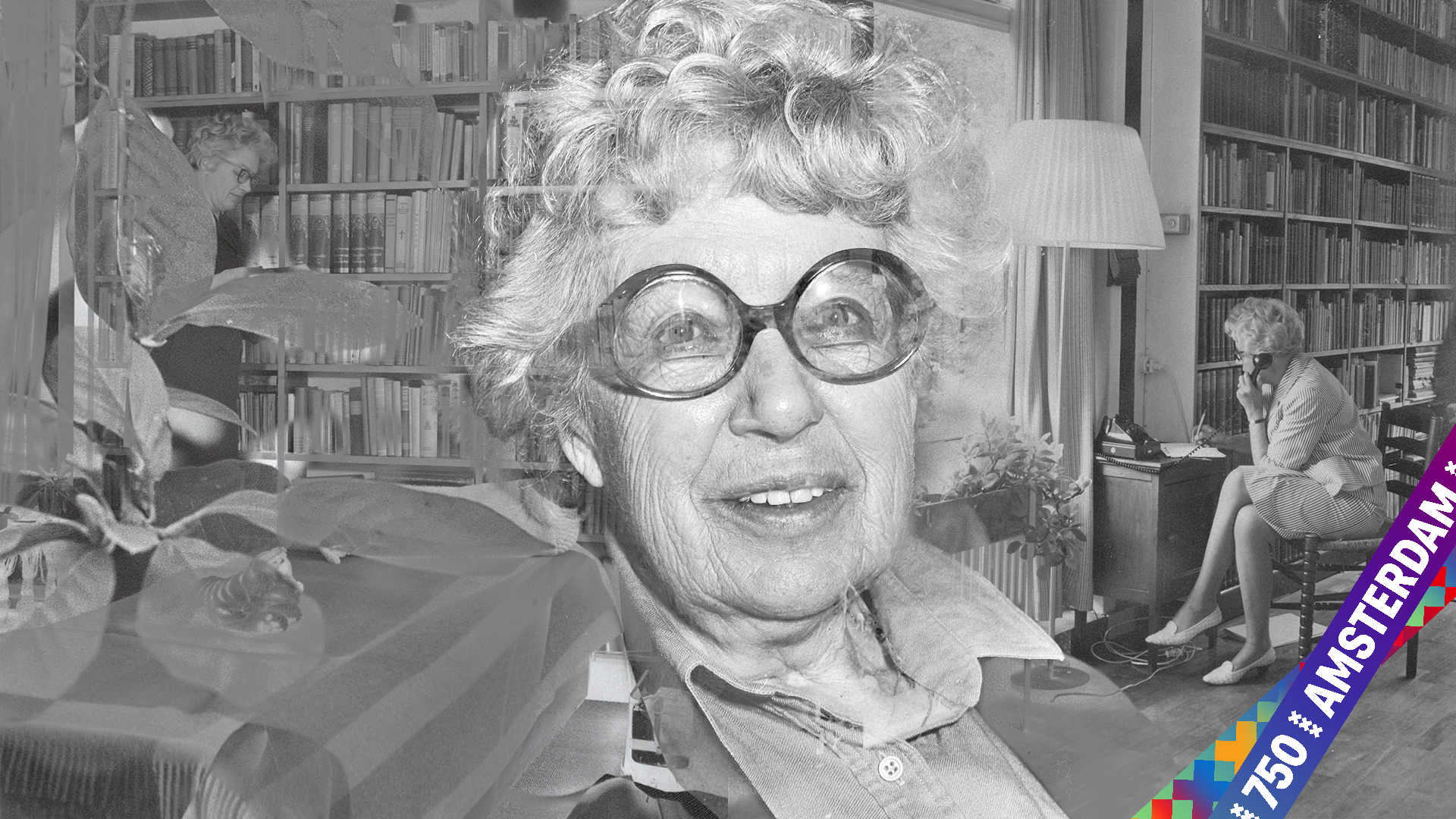
Publieke Intellectuelen: Annie M.G. Schmidt

O.a. met Pim Lammers, Annejet van der Zijl en Wil van der Meer

‘Doe nooit wat je moeder zegt, dan komt het allemaal terecht.’ Annie M.G. Schmidt schopte tegen alles wat bekrompen en burgerlijk was. Bijna eigenhandig trok zij Nederland een nieuwe tijd in. Welke vrijheid brak Annie M.G. Schmidt met haar teksten, versjes en verhalen open?

Meer Info Tickets

Toelichting op onze programmering naar aanleiding van recente vragen

We krijgen bij De Balie vragen over drie filmvertoningen van Israëlische kunstenaars die wij in maart 2024 eenmalig hebben vertoond. Deze films maakten onderdeel uit van het Seret Film Festival en waren geselecteerd door onze redactie. We hebben toen bewust afgezien van enige financiële relatie met het festival. Inmiddels hebben we besloten de samenwerking te beëindigen en in 2025 hebben we geen films meer geprogrammeerd van het Seret Film Festival.

In 2024 hebben we er wel voor gekozen de vertoningen door te laten gaan, omdat wij kunstenaars niet willen uitsluiten op grond van hun nationaliteit. Wij hebben er toen voor gekozen ruimte te geven aan kritische makers, en aanvullend een gesprek gevoerd met een van de documentairemakers over het handelen van de Israëlische regering.

We begrijpen dat deze beslissing ook tot kritiek kan leiden. Kritiek bespreken we uitvoerig met elkaar en soms leidt dit ook tot andere keuzes in onze programmering, zoals afgelopen jaar.

Wij geloven dat het samenbrengen van mensen een effectieve manier is om onderdrukking, polarisatie en agressie tegen te gaan. Ook maken wij ons unaniem grote zorgen over het geweld in Palestina en Israël en de oorlogsmisdaden en genocide in Gaza. Dit thema krijgt nadrukkelijk aandacht in ons programma, onder andere via gesprekken met Palestijnse journalisten en makers.

Wij blijven ernaar streven verschillende perspectieven samen te brengen en kritische stemmen te ondersteunen, zeker ook wanneer zij zich uitspreken tegen hun eigen onderdrukkende regimes. Of het nu om Russische kunstenaars of Israëlische kunstenaars gaat. Wij maken ons programma zo zorgvuldig mogelijk en staan open voor kritiek. We nodigen iedereen uit om in gesprek te blijven en onze programma’s te bezoeken.

De Balie

English

We have received questions at De Balie regarding three film screenings by Israeli artists that we presented once in March 2024. These films were part of the Seret Film Festival and were selected by our editorial team. We deliberately chose not to have any financial relationship with the festival. We have since decided to end the collaboration, and in 2025, we will no longer include any films from the Seret Film Festival in our programming.

In 2024, however, we did choose to proceed with the screenings because we do not want to exclude artists based on their nationality. We chose to provide space for critical voices, additionally we held a critical public conversation with one of the documentary filmmakers about the actions of the Israeli government.

We understand that this decision can also lead to criticism. We thoroughly discuss such criticism internally, and it sometimes leads to different choices in our programming, as was the case this past year.

We believe that bringing people together is an effective way to counter oppression, polarization, and aggression. We are also unanimously deeply concerned about the violence in Palestine and Israel, and about the war crimes and genocide in Gaza. This topic receives prominent attention in our programming, including through conversations with Palestinian journalists and creators.

We remain committed to bringing together different perspectives and supporting critical voices – especially when they speak out against their own oppressive regimes, whether they are Russian or Israeli artists. We curate our programs with the utmost care and remain open to criticism. We invite everyone to continue the conversation and to attend our events.

De Balie

Met groot verdriet heeft De Balie het overlijden van Derk Sauer vernomen

Met groot verdriet heeft De Balie het overlijden van Derk Sauer vernomen. Derk was een grote inspiratiebron voor ons. Hij adviseerde De Balie jarenlang vanuit de Raad van Toezicht en was recent onder meer nauw betrokken bij de dissidente kunsttentoonstelling Artists Against the Kremlin, die deze maand zijn tweede editie beleeft. Onze gedachten gaan uit naar de geliefden van Derk.

Derk is zo’n beetje de personificatie van alles waar wij voor staan: het belang van de onafhankelijke pers, de democratie en de rechtsstaat. Hij heeft vlammende betogen gehouden om donateurs voor De Balie binnen te halen en dacht mee bij Russische of Oekraïense programmering.

Yoeri Albrecht, algemeen en artistiek directeur De Balie

Derk Sauer was in 2022 te gast in ons programma Operatie Interview, waar hij met Jeroen Wollaars, Barbara Barend en Coen van Zwol sprak over zijn leven in Rusland en zijn terugkeer naar Nederland na de grootschalige invasie in Oekraïne.

Podcast

Derk Sauer over (de grenzen aan) persvrijheid en de geoliede propagandamachine in Rusland

Programmamaker Parwin Mirrahimy spreekt naar aanleiding van het uitkomen van de documentaire Citizen K met Derk Sauer, mediaondernemer te Rusland. Een gesprek over de omstreden Russische oligarch Michail Chodorkovski, persvrijheid én propaganda in het huidige Rusland.  De film Citizen K met daarin een rol voor Derk Sauer draait vanaf 27 februari in De Balie. Op 27 februari speciale

Luister
do 9 jun / 20:00
Politiek & Democratie

Operatie Interview: Derk Sauer

In de programmareeks Operatie Interview ontleden we het vraaggesprek. Drie vlijmscherpe interviewers bevragen één gast. Wie de interviewers zijn, blijft tot op het podium geheim. Ditmaal: journalist, uitgever en mediamagnaat Derk Sauer. Toen de oorlog in Oekraïne uitbrak en Rusland strenge mediawetten doorvoerde, keerde Derk Sauer noodgedwongen terug naar Nederland na meer dan 30 jaar

Meer Info Tickets
ANP
Expositie

Artists Against the Kremlin: VIRUS

15 Aug – 4 Sep: Major anti-war and dissident art exhibition vol. 2

Artists Against the Kremlin returns to De Balie with the exhibition VIRUS featuring over 100 works by artists from Russia, Belarus, Ukraine, and the global diaspora

Meer Info

Anne Applebaum: Reporting on Autocracy

Forum on European Culture

‘If the 20th century was the story of slow, uneven progress toward the victory of liberal democracy over other ideologies – communism, fascism, virulent nationalism – the 21st century is, so far, a story of the reverse’, Anne Applebaum wrote in 2021 in The Atlantic. And Russia hadn’t even invaded Ukraine yet…

Applebaum’s entire journalistic career has revolved around Russia and its neighboring countries. Through this, Applebaum has witnessed democracies emerge up close – and sometimes collapse again. Applebaum studied history and literature at Yale and specialized in Soviet history. In 1988, she moved to Poland as a correspondent for The Economist, where she reported on the collapse of communism and the first free Polish elections won by Lech Wałęsa’s Solidarność. Later on she covered the fall of the Berlin Wall. In this period she also met her husband, Radoslaw Sikorski, the current Polish Minister of Foreign Affairs. 

Applebaum received the Pulitzer Prize in 2004 for her monumental work Gulag, which chronicles the history of the Soviet forced labor camps where millions of people were imprisoned and perished during Stalin’s reign. In 2017, she published Red Famine: Stalin’s War on Ukraine, about the Holodomor – the deliberate starvation of the Ukrainian people by Stalin’s regime.

Up close, Applebaum witnessed in the early 2000s how Putin smothered the young Russian democracy in its cradle

In the 1990s, Applebaum was a convinced liberal who believed that history – following the words of Francis Fukuyama – had ended. But she quickly saw that capitalism and free trade, at least in Russia, did not go hand in hand with freedom. Up close, Applebaum witnessed in the early 2000s how Putin smothered the young Russian democracy in its cradle.

Today, autocracy is back in fashion, though be it in a different form than in the 20th century. Whereas the previous century was marked by an ideological battle of -isms, modern autocrats nowadays are mostly interested in self-enrichment, not even pretending anymore to care for human rights or democracy, Applebaum argues in her latest book, Autocracy Inc. Dictators like Putin, Kim Jong-Un, or Lukashenko view their countries primarily as profit-generating enterprises to make themselves filthy rich. The same goes for hybrid regimes like Hungary, where corruption runs rampant. Because ideology no longer matters, modern autocracies more than ever form a network of collaboration, Applebaum warns. They finance each other, arm each other, and cover for one another – all to undermine the liberal order.

By
Devi Smits

do 26 jun / 20:00
Geopolitiek & Mensenrechten

Anne Applebaum: How Autocracy Became a Business Model

Historian, journalist, and Pulitzer Prize winner Anne Applebaum dissects modern dictatorship. What threat do the growing autocracies pose?

Meer Info Tickets
Anne Applebaum FoEC
vr 27 jun / 12:00
Politiek & Democratie

Anne Applebaum x Volodymyr Yermolenko

On Ukraine’s past, present and future

Pulitzer prize winning author Anne Applebaum and Ukrainian philosopher Volodymyr Yermolenko engage in conversation about Ukraine’s past, present and future. 

Meer Info Tickets

Forum on European Culture: Art Against the Tyrants

Five days, 30+ programs, 40+ international artists, writers & thinkers, art installations, film screenings, talks and more

Who’s afraid of art? Now that tyrants are on the roll and more and more people in the West seem to be falling for the autocratic alternative, De Balie brings together over 40 international artists, writers, and thinkers. During Forum on European Culture, we celebrate the subversive power of art and literature.  It is no

Meer Info

Želimir Žilnik: grandmaster of Serbian avant-garde cinema

Forum on European Culture 2025

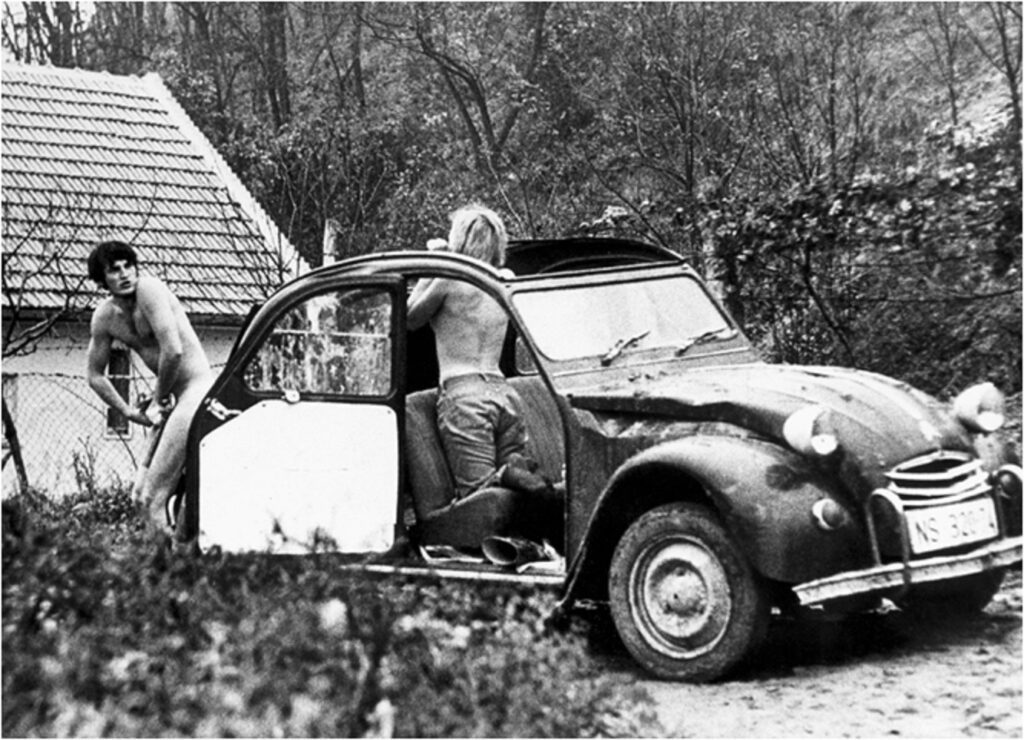
Želimir Žilnik was born in 1944 in a Nazi concentration camp near Niš, now Serbia. He lost his parents, both devoted communists, during the war. Raised by his grandparents, Žilnik grew up in Tito’s socialist Yugoslavia.

And so, from the very beginning, ideology was inescapable for Želimir Žilnik; a fact that is reflected throughout his later body of work. The grandmaster of Serbian avant-garde cinema consistently centers the perspectives of people on the margins of society.

Žilnik’s debut film Early Works (1969), shot in the aftermath of the 1968 student protests, is a satire about the gap between idealism and communism. The film was soon banned in Yugoslavia, but went on to win the Golden Bear at the Berlin Film Festival. It was also the catalyst for the coining of the term Yugoslav Black Wave Cinema. Though originally intended as a negative label by socialist film critics, Black Wave Cinema grew into an influential film movement throughout the 1960s and 70s. Inspired by Italian Neorealism and the French New Wave, Black Wave Cinema is characterized by its depiction of explicit violence, low-budget production and open criticism of the socialist system.

This critical stance made it impossible for Žilnik to continue working in Yugoslavia, so he temporarily moved to Germany. There, he portrayed the lives of people on the margins of German society, such as newly arrived migrant workers in Inventur – Metzstrasse 11. Žilnik’s return to Yugoslavia in the late 70’s marked a highly productive period, during which he created numerous television films.

Some directors utilize the camera as a paintbrush, to decorate; Žilnik uses the camera as a scalpel, to peel back the layers of society in an attempt to analyze what lies beneath

Cineaste

In 1994, Marble Ass was released – a film about the life of Merlinka, a trans sex worker in Belgrade. It is considered to be the first queer film in Yugoslav cinema and was awarded the Teddy Award in Berlin. At its premiere in Belgrade, the film received both loud applause and a barrage of apples and eggs.

Its exemplary of the subversiveness of Žilnik’s work, in which he always chooses to side with the underdog. Not stylised but consciously anti-esthetical, gritty and with the focus on common life. Žilnik’s films are characterized by the blending of fiction and documentary, often with non-professional actors in the lead. 

Želimir Žilnik has made over fifty films and remains active to this day. His latest film, Eighty Plus, a playful and poignant portrait of the process of restitution in post-socialist Serbia, will have its Dutch premiere at De Balie.

By
Devi Smits
za 28 jun / 13:00
Idee & Verbeelding

Želimir Žilnik: Cinema of the Marginalized

The films of Serbian director Želimir Žilnik are both subversive and deeply humanist. Želimir Žilnik on how cinema can be a form of resistance.

Meer Info Tickets
zo 29 jun
Cinema

Eighty Plus, including talk with Želimir Žilnik and Geert Mak

After more than ten years, Želimir Žilnik returns to narrative filmmaking with Eighty Plus. Following the screening, Geert Mak will engage in conversation with Žilnik.

Meer Info Tickets
zo 29 jun
Cinema

Želimir Žilnik: Early Works

Early Works, Želimir Žilnik’s first feature film, recounts an allegorical story of young people who took part in the 1968 student demonstrations in Belgrade.

Meer Info Tickets

Andrey Kurkov: chroniqueur of a country under attack

Forum on European Culture 2025

Andrey Kurkov was in the middle of writing a new novel – a detective story set during the Russian Revolution – when, on February 24, 2022, Russia launched its full-scale invasion of Ukraine. Kurkov was warned that he was on a Russian list of prominent Ukrainians to be arrested. He fled his home in Kyiv for western Ukraine, to Lviv. The manuscript was left untouched for a long time. War was no time for something as frivolous as fiction.

Yet Kurkov kept writing: essays, opinion pieces, speeches. Tirelessly, the author continues to act as an ambassador for a free and independent Ukraine, impressing upon his Western audiences that Ukraine and Russia are two completely different countries – historically, culturally, and, not least, mentally. And of course, there is his diary, in which Kurkov chronicles daily life in a country under attack, published as Diary of an Invasion. A year later, a sequel appeared: Our Daily War, in which Kurkov delicately captures the absurdity of war.

Recently my old friend and neighbour, the musician Liosha Aleksandrov, was walking along Yaroslaviva Val, one of Kyiv’s loveliest streets, when the air raid siren sounded, yet again. Before his eyes, people hurried out of the cafés and the doors were locked. Only the local beauty salon continued to work and, through the window, Liosha watched the lone salon employee continuing to give her client a manicure. One would like to think that beauty is more important than life!

Our Daily War

Andrey Kurkov is one of the most prominent contemporary Ukrainian writers. He self-published his debut novel just two weeks before the fall of the Soviet Union. As the economy collapsed, Kurkov sold his book on the streets. His first international success came with Death and the Penguin (1996), a satirical novel about a post-Soviet society in which an obituary writer takes care of a penguin after the local zoo goes bankrupt. Since the full-scale invasion of Ukraine, Kurkov’s darkly comic novels have found a large new readership. His work has now been translated into 41 languages.

That success carries a certain bitterness, Kurkov has said in interviews. Europeans should first learn more about Ukraine, he believes – because empathy without knowledge is shallow empathy that will not endure. Yet Kurkov did finish the novel he had started. Is there a future for fiction again?

By
Devi Smits
zo 29 jun / 17:30

Our Daily War: the World of Andrey Kurkov

Andrey Kurkov is considered to be one of the greatest contemporary Ukrainian writers. His work, including novels like Death and the Penguin and Grey Bees, is dark, humorous and satirical. As a keen observer of post-Soviet society, Kurkov proved to have prophetic qualities. What role does literature have in times of war?

Meer Info Tickets
vr 27 jun / 12:00
Politiek & Democratie

Anne Applebaum x Volodymyr Yermolenko

On Ukraine’s past, present and future

Pulitzer prize winning author Anne Applebaum and Ukrainian philosopher Volodymyr Yermolenko engage in conversation about Ukraine’s past, present and future. 

Meer Info Tickets

Forum on European Culture: Art Against the Tyrants

Five days, 30+ programs, 40+ international artists, writers & thinkers, art installations, film screenings, talks and more

Who’s afraid of art? Now that tyrants are on the roll and more and more people in the West seem to be falling for the autocratic alternative, De Balie brings together over 40 international artists, writers, and thinkers. During Forum on European Culture, we celebrate the subversive power of art and literature.  It is no

Meer Info

‘Contemporary art has, in many ways, built echo chambers. We speak in silos‘

Azu Nwagbogu hosts the first edition of ‘In Our Time’

During Forum on European Culture, the first edition of In Our Time will take place – a new series of conversations about contemporary art, in collaboration with internationally acclaimed curator Azu Nwagbogu. We spoke with Nwagbogu about the subversive potential of art.

The theme of Forum is Art Against the Tyrants. How can art challenge power?
‘The powerful thing about art is that it relentlessly seeks the truth, poses questions, and sparks imagination. These three vital aspects of art are anathema and antithetical to tyranny and tyrants. Tyrants demand unquestioning loyalty to propaganda, lies, deceit, and malevolence – the truth is always excluded. Their ideology is absolute, and everything must conform to it. Over the years, the art world has, in a sense, played a detrimental role by abstracting the truth into a commodity consumed by the wealthy and by institutions seeking relevance rather than virtue. The art world has become too closely tied to the art market, and this is a problem.’

⁠Is contemporary art equipped to stand up to (emerging) autocracies? Do you see reason for optimism or concern?
‘The first act of despots and tyrants, upon seizing power, is to silence free speech, to stifle artists and intellectuals. This is telling. When contemporary art remains unrestrained by the establishment – unfettered by museums, PR machinery, and the machinery of hype – it is at its most vital and challenging. Such art stirs something within us, awakening truths we sense but have yet to name. It offers us, as humans, a rare space to breathe together. Yet, there is a sadness: contemporary art has, in many ways, built echo chambers. We speak in silos, our voices failing to reach beyond familiar walls, unable to touch a wider audience. This is why the series of talks, In Our Time, conceived by De Balie and me, feels so urgent and necessary. I hope we can widen our circle, reaching those who see contemporary art as elitist or obscure, and invite them into the conversation.’

⁠⁠In the first edition of In Our Time, that will take place during Forum, you will be speaking with artist Tino Sehgal, known for live artworks, that leave no trace and are never repeated. Can you elaborate a bit on what makes Sehgal’s work subversive?
‘I appreciate the idea of ‘leave no trace and never repeated.’ I would go further to suggest that Sehgal’s work establishes continuity through audience participation and relational aesthetics, inviting what he calls his ‘interpreters’ into a state of ‘presentism.’ I am particularly pleased to launch this series with Sehgal, as he is an artist who does not make objects per se. As I mentioned earlier, I believe the art world would benefit from a clearer disambiguation between itself and the art market to regain its avant-garde influence.’

You are also one of the moderators of the Interview Marathon. What is your key question for the artists joining the conversation?
‘I confess, I do not yet have all my questions neatly arranged. Still, I am compelled to ask my interlocutors: How do we endure in these times – times marked by global conflict and the raw wound of ongoing genocide? What does solidarity look like at times like these? What are the new forms of alliances that we need to be thinking of since the old forms have failed us? I am also drawn to inquire: What do you believe is the role of art in our fractured society? And, perhaps most urgently – can there be redemption in art?’

zo 29 jun / 15:00
Idee & Verbeelding

In our Time: Azu Nwagbogu x Tino Sehgal

The Art and Politics of Presence

What is the political potential of live, embodied interactions? Celebrated artist Tino Sehgal believes they matter deeply. In our highly polarized, mediatized, and capitalized society, Sehgal has the courage to create artworks that are immaterial, leave no trace, and are not meant to be repeated.

Meer Info Tickets
za 28 jun / 16:30
Politiek & Democratie

Art Against the Tyrants: Interview Marathon

With Nino Haratischwili, Beatrix Ruf, Ece Temelkuran, Volodymyr Yermolenko, Želimir Žilnik, Gosia Wdowik and more

During our Interview Marathon, the Forum on European Culture invites writers, artists and thinkers to reflect on the role of art in the fight against tyranny.

Meer Info Tickets

Forum on European Culture: Art Against the Tyrants

Five days, 30+ programs, 40+ international artists, writers & thinkers, art installations, film screenings, talks and more

Who’s afraid of art? Now that tyrants are on the roll and more and more people in the West seem to be falling for the autocratic alternative, De Balie brings together over 40 international artists, writers, and thinkers. During Forum on European Culture, we celebrate the subversive power of art and literature.  It is no

Meer Info

‘Peope rarely drink in Georgia without toasts’

Nino Haratischwili invites you to her supra

Acclaimed writer Nino Haratischwili, known for her bestseller The Eighth Life (for Brilka), will kick off Forum on European Culture with a supra, a Georgian feast. Expect music, food and plenty of Georgian wine. We spoke with Nino Haratischwili about how she reinterprets this festive tradition.

What exactly is a supra?
A supra is a traditional Georgian table where many people often come together and eat, and drink and sing. There can be various occasions: celebrations, weddings, birthdays. There are long tables with many different dishes on them. Traditionally, there is always a kind of leader, called a Tamada, who is always a man. He holds toasts and sets the agenda, so to speak, which everyone then gets talking about. Sometimes it can be very tiring because the toasts are often predetermined, but if it’s a good Tamada – then it can be a very stimulating evening full of anecdotes and laughter. Actually, the idea is that when so many people come together, some of whom don’t know each other, they are all brought together by one person.’

What meaning does this ritual hold in Georgia?
‘It is a very old and very popular tradition. Peope rarely drink in Georgia without toasts. Simply raising a wine glass and drinking is not common, not even among the less traditionally minded. However, this does not mean that a tamada is always present at every celebration and that this ritual is always observed. Of course, you can also celebrate a little more casually.’ 

How do you reinterpret the traditions of the supra during the event at De Balie?
‘My intention with our project was to question this tradition from a female perspective, because women are often the subject of the toasts – their beauty and their dignity – but in reality they are often the ones who set the table and cook and serve. Moreover, Georgian women are often the ones who keep families together. Work, taking care of children and elder ones and even earning money. Especially in the last 34 years since the independence and the challenges that have followed. In addition, the toasts usually emphasize the beautiful and good sides of life and the sayings end up in templates. I wanted to tell the real stories behind themes like homeland and love from the women’s point of view.’

What kind of performances can people expect?
‘The special thing about our performance is that there is no separation between the audience and the performers. Everyone sits at the table, as is the case with the classic supra. It is modeled exactly on the real format: with food, drink, singing. Except that we tell completely different stories and it’s all women: the singers and the players. They are all tamadas, if you like. And the texts are a kind of collage of my novels and plays. The songs consist of popular chansons that are sung at the supras.’

wo 25 jun / 19:30
Idee & Verbeelding

Supra, a feast with Nino Haratischwili

Nino Haratischwili, renowned author of The Eighth Life (for Brilka) and director, invites you to take a seat at her supra at Forum on European Culture.

Meer Info Tickets
za 28 jun / 16:30
Politiek & Democratie

Art Against the Tyrants: Interview Marathon

With Nino Haratischwili, Beatrix Ruf, Ece Temelkuran, Volodymyr Yermolenko, Želimir Žilnik, Gosia Wdowik and more

During our Interview Marathon, the Forum on European Culture invites writers, artists and thinkers to reflect on the role of art in the fight against tyranny.

Meer Info Tickets

Forum on European Culture: Art Against the Tyrants

Five days, 30+ programs, 40+ international artists, writers & thinkers, art installations, film screenings, talks and more

Who’s afraid of art? Now that tyrants are on the roll and more and more people in the West seem to be falling for the autocratic alternative, De Balie brings together over 40 international artists, writers, and thinkers. During Forum on European Culture, we celebrate the subversive power of art and literature.  It is no

Meer Info

DUX Executive Search zoekt voor De Balie een Manager Development (Amsterdam/40 uur per week)

solliciteer t/m 24 september

Organisatie
De Balie is een centrum voor kunst en cultuur en gelooft dat een open, pluriforme, democratische en rechtsstatelijke samenleving de beste samenleving is. Deze gedachte is leidend voor wat zij maken, doen en laten. Hun programma’s brengen mensen bijeen en om gesprekken te voeren, ook als dat soms moeilijk is. In de journalistieke en kunstzinnige producties staat de ontmoeting en de vrije gedachtewisseling centraal. De Balie organiseert elke dag programma’s voor publiek, over de actualiteit in artistieke vorm, die ook te volgen zijn via de livestream. Zij programmeren in Amsterdam, Nederland en internationaal.

De Balie werkt vanuit het idee dat (podium)kunst een uitgelezen manier is om het publiek tot introspectie, empathie, overpeinzingen en nieuwe inzichten te brengen. Een diverse redactie van vijftien programmamakers maakt programma’s die ruim baan geven aan nieuwe ideeën en initiatieven. Hierbij wordt samengewerkt met sprekers en organisaties uit alle geledingen en windstreken. Als incubator en emancipator is De Balie dé plek waar kunstenaars, aanstormende talenten, denkers, wetenschappers, activisten, politici en publiek elkaar ontmoeten en raken.

Het team

De Balie bestaat uit een bevlogen team van circa 90 collega’s. De afdeling Development is verantwoordelijk voor het realiseren van een gezonde financieringsmix die nodig is om de ambities van De Balie te kunnen behalen. De Balie heeft een aantal grote bedrijfspartnerships aan zich weten te binden en een actieve kring van vrienden die De Balie financieel ondersteunen. Het Development team is verantwoordelijk voor o.a. subsidies, fondsen, donateurs en zakelijke partnerships. Het huidige team werkt nauw samen en bestaat in totaal uit vier collega’s. In verband met het vertrek van de huidige leidinggevende zijn we op zoek naar een Hoofd Development.

Diversiteit en inclusie zijn basisprincipes binnen onze organisatie. Dit is verankerd in ons aannamebeleid. We verwachten van kandidaten dat ze bijdragen aan een meer inclusieve leer- en werkomgeving.

Wat ga je doen?

  • Je geeft leiding aan het team Development bestaande uit drie collega’s;
  • Je bent onderdeel van het managementteam;
  • Je bent verantwoordelijk voor de ontwikkeling en uitvoering van het sponsor- en wervingsbeleid;
  • Je draagt bij aan het werven en behouden van private en publieke partners;
  • Je vindt, en bent nauw betrokken bij het werven van, nieuwe partnerships en het leggen van contacten.
  • Je gaat in overleg met de redactie op zoek naar algemene en programmagerichte sponsoring.
  • Je adviseert de directie over de strategie en prioriteiten op het gebied van partnerships, fondsenwerving en donateurs.
  • Je bent verantwoordelijk voor het prestatieoverzicht en de uitvoering daarvan.
  • Je schrijft mee aan grote aanvragen en draagt verantwoordelijkheid voor de
    structurele (overheids) subsidieaanvragen;
  • Je rapporteert direct aan de zakelijk directeur en werkt nauw samen met de
    inhoudelijke directeur.

Wie zoeken we? Iemand met..

  • minimaal 5+ leidinggevende jaren- en aantoonbare ervaring op het gebied van
    development;
  • een participatieve leidinggevende stijl;
  • een bestaand netwerk zowel bij bedrijven, als fondsen en particulieren;
  • een goed zakelijk inzicht en een initiatiefrijke persoonlijkheid;
  • lef, met een proactieve houding en communicatief heel vaardig;
  • bereidheid in de avond en in het weekend te werken;
  • uitstekende mondelinge en schriftelijke vaardigheden in het Nederlands en Engels

Wat bieden wij?

  • Een dienstverband van 40 uur per week met een marktconform salaris passend bij de functie en branche, hoogte wordt mede bepaald door ervaring;
  • De mogelijkheid om naar hartenlust onze programma’s en films te bezoeken;
  • De kans om je te ontwikkelen op een prominente plek waar altijd wat gebeurt;
  • Een inspirerende, dynamische en internationale werkplek in het hart van Amsterdam;
  • Een team van toegewijde, professionele en bevlogen collega’s.

Interesse?
De Balie wordt bij deze wervingsprocedure bijgestaan door DUX Executive Search.
Voor meer informatie over de functie kun je contact opnemen met Esther Driessen via esther.driessen@dux.nl.

Solliciteren kan tot en met 24 september door een CV en beknopte motivatiebrief te sturen naar info@dux.nl onder vermelding van ‘Manager Development De Balie’.

Referentieonderzoek kan onderdeel vormen van deze sollicitatieprocedure.

Solliciteer

De Balie wordt bij deze wervingsprocedure bijgestaan door DUX Executive Search.
Voor meer informatie over de functie kun je contact opnemen met Esther Driessen via
esther.driessen@dux.nl.

Solliciteren kan tot en met 24 september door een CV en beknopte motivatiebrief te sturen naar info@dux.nl onder
vermelding van ‘Manager Development De Balie’.


De Balie verwelkomt nieuwe leden in de Raad van Toezicht

Khadija Arib en Monique Koemans zijn benoemd tot algemeen lid

Met dank en waardering nemen wij afscheid van Peter Mensing, die De Balie acht jaar lang met raad en daad heeft bijgestaan als lid van onze RvT. Tegelijkertijd heten wij twee nieuwe leden, Khadija Arib en Monique Koemans, van harte welkom in onze Raad van Toezicht. Daarnaast is Prof. Dr. Mirjam van Praag aangesteld voor een tweede termijn als voorzitter van de Raad van Toezicht. Met de nieuwe leden aan boord, en met Mirjam van Praag opnieuw aan het roer, blijven wij ons inzetten om De Balie in deze uitdagende tijd zelfredzaam en onafhankelijk te houden.

Als lid van de Raad van Toezicht draag ik graag bij aan de missie van De Balie. De democratische en rechtstatelijke samenleving staat op veel plaatsen onder druk en het is dus belangrijker dan ooit om ruimte te bieden aan mensen uit alle delen van de samenleving om met elkaar diepgaand in gesprek te kunnen gaan.

Khadija Arib

Juist in deze tijd is naar elkaar blijven luisteren zo belangrijk. Bij De Balie is alle ruimte voor verschillende geluiden. Als lid van de Raad van Toezicht lever ik daar heel graag een bijdrage aan.

Monique Koemans

Khadija en Monique zijn twee indrukwekkende en prettige nieuwe collega’s in de Raad. We verheugen ons op een inspirerende samenwerking. Onze raad is weer compleet, met voldoende en diverse competenties en perspectieven.

Prof. Dr. Mirjam van Praag

Bron foto Khadjia Arib – ANP