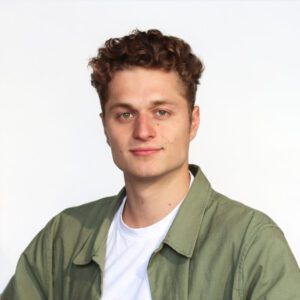
Glass of Friendship (Le verre de l’amitie) tells the story of a group of friends who meet again after twenty years. Ahmed, his wife Souad and their friend Rachid were supposed to spend a few quiet days by the sea, under the sun. However, this reunion unfolds differently and reveals various secrets from the past.
The Maghreb Film Festival
The Maghreb Film Festival was started in Haarlem by Brothers Hakim and Karim Traïdia to showcase films by independent North African makers. In its four previous editions the festival introduced a young but lively film tradition to Dutch audiences. In 2024, De Balie collaborates for the second time with MFF, with a curated selection of their 2024 program. We offer a window to current cinema from Morocco, Tunisia and Algeria, by presenting one film from each of these countries, followed by conversations with the filmmakers.
Pirate Aroudj Barbarossa liberates Algiers from Spanish control. Queen Zaphira challenges him despite their alliance, her story blending history and legend as she fights for the people
To find shelter in Paris, the young painter Yasmine must change her identity which brings her back to her former life in Algeria. After the movie we talk to director Nora Hamdi
A multimedia performance combining cinema, music, and spoken word to explore the world of Sergei Parajanov, shedding light on his struggles with the Soviet regime. Part of Kyiv Critics’ Week x De Balie
Featuring images of
Sergei Parajanov
Program maker
Stefan Malešević
In collaboration with
Kyiv Critics’ Week
In this unique hybrid event a trio of musicians perform alongside the moving images of ‘Shadows of Forgotten Ancestors,’ the cinematic masterpiece by Sergei Parajanov, widely recognized as one of the greatest filmmakers in cinema history.
This event is presented as part of the KCW x De Balie collaboration, taking place from May 17th to May 21th. Under the banner of “Double Exposure: Ukrainein the 90s“, we will showcase films that were either shot in 90s Ukraine or depict this period of national awakening. Each screening will be followed by a conversation between one of the KCW curators and a Dutch film critic. See the full program and get your tickets for other events here.
Sergei Parajanov was born as Sarkis Hovsepi Parajaniants in Tbilisi to Armenian parentsm but later moved to Kyiv, where he created some of his best works and met the mother of his only child. He stated: “Everyone knows that I have three Motherlands. I was born in Georgia, worked in Ukraine and I’m going to die in Armenia.“
Parajanov died at the onset of the 90s, so he didn’t live to see Ukraine independent, but left an indelible mark on its history and culture, both by shedding light on some of the most interesting elements of its folk culture and by defying the Soviet authorities who accused him of spreading Ukrainian nationalism to undermine the USSR. He was heavily persecuted and spent years in prison, which abruptly stopped his career and ruined the latter part of his life.
Concert: Shadows of Forgotten Ancestors This performance, marking the 100th anniversary of Parajanov’s birth, alternates music and texts that expand the view of his masterpiece Shadows of Forgotten Ancestors and the unique circumstances under which the film was shot, the eccentric director Sergii Parajanov and the Ukrainian village Kryvorivnya with its peculiar customs, dialect, and music.
Music performers Besides Maryana Golovchenko, Anna Antipova and Katherine Ziabliuk who perform live on stage, this performance features work of Olha Chernii, who edited the video footage and George Dumitriu, who was responsible for sound design.
The project was already presented at Berlin Jazz Fest and Delft Chamber Music Festival, where it was met with great enthousiasm. Reviews of previous renditions of this concert. Henning Bolte (independent journalist, reviewer): “It revealed as a kind of deep ambient imbued by a touching fervor for the very cultural richness and identity – a kind of out-of-time vibration and flow…”
Rolf Thomas from Jazzthetik wrote: “..It was intimate and calm, but often also shrill and archaic music, which, together with the excerpts from the film of the same name by director Sergii Parajanov, created a peculiar pulling undertow.”
After the event our visitors will be served a complimentary selection of traditional Ukrainian snacks, hand-made, prepared and served by Uliana Bun and her husband. Uliana Bun is a professional chef specializing in modern Ukrainian cuisine, who strives to bring a fresh perspective to traditional dishes. She was born and raised in the Carpathian Mountains, where the Shadows of Forgotten Ancestors where shot and take place.
Photographs by: Melle Meivogel
KCW x De Balie collaboration was made possible with the financial contributions of Steunfonds Oekraïense makers – Dutch Foundation for Literature and Embassy of Ukraine in the Kingdom of The Netherlands.
Between May 17th and 21st De Balie will showcase the Kyiv Critics’ Week, where the best new films selected by professional Ukrainian film critics are introduced to the public in Amsterdam. The programme features specials centered around the theme of “Double Exposure: Ukraine in the 90s”, moving beyond the omnipresent war reports and Soviet-era prejudices.
Richly ornamented story of the rise and fall of a petty gangster told in an unsentimental manner became the first Ukrainian film that tackles the anarchy and unlawfulness of the 90’s.
Een leugentje om bestwil kan geen kwaad, maar bij regisseur Asmae El Moudir thuis werden meer leugens dan waarheden verteld. In de levendige wijk in Casablanca waar ze opgroeide, bepaalde haar overheersende grootmoeder alles in huis: het verleden werd verzwegen en foto’s hingen er niet. In een poging om deze onbesproken historie te ontrafelen bouwt ze haar buurt na als maquette. Samen met familie en buren reconstrueert ze op onorthodoxe wijze haar pijnlijke persoonlijke, maar ook de gedeelde geschiedenis van Casablanca die lang verborgen bleef.
Het gedurfde en creatieve The Mother of All Lies won twee prijzen op het filmfestival van Cannes en was de Marokkaanse Oscarinzending.
part of the Kyiv Critics` Week & De Balie programme
director
Philip Sotnychenko
running time
100′
country
Ukraine
language
Ukrainian, Russian
subtitles
English
Year of production
2023
Program maker
Stefan Malešević
In collaboration with
Kyiv Critics’ Week
In Ukraine, 1996, just 5 months before the moratorium on the death penalty, two old friends—a police detective and a forensic psychiatrist—investigate the murder of their colleague. La Palisiada was nominated for the European Discovery Prize by the European Film Academy.
This screening is presented as part of the KCW x De Balie collaboration, taking place from May 17th to May 21st. Under the banner of “Double Exposure: Ukrainein the 90s“, we will showcase films that were either shot in 90s Ukraine or depict this period of national awakening. Each screening will be followed by a conversation between one of the KCW curators and a Dutch film critic, while the closing event features a live music performance. See the full program and get your tickets for other events here.
Info about speakers
Daria Badior is a Ukrainian film critic, editor, and co-curator of Kyiv Critics’ Week. Her work was published by Ukrainian and international publishers: The Independent, Der Tagesspiegel, Suspilne Kultura, Dwutygodnyk, Osteuropa, Kino Raksti, and others. She is a co-founder of the Union of Ukrainian Film Critics.
Alexander Zwart is a Dutch film programmer and film journalist. Born and raised in The Netherlands to a Dutch father and a Greek mother he has always been intrigued by multicultural angles and diversity in cinema as well as in life. He is a member of Fipresci, writes for Filmkrant and is one of the five members of the Selection Committee of NFF (Dutch Film Festival).
Daria Badior’s introduction of the film
“This turned-inside-out cop thriller centres on the murder investigation of a high-ranking police officer in mid-90s Ukraine. Through a nonlinear plot and constant repetitions, Sotnichenko explores the deceitful nature of footage, cameras, and, more importantly, the people behind and in front of those cameras. It is one of several films reflecting on the “wild 1990s” released in recent years in Ukraine, and provides a daring experiment with the medium of film. In my opinion, this is one of the most boldly and beautifully written, directed, acted, and crafted, Ukrainian films for the last ten years. On one hand, “La Palisiada” tells a universal story within the meticulously recreated environment of Ukraine in the 90s. On the other hand, it illustrates the cyclicity of injustices that exist in societies all over the world, exploring the question of what is fake and what is “real.” Today, when it appears that the line separating them has never been finer, films like this are crucial.“
KCW x De Balie collaboration was made possible with the financial contributions of Steunfonds Oekraïense makers – Dutch Foundation for Literature and Embassy of Ukraine in the Kingdom of The Netherlands.
Speakers
Daria BadiorUkrainian film critic
Alexander ZwartDutch film critic
Also part of Kyiv Critics’ Week
Kyiv Critics` Week X De Balie
Between May 17th and 21st De Balie will showcase the Kyiv Critics’ Week, where the best new films selected by professional Ukrainian film critics are introduced to the public in Amsterdam. The programme features specials centered around the theme of “Double Exposure: Ukraine in the 90s”, moving beyond the omnipresent war reports and Soviet-era prejudices.
Part of Kyiv Critics’ Week x De Balie. After the film viewing we talk with Ukrainian film critic Serhii Ksaverov and Dutch film critic Laura van Zuylen.
Multimedia performance combining cinema, music and spoken word to explore the world of Sergei Parajanov, shedding light on his struggles with the Soviet regime.
A vivid adaptation of Andrei Kurkov’s book portrays a man who hires a contract killer to kill himself. Part of Kyiv Critics’ Week x De Balie
director
Viacheslav Kryshtofovych
running time
101′
country
Ukraine, France
language
Ukrainian, Russian, English
year of Production
1997
subtitles
English
Program maker
Stefan Malešević
In collaboration with
Kyiv Critics’ Week
An intellectual rendered superfluous in the new capitalist landscape is compelled to take on a series of mundane odd jobs merely to survive. Consequently, it’s hardly a shock when his unfaithful wife eventually leaves him for another man. Disheartened by these events, our protagonist Anatoli decides to commit suicide by hiring someone else to organize it — after all there is no shortage of contract killers in 90s Kiev. Yet, even this proves complicated for Anatoli.A famous Ukrainian writer, Andriy Kurkov, wrote the script based on his own book.
This screening is presented as part of the KCW x De Balie collaboration, taking place from May 17th to May 21st. Under the banner of “Double Exposure: Ukraine in the 90s“, we will showcase films that were either shot in 90s Ukraine or depict this period of national awakening. Each screening will be followed by a conversation between one of the KCW curators and a Dutch film critic, while the closing event features a live music performance. See the full program and get your tickets for other events here.
Info about speakers
Hanna Datsiuk is a Ukrainian film critic, co-curator of Kyiv Critics’ Week, lecturer of the course on cinema at the Cultural Project, and curator of the cinema hall at the SWEET.TV online platform.
Sjoerd van Wijk is an independent Dutch film critic who focuses equally on the technical issues of filmmaking and the social context of the films he reviews. He also writes about music for Gonzo Circus magazine and makes his own films.
Hanna Datsiuk’s introduction of the film
“This adaptation of a book by Andriy Kurkov’s, a well-known Ukrainian writer, turned out to be one of the most sophisticated portrayals of the 90’s Kyiv routine, vividly decorated with elements of detective stories, melodrama, and absurdism. Its lead character is a man in despair who loses the meaning of life but finds it again through a series of semi-criminal, gloomy yet life-affirming sketches in the background of the Ukrainian capital. Kyiv here appears to be flourishing and recovering after the collapse of the Soviet Union, but simultaneously bears the weight of a complex past that seems to make each of its citizens a bit of a criminal. I’m still trying to find common ground with ‘Friend of the Deceased’ as it carries many stylistic marks of 90s cinema, ones that have not aged gracefully. However, what I find fascinating is how this movie has become an urbanistic museum piece about my hometown. Kyiv seems to be a fully-fledged hero of this film, and I’m eagerly awaiting the next movie that will depict the ups and downs of this city—its fascinating antiquity, flashy consumerism, and, as I’m certain, post-war euphoria.”
KCW x De Balie collaboration was made possible with the financial contributions of Steunfonds Oekraïense makers – Dutch Foundation for Literature and Embassy of Ukraine in the Kingdom of The Netherlands.
Speakers
Hanna DatsiukUkrainian film critic
Sjoerd van WijkDutch film critic
Also part of Kyiv Critics’ Week
Kyiv Critics` Week X De Balie
Between May 17th and 21st De Balie will showcase the Kyiv Critics’ Week, where the best new films selected by professional Ukrainian film critics are introduced to the public in Amsterdam. The programme features specials centered around the theme of “Double Exposure: Ukraine in the 90s”, moving beyond the omnipresent war reports and Soviet-era prejudices.
A turned inside-out cop thriller centering on the murder investigation of a high-ranking police officer in mid-90s Ukraine which led to the last death penalty executed in Ukraine.
Multimedia performance combining cinema, music and spoken word to explore the world of Sergei Parajanov, shedding light on his struggles with the Soviet regime.
A young man nicknamed ‘Rhino’ quickly works his way up the criminal hierarchy in 90s Ukraine. Part of Kyiv Critics’ Week x De Balie
director
Oleh Sentsov
running time
101′
country
Ukraine, Poland, Germany
language
Ukrainian, Russian, German
subtitles
English
year of production
2021
Program maker
Stefan Malešević
In collaboration with
Kyiv Critics’ Week
This richly ornamented story of the rise and fall of a petty gangster, told in an unsentimental manner, premiered at the Venice Film Festival in 2021. It became the first Ukrainian film to tackle the anarchy and unlawfulness of the 90s, presenting itself as a story of a lost generation.
This screening is presented as part of the KCW x De Balie collaboration, taking place from May 17th to May 21st. Under the banner of “Double Exposure: Ukrainein the 90s“, we will showcase films that were either shot in 90s Ukraine or depict this period of national awakening. Each screening will be followed by a conversation between one of the KCW curators and a Dutch film critic, while the closing event features a live music performance. See the full program and get your tickets for other events here.
Info about speakers
Serhii Ksaverov is a Ukrainian film critic and co-curator of Kyiv Critics’ Week. He is a member of the International Film Press Association (FIPRESCI) and the Union of Ukrainian Film Critics. A regular contributor to LB.UA and DTF MAGAZINE.
Ruud Vos is a film journalist and film programmer at Arthouse LUX, Nijmegen. He writes reviews and does video interviews for FilmTotaal and occasionally reviews genre movies for the Schokkend Nieuws website. He also runs his own movie podcast since 2019, called Thumb Wrestling (or: Duimpjeworstelen), in which he disagrees about a different film with a new guest every two weeks. From 2023 he presides over the Dutch Critics’ Circle (KNF).
Serhii Ksaverov’s introduction of the film
“In 2014, during preparations for this film, Oleh Sentsov was abducted from his home in Crimea and unlawfully incarcerated in Russia on fabricated charges. ‘Rhino’ was completed only after his release in 2019 and premiered at the Venice Film Festival in 2021. This robust film takes an unsentimental look at the rise and fall of a petty gangster in 1990s Ukraine. While it could easily fit within the criminal saga genre of any other country, in Ukraine, it was not seen merely as the life story of a small-time “Scarface”. ‘Rhino’ was the first Ukrainian film to confront the most traumatic decade in the country’s history prior to the Russian invasion—the ‘wild 90s’—choosing to navigate this period alongside one of its anti-heroes. My personal experience growing up in the 1990s was nothing like what was depicted in ‘Rhino.’ However, the violence-dominated chaos and social confusion portrayed in this well-crafted film felt authentic, even if dramatized. Seeing is believing. ‘Rhino’ may not be among the best films of the Ukrainian 90s for me as a piece of cinema that seeks to understand its time, but it stands out as a powerful tour-de-force that confronts and doesn’t shy away from what then felt like an essential part of life.”
KCW x De Balie collaboration was made possible with the financial contributions of Steunfonds Oekraïense makers – Dutch Foundation for Literature and Embassy of Ukraine in the Kingdom of The Netherlands.
Speakers
Serhii KsaverovUkrainian film critic
Ruud VosDutch Film Critic
Also part of Kyiv Critics’ Week
Kyiv Critics` Week X De Balie
Between May 17th and 21st De Balie will showcase the Kyiv Critics’ Week, where the best new films selected by professional Ukrainian film critics are introduced to the public in Amsterdam. The programme features specials centered around the theme of “Double Exposure: Ukraine in the 90s”, moving beyond the omnipresent war reports and Soviet-era prejudices.
Multimedia performance combining cinema, music and spoken word to explore the world of Sergei Parajanov, shedding light on his struggles with the Soviet regime.
A tale of betrayal of national identity, told through a horror lens. Part of Kyiv Critics’ Week x De Balie
director
Mykola Rasheyev
running time
83′
Land
Ukraine
language
Ukrainian, Russian
subtitles
English
Year of production
1991
Program maker
Stefan Malešević
In collaboration with
Kyiv Critics’ Week
After the mysterious death of his brother, an ambitious man continues his case on the Chernobyl investigation, however, on his way to the top there is a hindrance – he starts to become a werewolf. Amulet blends elements of doppelganger and werewolf genres within a narrative set in Kyiv during the resurgence of national consciousness. Parts of the film were shot during the actual protests for Ukrainian independence during the collapse of the USSR.
This screening is presented as part of the KCW x De Balie collaboration, taking place from May 17th to May 21st. Under the banner of “Double Exposure: Ukrainein the 90s“, we will showcase films that were either shot in 90s Ukraine or depict this period of national awakening. Each screening will be followed by a conversation between one of the KCW curators and a Dutch film critic, while the closing event features a live music performance. See the full program and get your tickets for other events here.
Info about speakers
Serhii Ksaverov is a Ukrainian film critic and co-curator of Kyiv Critics’ Week. He is a member of the International Film Press Association (FIPRESCI) and the Union of Ukrainian Film Critics. A regular contributor to LB.UA and DTF MAGAZINE.
Laura van Zuylen writes a.o. for the Dutch magazine de Filmkrant and creates programs for the Dutch National Theatre in The Hague. She is specialised in Italian cinema, classical Hollywood and a fan of horror of all sorts.
Serhii Ksaverov’s introduction of the film
“The last film of renowned Ukrainian Soviet director Mykola Rasheev became one of the ‘lost’ films of the 1990s being almost completely forgotten for almost 20 years. It came out when the theatrical distribution system was already in smithereens and didn’t see the light of the day. Conceived and filmed during the last days of the USSR, Amulet is one of the first attempts to graft Western horror tropes into a local film culture. Like almost any other werewolf tale this gloomy, moody film is about identity or, rather, identities contesting for the same body. What sets it apart however is that the Amulet witnesses struggle not only between personal identities but political and national bodies as well. When I first saw this film about five years ago, I was struck by how different it was from what I perceived as a typical film of that period. It still embodies many sensibilities and stylistic choices typical of the time, yet it also felt unique. Unlike some other films, it didn’t try to avoid or merely hint at bilingualism in Ukraine at the time. It consciously used it to illustrate how nationality was connected to social benefits. The film didn’t surrender to fashionable Western tropes but neither was it a part of Soviet cinema anymore.”
KCW x De Balie collaboration was made possible with the financial contributions of Steunfonds Oekraïense makers – Dutch Foundation for Literature and Embassy of Ukraine in the Kingdom of The Netherlands.
Speakers
Serhii KsaverovUkrainian film critic
Laura van ZuylenDutch film critic
Also part of Kyiv Critics’ Week
Kyiv Critics` Week X De Balie
Between May 17th and 21st De Balie will showcase the Kyiv Critics’ Week, where the best new films selected by professional Ukrainian film critics are introduced to the public in Amsterdam. The programme features specials centered around the theme of “Double Exposure: Ukraine in the 90s”, moving beyond the omnipresent war reports and Soviet-era prejudices.
A turned inside-out cop thriller centering on the murder investigation of a high-ranking police officer in mid-90s Ukraine which led to the last death penalty executed in Ukraine.
Multimedia performance combining cinema, music and spoken word to explore the world of Sergei Parajanov, shedding light on his struggles with the Soviet regime.
The story of an escaped prisoner hiding in a dilapidated hammer-and-sickle monument delivers a profound allegory of the Soviet Union. Part of Kyiv Critics’ Week x De Balie
director
Yuriy Ilyenko
Script
Sergei Parajanov
running time
96′
COUNTRY
Soviet Ukraine, Sweden, Canada
language
Ukrainian
subtitLEs
English
Year of production
1990
Program maker
Stefan Malešević
In collaboration with
Kyiv Critics’ Week
An escaped prisoner seeks refuge inside a Soviet monument, where he gets visited by a woman who dreams of a new life. They fall in love, but chance intervenes when the monument needs to be repainted, forcing his return to prison. Upon a miraculous recovery from an almost lethal mistake, he faces the grim reality of his impending fate.
This screening is presented as part of the KCW x De Balie collaboration, taking place from May 17th to May 21st. Under the banner of “Double Exposure: Ukrainein the 90s“, we will showcase films that were either shot in 90s Ukraine or depict this period of national awakening. Each screening will be followed by a conversation between one of the KCW curators and a Dutch film critic, while the closing event features a live music performance. See the full program and get your tickets for other events here.
Info about speakers
Daria Badior is a Ukrainian film critic, editor, and co-curator of Kyiv Critics’ Week. Her work was published by Ukrainian and international publishers: The Independent, Der Tagesspiegel, Suspilne Kultura, Dwutygodnyk, Osteuropa, Kino Raksti, and others. She is a co-founder of the Union of Ukrainian Film Critics.
Ronald Glasbergen is a Rotterdam based publicist, art- and film curator and artist. His work and his studies in film sciences are driven by interest in and beyond the borders between truth and fabula in life and in documentary and creative narratives.
Daria Badior’s introduction of the film
“A powerful and stunningly shot allegorical fable depicting the pursuit of freedom that remains perpetually out of reach, ‘Swan Lake. The Zone.’ is based on stories written by Sergei Paradjanov while incarcerated in the very prison where the film was shot. It stands as one of the last examples of Ukrainian poetic cinema—a direction taken by Ukrainian-Soviet filmmakers in the 1960s, who favored symbolism over the realism imposed by ‘official’ Soviet art. The director, Yuriy Illenko, was one of the most important Ukrainian filmmakers and cinematographers (he was the DoP on “Shadows of Forgotten Ancestors”). In the opening scene, we see the main protagonist, a middle-aged man with no name, running from the prison across the fields, breathing heavily, finding refuge in a narrow tin monument of hammer-and-sickle. A symbol of the Soviet state already in the process of collapsing at the time when this film was in the making, performs as a metaphor for a suffocating space which the Soviet Union was for many people. With a highly unconventional narrative structure, the film evokes a visceral sense of the protagonist’s profound lack of freedom and the overwhelming prevalence of fate.“
KCW x De Balie collaboration was made possible with the financial contributions of Steunfonds Oekraïense makers – Dutch Foundation for Literature and Embassy of Ukraine in the Kingdom of The Netherlands.
Speakers
Daria BadiorUkrainian film critic
Ronald GlasbergenDutch film critic
Also part of Kyiv Critics’ Week
Kyiv Critics` Week X De Balie
Between May 17th and 21st De Balie will showcase the Kyiv Critics’ Week, where the best new films selected by professional Ukrainian film critics are introduced to the public in Amsterdam. The programme features specials centered around the theme of “Double Exposure: Ukraine in the 90s”, moving beyond the omnipresent war reports and Soviet-era prejudices.
Multimedia performance combining cinema, music and spoken word to explore the world of Sergei Parajanov, shedding light on his struggles with the Soviet regime.
A young girl steps out of adolescence as her motherland steps into independence. Part of Kyiv Critics’ Week x De Balie
director
Tonia Noyabrova
Running time
90′
country
Ukraine, Sweden
Language
Ukrainian, Russian
subtitlEs
English
Year of production
2023
Program maker
Stefan Malešević
In collaboration with
Kyiv Critics’ Week
What at first glance seems like another 90s coming-of-age story about a young woman facing her parents’ painful divorce, is placed against the authentic backdrop of the collapse of the Soviet Union, when Ukraine was going through the equally painful process of becoming an independent country. The film was screened at Berlinale 2023 in Panorama section.
This screening is presented as part of the KCW x De Balie collaboration, taking place from May 17th to May 21st. Under the banner of “Double Exposure: Ukrainein the 90s“, we will showcase films that were either shot in 90s Ukraine or depict this period of national awakening. Each screening will be followed by a conversation between one of the KCW curators and a Dutch film critic, while the closing event features a live music performance. See the full program and get your tickets for other events here.
Info about speakers
Hanna Datsiuk is a Ukrainian film critic, co-curator of Kyiv Critics’ Week, lecturer of the course on cinema at the Cultural Project, and curator of the cinema hall at the SWEET.TV online platform.
Fabian Melchers is a Dutch journalist who writes about movies and culture for media such as De Telegraaf and NU.nl.
Hanna Datsiuk’s introduction of the film
“Through this intimate story of a teenage girl named Kira, the collapse of the Soviet Union is depicted as a period of great opportunities and profound crisis. Her carefree youth abruptly ends amidst a family drama, serving as a metaphor for a country gaining independence through struggle and liberalization, yet with a sense of lost security. Young Kira, losing her safety net due to her parents’ divorce, embarks on the path of inevitable transition, grappling with the question: “Do you love me?”—or, in fact, “Does anyone love me?” Inspired heavily by director Tonya Noyabrova’s own childhood, “Do You Love Me?” is a tender coming-of-age story and a portrait of Ukraine’s first independent generation. “Do you Love Me?” appeared to be one of the most relatable reflections on teenage years in cinema for me, as I am myself a child of a 90s. With all the variety of coming of age stories, and with the best of examples, that truly blur the line between national identity or time frame, manifesting teenage experience as the one that can be universally resonated with, this film unexpectedly felt much needed by me. It marked a new inspiring chapter for young ukrainian cinema, adult enough to go back and reflect.”
KCW x De Balie collaboration was made possible with the financial contributions of Steunfonds Oekraïense makers – Dutch Foundation for Literature and Embassy of Ukraine in the Kingdom of The Netherlands.
Speakers
Hanna DatsiukUkrainian film critic
Fabian MelchersDutch film critic
Also part of the festival
Kyiv Critics` Week X De Balie
Between May 17th and 21st De Balie will showcase the Kyiv Critics’ Week, where the best new films selected by professional Ukrainian film critics are introduced to the public in Amsterdam. The programme features specials centered around the theme of “Double Exposure: Ukraine in the 90s”, moving beyond the omnipresent war reports and Soviet-era prejudices.
Part of Kyiv Critics’ Week x De Balie. After the film viewing we talk with Ukrainian film critic Serhii Ksaverov and Dutch film critic Laura van Zuylen.
Multimedia performance combining cinema, music and spoken word to explore the world of Sergei Parajanov, shedding light on his struggles with the Soviet regime.
The Dupes is de indrukwekkende film gebaseerd op de roman Mannen in de zon, de Palestijnse verzetsklassieker van Ghassan Kanafani.
In 1973 verfilmde de Egyptische regisseur Tewfik Saleh het verhaal van drie Palestijnse mannen, die na de Nakba een levensgevaarlijke tocht maken door de Iraakse woestijn, op zoek naar een beter bestaan in het welvarende Koeweit.
Deze maand vertoont De Balie The Dupes twee keer – op zondagmiddag 12 mei (tickets beschikbaar hier) en op dinsdagavond 14 mei (deze vertoning).
Op 12 mei vindt er na de vertoning een gesprek plaats over het meesterwerk van Kanafani, en over hoe wij dit boek moeten lezen – en de film moeten kijken – in deze tijd van oorlog in Gaza. Een link naar dat programma vindt u hier.
The Dupes werd in 2023 gerestaureerd door het World Cinema Project van The Film Foundation en Cineteca di Bologna in samenwerking met de National Film Organization en de familie van Tewfik Saleh. Speciale dank aan Mohamed Challouf en Nadi Nekol Nas. Financiering verstrekt door de Hobson/Lucas Family Foundation.