TV NL EN

How Europe Says sorry

Forum on European Culture

Programme Editor
Last December, Dutch prime-minister Mark Rutte formally apologized for the colonial past of The Netherlands, after years of grappling with the colonial legacy. He acknowledged the damage our state has done to enslaved people for hundreds of years and the effects this still has. Is apologizing the right approach to take and if so, what is the right way to apologize? With leading thinkers from different European countries, we’ll discuss how we should deal with the crimes of Europe’s colonial past.

Germany was the first European country to apologize in 2001. The United Kingdom has expressed regret, but hasn’t apologized yet. However, English cities London and Liverpool have uttered their apologies. And while in France the government has long acknowledged their actions as a crime against humanity, in Spain and Portugal the discussion about the colonial past has hardly come off the ground.

Are formal apologies sufficient to close the book on colonialism? Or are reparations in order? Our experts will draw on their expertise to help us answer these difficult questions our shared European colonial legacy poses and, how the colonial past and present of former imperial powers differ from each other.

About the speakers

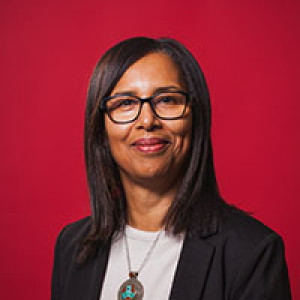
Mame-Fatou Niang is a scholar, writer, filmmaker and racial justice activist. Niang is an Associate Professor of French & Black Geographies and the founder/director of Center for Black European Studies and the Atlantic. She wrote two books in which she discusses the notion of the French identity: Universalisme (2022) and Identités Françaises: Banlieues, Féminités et Universalisme (2019).

Kehinde Andrews is an academic and author of British African-Caribbean heritage. Andrews is UK’s first Professor of Black Studies at Birmingham City University. He regularly appears in the media discussing issues of race and racism, colonialism and slavery, and British nationalism.

He is a frequent contributor to British media outlets as The Guardian, the BBC and Good Morning Britain. Furthermore, he wrote multiple books on race and colonialism, like The New Age of Empire (2021). Andrews is the director of the Centre for Critical Social Research, founder of the Harambee Organization of Black Unity, and co-chair of the UK Black Studies Association.

Sofia Lovegrove is an independent researcher and heritage professional born in the UK, brought up in Portugal and based in the Netherlands. Her research lies at the intersection of critical heritage and memory studies, with a focus on (re)presentation of the Portuguese and Dutch colonial pasts and their afterlives in museums, heritage sites and public memory. She currently works at the Cultural Heritage Agency of the Netherlands (Ministry of Education, Culture and Science) where she focuses on the topics of multiperspectivity, inclusion, the slavery and colonial past and international heritage cooperation.

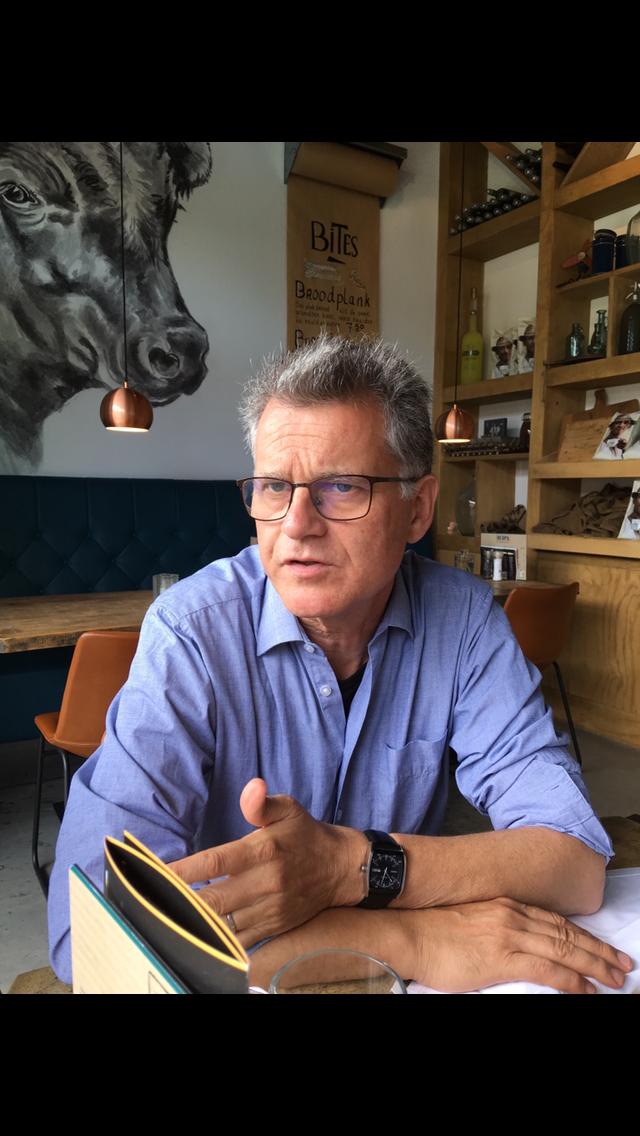
Wouter Veraart (1971) is Professor of Legal Philosophy and head of the Department of Legal Theory and Legal History at the Vrije Universiteit Amsterdam. Veraart has a strong interest in questions of historic injustice, restitution, victimization and the rule of law. Since 2021, he is one of the investigators of the research program Pressing Matter, which deals with the provenance and destination of colonial collections in Dutch museums. Veraart’s publications include articles on the value of apologies and reparations in relation to slavery and other forms of colonial injustice, most recently “Apologies from the heart: Some reflections on national apologies for colonial slavery” (in Dutch) in Tijdschrift voor Herstelrecht (2022).

Website Pressing Matter: https://pressingmatter.nl/

Speakers

Mame-Fatou NiangScholar, writer, filmmaker and racial justice activist (FR)
Kehinde AndrewsAcademic and author (UK)
Sofia LovegroveIndependent researcher (PT/UK/NL)
Wouter VeraartProfessor of Legal Philosophy (NL)

Forum on European Culture:

za 3 jun / 20:00
Politiek & Democratie

Ece Temelkuran: The Dilemma of Climate Democracy

Can we save the planet without breaking the democratic system? A conversation with Ece Temelkuran, Eva Rovers and Clare Farrell (XR).

Meer Info Tickets
za 3 jun / 20:30
Idee & Verbeelding

Theatre of War: The Persians

Listen to The Persians, the first theatre play in European history. A 2500-year-old text by Aeschylus about an imperialistic king trying to crush Greek democracies. Performed by actors

Meer Info Tickets
vr 2 jun / 20:30
Politiek & Democratie

CANCELLED Eline Arbo & Natalie Haynes on European Tragedy

Can we draw moral lessons from ancient European myths? And how do we deal with their predominantly male perspective?

Meer Info Tickets

Theatre of War: The Persians

Forum on European Culture

Programme Editor
Text
Hans Croiset (based on Aeschylus)
Produced and directed by
Yoeri Albrecht, Merlijn Geurts (De Balie)
Language
Dutch (English subtitles)

Listen to The Persians, the first theatre play in European history. A 2500-year-old text by Aeschylus about an imperialistic king trying to crush Greek democracies. Performed by actors Victoria Koblenko, Gijs Scholten van Aschat, Janni Goslinga and Hans Croiset.

The Persian court is awaiting news from their army. Under the leadership of emperor Xerxes, the country’s military troops left Persia to fight a battle at sea. They receive the worst possible news: their entire fleet is crushed by the much smaller Greek forces.

The ancient writer Aeschylus, who served as a soldier in the Greek army against the invading Persians, decided not to glorify the Greeks’ military might, but attempted to give words to the perspective of the defeated enemy. To what extent are these 2500-year-old words recognizable to those who are experiencing the reality of today’s brutal war? After the performance, we invite people from the audience to reflect on what Aeschylus’ text tells us today.

Nederlandse tekst

Luister naar De Perzen, het eerste toneelstuk in de Europese geschiedenis. Een 2500 jaar oude tekst van Aeschylus over een imperialistische koning die de Griekse democratieën probeert te verpletteren. Uitgevoerd door acteurs Victoria Koblenko, Gijs Scholten van Aschat, Janni Goslinga en Hans Croiset.

Het Perzische hof wacht op nieuws van hun leger. Onder leiding van keizer Xerxes hebben de militaire troepen van het land Perzië verlaten om een strijd op zee uit te vechten. Ze krijgen het slechtst mogelijke nieuws: hun hele vloot wordt verpletterd door de veel kleinere Griekse troepen.

De antieke schrijver Aeschylus, die als soldaat in het Griekse leger tegen de binnenvallende Perzen diende, besloot de militaire macht van de Grieken niet te verheerlijken, maar probeerde het perspectief van de verslagen vijand onder woorden te brengen. In hoeverre zijn deze 2500 jaar oude woorden herkenbaar voor hen die de realiteit van de huidige brute oorlog ervaren? Na de voorstelling nodigen we mensen uit het publiek uit om na te denken over wat Aeschylus’ tekst ons vandaag vertelt.

Cast

Victoria Koblenko in De Balie
Victoria KoblenkoActor, activist
Gijs Scholten van AschatActor | Photo: Huib van Wersch
Janni Goslinga Actor | Photo: Jan Verweysveld

Music

Ata GünerMusician and composer
This programme will not be livestreamed.

Forum on European Culture:

zo 4 jun / 13:30
Politiek & Democratie

Simon Schama: What History Teaches Us About Pandemics

How should we look back on the way we dealt with COVID-19? And how can societies prepare themselves for new viruses to come?

Meer Info Tickets
za 3 jun
Cinema

The Killing of a Journalist

How is it that journalists are not safe within the European Union, and how is it possible that such misconduct can happen in our common space?

Meer Info Tickets
vr 2 jun / 20:00
Politiek & Democratie

European Literature Night 2023: Between Utopia and Dystopia

Ten European writers get together to reflect on the utopian and dystopian mirrors of current society.

Meer Info Tickets

Ece Temelkuran: The Dilemma of Climate Democracy

Forum on European Culture

programme editor
Rosalie Dielesen
Mdoerator
In Cooperation with
DutchCulture
Climate change is a European reality. Ece Temelkuran is a prominent Turkish journalist, author, and political commentator on climate change and its impact on societies around the world. In her writings and speeches, Temelkuran emphasizes the urgent need for global action to address this existential threat to humanity. She will be discussing the dilemma of climate democracy with writer Eva Rovers and Clare Farrell, co-founder of Extinction Rebellion.

Europe has set ambitious climate targets, including reaching net-zero greenhouse gas emissions by 2050 and reducing emissions by at least 55% by 2030 relative to 1990 levels. In any event, the question remains whether these targets will be met in time to mitigate the impacts of climate change.

While some propose new institutional forms of public consultation to circumvent political inactivity, others believe it is necessary to act more quickly. During this programme, the following question will be examined: can we save the planet without breaking the political system?

Programme setup

Loes Damhof will guide the audience through an interactive thought experiment. Based on the principles of Futures Literacy – a capability developed by UNESCO – the audience and panellist will explore multiple futures and identify their assumptions on democracy and agency.

Reframed based on those assumptions, they are invited to view the debate through a different lens. What does agency mean, when do we question our assumptions? This quick democratic flex is followed by Ece Temelkuran’s keynote address, plus a panel discussion with Eva Rovers and Clare Farell.

About the speakers

Ece Temelkuran is a prominent Turkish journalist, author, and political commentator known for her critical perspective on the politics of Turkey and the wider Middle East region. Temelkuran has been an active commentator on climate change and its impact on societies around the world. In her writings and speeches, she emphasizes the urgent need for global action to address this existential threat to humanity.

Eva Rovers is a Dutch writer and cultural historian. She is also the co-founder of Bureau Burgerberaad. In her most recent book ‘Nu is het aan ons’ – Oproep tot echte democratie” (“Now it’s up to us. Call for real democracy”), she passionately argues for not leaving politics exclusively to politicians. The multifaceted problems of the 21st century require a multifaceted approach, and citizen assemblies are ideal for that.

Clare Farrell is an active citizen, devoting her creativity, her energy, and occasionally her personal liberty, to fight against climate collapse and the wider environmental crisis. As one of the cofounders of Extinction Rebellion her work to date has included coordinating the creative team that delivered the name, identity, and messaging that the movement set out with in 2018, co-editing the bestselling book, This is Not a Drill, and now works with the UK media team and acts as a spokesperson.

Loes Damhof was elected as Lecturer of the Year of all higher education in The Netherlands in 2016, and decided to use the Comenius Grant to further advance the skill of Futures Literacy. In short terms, training Futures Literacy invites us to use different conceptions and ideas about the future as lenses for interpreting, understanding and seeing anew our world and ourselves in it in the present. In 2018, Loes received the UNESCO Chair on Futures Literacy in Higher Education at Hanze University of Applied Sciences.

Loes Damhof

In addition to her research and teaching practices, Loes consults and trains staff of global organizations such as FutureWomenX, UNESCO, UNFCCC, ClimateKIC,  Copenhagen Institute for Futures Studies and Oxfam. Over the years, Loes and her team have set the golden standard for training and teaching Futures Literacy. Currently she is building The Emergence Academy; new school for new activism, that fosters a new attitude towards complexity, uncertainty applied to wide range of societal domains.

Speakers

Ece TemelkuranJournalist, author and political commentator | Photo: De Balie / Jan Boeve
Eva RoversWriter and cultural historian | Photo: Frank Ruiter
Clare FarrellCofounder Extinction Rebellion
Loes Damhof
Loes DamhofExpert Futures Literacy (Foto: Wouter Brem)
Image: Marit Breuker

Forum on European Culture:

zo 4 jun / 13:30
Politiek & Democratie

Simon Schama: What History Teaches Us About Pandemics

How should we look back on the way we dealt with COVID-19? And how can societies prepare themselves for new viruses to come?

Meer Info Tickets
vr 2 jun / 20:30
Politiek & Democratie

CANCELLED Eline Arbo & Natalie Haynes on European Tragedy

Can we draw moral lessons from ancient European myths? And how do we deal with their predominantly male perspective?

Meer Info Tickets
zo 4 jun
Cinema

The Lost Leonardo

The Lost Leonardo is a fascinating story about the most expensive painting ever sold. A revealing and exciting film about the world of the art trade and the hidden interests of…

Meer Info Tickets

CANCELLED Eline Arbo & Natalie Haynes on European Tragedy

Forum on European Culture

Programme editor

This programme is cancelled due to personal circumstances of one of our speakers.

Ancient European myths and stories tell us about the history of Europe and its people. These stories have shaped our European identities. Together with classicist Nathalie Haynes and director Eline Arbo we talk about what these ancient stories can tell us about Europe today and the world we live in. Can we draw moral lessons from them? And how do we deal with their predominantly male perspective? The conversation is going to be shaped by the fragments of classic texts that will be read during the programme.

During this programme different classical scenes will be read and performed by actresses Sam Ghilane and Sophie van Winden, created by Sam Ghilane, Sophie van Winden and Ianthe Mosselman.

About the speakers

Eline Arbo is currently directing Penthesilea, the fatal love story about the Amazonian queen Penthesilea and Greek captain of arms Achilles. She has been associated with ITA since 2022 as Associate Artistic Director. Before this, she was the director of Het Nationale Theater. Plays she directed included her play of De Jaren (based on the book of Annie Ernaux), The Hours and Jane Eyre.

Natalie Haynes is a writer and broadcaster. She writes and speaks about the modern relevance of the classical world on three continents. She wrote many books about the classical, both fiction and non-fiction, which include: The Ancient Guide to Modern Life, The Children of Jocasta and her retelling of the Trojan War, A Thousand Ships. Her most recent non-fiction book, Pandora’s Jar: Women in the Greek Myth was published in Oct. Her novel about Medusa, Stone Blind, was published in Sep 2022.


Forum on European Culture 2023

From 31 May until June 4, the 4th edition of the Forum on European Culture takes place. Artists, activists and intellectuals from all over the world come together to explore the meaning and future of democracy in Europe. For the full programme, see www.cultureforum.eu

Speakers

Eline ArboTheatre director | Photo: Fabian Calis
Natalie HaynesWriter, broadcaster | Photo: James Betts

More Forum on European Culture:

do 1 jun / 17:00
Politiek & Democratie

Peter Frankopan: Opening Forum on European Culture

Peter Frankopan, author of the international bestseller The Silk Roads (2015) will open the fourth edition of the Forum on European Culture.

Meer Info Tickets
vr 2 jun / 17:00
Politiek & Democratie

Peter Pomerantsev: How We Connect in the Public Digital Space

In this programme, we debate the need for a new online public space as an important element of democracy. With Peter Pomerantsev, Francesca Bria and Oyidiya Oji Palino.

Meer Info Tickets
vr 2 jun / 16:30
Politiek & Democratie

A Culture of Genocide

European history is steeped in violence, war and genocide. How have these events shaped the Europe of today?

Meer Info Tickets

Peter Pomerantsev: How We Connect in the Public Digital Space

Forum on European Culture

Programme editor
Moderator
Reka Papp
For centuries, ‘the Forum’ was the centre of day-to-day life in ancient Rome: the site of processions and elections; the venue for public speeches, and the heart of commercial events. In modern life, the function of the forum has largely been taken over by media and the online. And how’s that working out for us? In this programme, we debate the need for a European public space as an important element of democracy and announce a new initiative: The Council for European Public Space. A conversation with Peter Pomerantsev and Francesca Bria.

A crucial gab of European democracy is the lack of a public space, where citizens from all backgrounds can inform themselves, debate society and share culture. This leaves Europeans disorientated, distrustful and disengaged. Traditional media mostly report from a national perspective, suppressing solidarity between Europeans from different countries.

Social media is based on algorithms that prioritize profit maximization over democratic values, which results in a toxic space, where nobody listens, arguments are short, and the response is hostile. Moreover, many inhabitants of Europe, such as refugees and migrants, are marginalized or invisible in the media.

The Council for European Public Space will be a think-and-do-tank that develops evidence-based and politically viable strategies to create a more open, fair, and safe European Public Space.

Line-up

Peter Pomerantsev, journalist and writer of This is Not Propaganda, will give a speech on the difficulty of ‘bubbles’ and what is needed to create a common space in which we actually can create interactions that have meaning, and what is needed to make that happen.

With Francesca Bria, Digital and Innovation Policy Expert, who works on the project New European Bauhaus, we will discuss in what way the interests of companies and states – and more broadly the European Union align and differ. Is the European Union fully aware of the steps that need to be taken to make the internet a better, more civil place that (perhaps) functions as a state, or should that not be desirable? How can we use data and innovations that defends and embraces the concept of democracy instead of defeating it?

Oyidiya Oji Palino is a digital rights advocate, intersectional feminist and researcher. She is Policy Advisor on Digital Rights at the European Network against Racism. Oyidiya will speak about how tech is another tool that reinforces systemic inequalities, as it does not take into account the realities and needs from everyone, leaving behind underrepresented communities.

Matthias Pfeffer is a renowned journalist from Germany and the founding director of the Council for European Public Space. He will reveal the plans of this new institution and invites the audience to contribute.


Forum on European Culture 2023

From 31 May until June 4, the 4th edition of the Forum on European Culture takes place. Artists, activists and intellectuals from all over the world come together to explore the meaning and future of democracy in Europe. For the full programme, see www.cultureforum.eu

Speakers

Peter PomerantsevJournalist, writer
Francesca BriaDigital and Innovation Policy Expert
Oyidiya Oji PalinoDigital rights advocate
Matthias PfefferJournalist
Afbeelding: Marit Breuker

More Forum on European Culture:

za 3 jun
Cinema

The Killing of a Journalist

How is it that journalists are not safe within the European Union, and how is it possible that such misconduct can happen in our common space?

Meer Info Tickets
vr 2 jun / 16:30
Politiek & Democratie

A Culture of Genocide

European history is steeped in violence, war and genocide. How have these events shaped the Europe of today?

Meer Info Tickets
za 3 jun / 15:00
Politiek & Democratie

How Europe Says sorry

Are formal apologies sufficient to close the book on colonialism? Or are reparations in order? Our experts will draw on their expertise to help us answer these difficult questions.

Meer Info Tickets

De Republiek

Een programma gemaakt door
De Republiek

Het kunstenaarskollektief ‘de (eerste) republiek’ wordt begin jaren negentig opgericht door een aantal amsterdamse toneelgezelschappen, dichters, journalisten en beeldend kunstenaars. Elke eerste maandag van de maand is er een presentatie waarin gelezen, voorgesteld, geinterviewd, gespeeld en over van alles gesproken wordt. In ons meer dan dertigjarige bestaan zijn we op veel plaatsen samengekomen om vanaf de jaren tien steeds in de balie aldaar post te vatten. Iedereen is ten allen tijde welkom. Het programma, het nieuwe repertoire wordt op de avond zelf voor aanvang door de dan aanwezigen vastgesteld. Er worden geen toegangsprijzen geheven. Meer weten over de voorgaande bijeenkomsten? Klik hier. De tekst van vorige editie op 3 april, vindt u hier.

Ik ben het zuiverste dier op aarde

ik ben het zuiverste dier op aarde
ik slaap met de nacht als met mijn lichaam
en de nacht wordt groter in mijn hart

in het donkere weefgetouw van je vingers
borduur ik een nacht van eenzaamheid
veelkleurig veeleisend veranderlijk

ik ken alle tranen van de eenzaamheid
sla mij maak mij open
ik ben een roos van vrolijkheid

kom hier vertrouw mij
ik gooi de wind vol sterren

als een boot van overvloed
in de spaarzaamheid van de zee

nu ben je niet gekomen
en zachtjes ga ik dicht.

Hans Lodeizen 1948

We verwachten zoals altijd plotseling nieuwe bijdrages, discussies en reacties.

De republiek (open kunstenaarscollectief sinds 1992)

Gemaakt door Jan Joris Lamers.

A Culture of Genocide

Forum on European Culture 2023

Programme editor

Arnon Grunberg meets Auschwitz Museum-director Piotr Cywinski.

European history is steeped in violence, war and genocide. How have these events shaped the Europe of today? And how should reflection on that brutal past play a role in shaping the future of Europe? During this programme Piotr Cywinski, historian and director of the Auschwitz-Birkenau State Museum and writer Arnon Grunberg will take a close look at Europe’s darkest hour.

To start off they will listen to fragments from Sonderbehandlung, written by Jewish Slovak Holocaust survivor Flip Müller, who was part of the Sonderkommando at Auschwitz and later survived a death march into Germany.

Actor Anne van Veen will read fragments from Filip Müller’s book Sonderbehandlung.


Forum on European Culture 2023

From 31 May until June 4, the 4th edition of the Forum on European Culture takes place. Artists, activists and intellectuals from all over the world come together to explore the meaning and future of democracy in Europe. For the full programme, see www.cultureforum.eu

Speakers

Piotr CywinskiHistorian and director of the Auschwitz-Birkenau State Museum
Anne van VeenActor

More Forum on European Culture:

zo 4 jun / 14:00
Politiek & Democratie

Letters on Democracy

How can the future of Europe be imagined? What are threats to European democracy, and what should we pay attention to? We asked five writers to envision a European future.

Meer Info Tickets
vr 2 jun / 17:00
Politiek & Democratie

Peter Pomerantsev: How We Connect in the Public Digital Space

In this programme, we debate the need for a new online public space as an important element of democracy. With Peter Pomerantsev, Francesca Bria and Oyidiya Oji Palino.

Meer Info Tickets
vr 2 jun / 19:00
Idee & Verbeelding

On the State of European Cinema

Cinemas were already having a tough time with the rise of streaming services and home projectors, when the pandemic lockdowns eradicated the habits of cinema-going and diminished the…

Meer Info Tickets

Achter de Schermen van het Nederlandse Omroepbestel

Programmamaker
In samenwerking met
Presentatie
Landelijk verzet tegen het omroepbestel neemt toe. Het idee van lineaire televisie wordt niet losgelaten, terwijl het medialandschap razendsnel is veranderd. Ook klappen steeds meer makers uit de school over moeizame samenwerkingen met de omroepen, gebrek aan waardering en slechte arbeidsvoorwaarden. De vraag of Ongehoord Nederland uit het omroepbestel moet ligt op tafel bij Staatsecretaris Gunay Uslu. Wat betekent dit voor de toekomst van de NPO?

De NPO een onderzoek gestart naar zijn eigen werksfeer. De nieuwe NPO-top zegt te staan voor een open en veilige werkcultuur, maar is deze visie ook terug te zien in de praktijk? 

In dit programma werpen we een kritische blik op het omroepbestel. Want wie maakt de tv-programma’s en voor wie? De publieke omroep is opgedeeld in verschillende omroepverenigingen, elk met hun eigen doelgroep en programma-aanbod, zoals KRO-NCRV, BNNVARA en Omroep Max. Daarnaast zijn er commerciële omroepen, zoals RTL Nederland en Talpa Network, die hun inkomsten uit reclame halen en zo hun programma’s financieren. In dit programma gaan de makers, omroepen en de NPO, met- en over elkaar in gesprek.

Sprekers

Sarah SylbingHoofdredacteur VPRO
Monique Nolte Documentairemaker
Jeroen PenJournalist en schrijver
Guikje RoethofOud-Ombudsman van de NOS
Ton F. van DijkOud- Omroepbestuurder en columnist HP/ De tijd

Ook in De Balie:

di 30 mei / 20:00
Politiek & Democratie

Red het onderwijs

RED-Team Onderwijs en het Nederlands Mathematisch Instituut stellen dat het onderwijs zich meer moet focussen op het aanbrengen van basiskennis en basisvaardigheden.

Meer Info Tickets
Marit Breuker
zo 4 jun / 13:30
Politiek & Democratie

Simon Schama: What History Teaches Us About Pandemics

How should we look back on the way we dealt with COVID-19? And how can societies prepare themselves for new viruses to come?

Meer Info Tickets
zo 4 jun / 14:00
Politiek & Democratie

Letters on Democracy

How can the future of Europe be imagined? What are threats to European democracy, and what should we pay attention to? We asked five writers to envision a European future.

Meer Info Tickets

De Koplopers: De stad als natuurreservaat

moderator
In samenwerking met

Het is een dramatisch jaar voor vlinders, hommels en bijen. Waar in het buitengebied habitats verdwijnen, bossen ontbossen, rivieren en bodems vergiftigd raken en insectenpopulaties verdwijnen, doemt de stad op als plek waar het tij kan worden gekeerd. Kan de wilde stad echt een verschil maken?

De stad wordt steeds belangrijker voor biodiversiteit, maar wordt door ontwerpers en beleidsmakers maar al te vaak gezien als het exclusieve leefgebied van mensen. Als we anders omgaan met grachten, kades, daken, bermen en pleinen, kunnen soorten die elders in de knel komen in de stad hun heil vinden.

En zo wordt de stad niet alleen het thuis voor patatmeeuwen en haringreigers, maar ook voor wilde bijen, bedreigde planten en vogels. Essentieel voor ecosystemen, maar net zo goed voor de mens. Hoe voorkomen we dat stadsnatuur als futiliteit wordt beschouwd? Hoe kunnen gemeenten, ontwerpers, ecologen, beleidsmakers en actieve stadsbewoners nu beginnen aan de wilde stad?

De Koplopers

Vergroenen, verduurzamen, innoveren. De ambities voor Nederland zijn groot, maar de realiteit is weerbarstig. In de serie De Koplopers ontmoet Teun van de Keuken mensen die oplossingen van de toekomst nu al in de praktijk brengen. Wat kunnen we van deze koplopers leren? Hoe vertalen we hun praktijkervaring naar politieke samenwerking – zodat de rest van Nederland ook mee kan in de transitie?

De Koplopers is een samenwerking met Regieorgaan SIA. SIA bevordert de kwaliteit en de impact van het praktijkgericht onderzoek van hogescholen.

Sprekers

Marjan SlobFilosoof, Denker des Vaderlands
Aglaia BoumaEntomoloog, onderzoeker Naturalis Biodiversity Center
Gideon SpanjarLector Innovatie & Groenstedelijke Ruimte, Aeres
Nico TillieUrban Ecology & Ecocities Lab TU Delft
Hans KalliwodaKunstenaar, initiatiefnemer Beetotems for RefuBees
Geert TimmermansStadsecoloog Gemeente Amsterdam

Binnenkort in De Balie:

wo 5 jul / 20:00
Politiek & Democratie

The madman in the White House

Is Putin mad? Is Trump crazy? Such questions are very easy to ask, but very difficult to answer. Why do we want to find psychiatric reasons for the behaviour of our world leaders?

Meer Info Tickets

Simon Schama: What History Teaches Us About Pandemics

Forum on European Culture

Programme editor
Programme editor
Three years ago, the COVID-19 pandemic disrupted the world and left a deep imprint on society. But the wave of panic, competitive vaccine research, economic impact, and distrust in medical science have already occurred. In his new book Foreign Bodies: Pandemics, Vaccines and the Health of Nations (2023) the internationally renowned historian Simon Schama shows how the world has survived similar pandemics before.

In the eighteenth and nineteenth centuries’ smallpox struck London, cholera hit Paris and pestilence came to India. What can history teach us about good leadership in times of pandemic and viruses? How should we look back on the way we dealt with COVID-19? And how can societies prepare themselves for new viruses to come?

About Simon Schama

Simon Schama is one of the most famous historians worldwide, a renowned expert on European history, ecology and art history. He published numerous awarded history books such as Landscape and Memory (1995), Rembrandt’s Eyes (1999) and A History of Britain (2000). He also created famous television series such as The Power of Art, The Story of the Jews and most recently The History of Now (2022). With over 40 documentaries on his name, he keeps informing his audience about Europe’s vast history.


Forum on European Culture 2023

From 31 May until June 4, the 4th edition of the Forum on European Culture takes place. Artists, activists and intellectuals from all over the world come together to explore the meaning and future of democracy in Europe. For the full programme, see www.cultureforum.eu

Speakers

Simon SchamaHistorian | Photo: Peter Strelitski, Hollandse Hoogte
In gezonde staat (Foreign Bodies), Atlas Contact 2023

More Forum on European Culture:

do 1 jun / 20:30
Idee & Verbeelding

Take the Rubbish Out, Sasha

Sasha, a colonel in the Ukrainian army who died due to a heart failure, sees his widow Katia and his stepdaughter Oksana prepare his funeral feast.

Meer Info Tickets
za 3 jun / 20:30
Idee & Verbeelding

Theatre of War: The Persians

Listen to The Persians, the first theatre play in European history. A 2500-year-old text by Aeschylus about an imperialistic king trying to crush Greek democracies. Performed by actors

Meer Info Tickets
zo 4 jun / 14:00
Politiek & Democratie

Letters on Democracy

How can the future of Europe be imagined? What are threats to European democracy, and what should we pay attention to? We asked five writers to envision a European future.

Meer Info Tickets