TV NL EN

Tino Sehgal: New Rituals for 21st Century Europe

Forum on European Culture

programme editor
At any time and in any place, societies have created rituals to celebrate their own fundamental values: from the tragedies of Greek antiquity to service in medieval churches. But what are the binding forces in today’s highly individualized, fragmented and diversified society? When and where can individuals perceive themselves as citizens of a democratic European society? Because we cannot talk about a culture of democracy unless that democratic culture is felt and internalized by a sufficient number of its citizens. Tino Sehgal, recognized as one of the most important artists of his generation, will share his ideas of new rituals for contemporary Europe.

Tino Sehgal is famous for his radical art practice, which takes the form of “constructed situations”: live encounters between visitors and those who interpret the work. His work focusses on lived experiences instead of material productions.

Speakers

Tino SehgalArtist (Photo: Jean-Baptiste Béranger)

Forum on European Culture:

do 1 jun / 20:30
Idee & Verbeelding

Take the Rubbish Out, Sasha

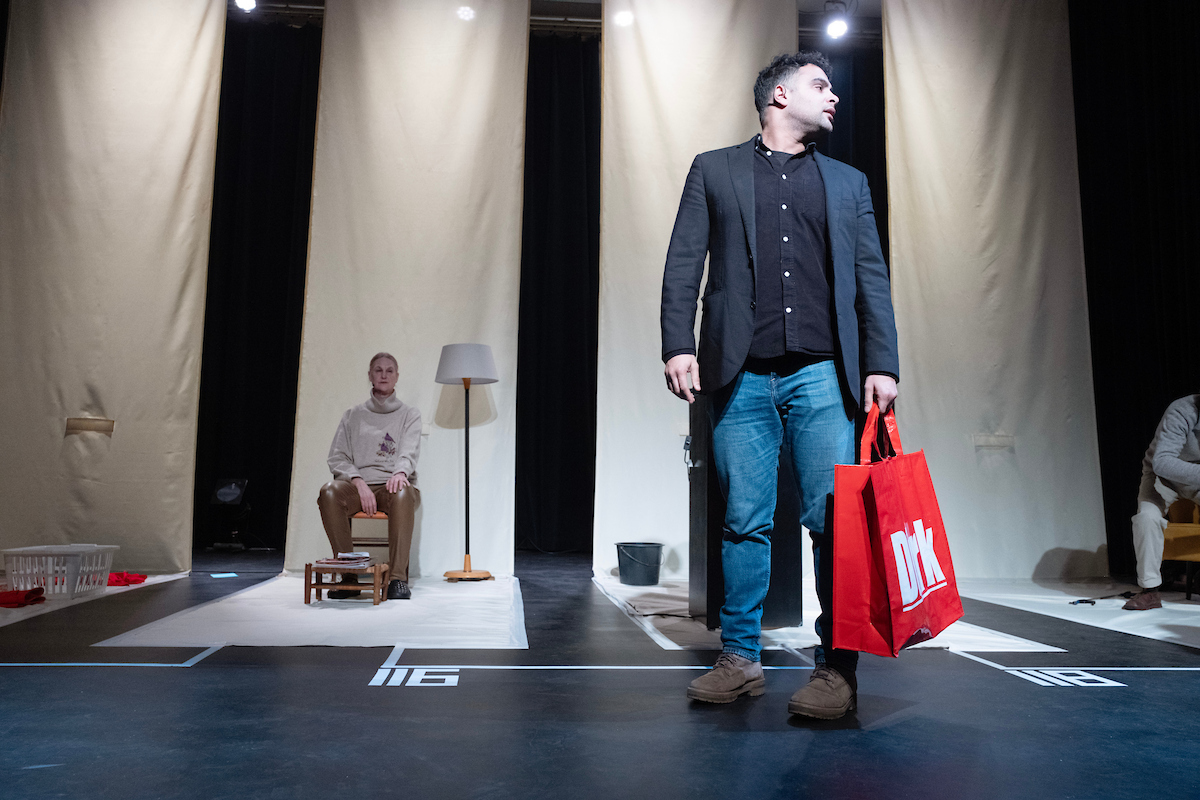
Sasha, a colonel in the Ukrainian army who died due to a heart failure, sees his widow Katia and his stepdaughter Oksana prepare his funeral feast.

Meer Info Tickets
do 1 jun / 17:00
Politiek & Democratie

Peter Frankopan: Opening Forum on European Culture

Peter Frankopan, author of the international bestseller The Silk Roads (2015) will open the fourth edition of the Forum on European Culture.

Meer Info Tickets
vr 2 jun / 20:00
Politiek & Democratie

European Literature Night 2023: Between Utopia and Dystopia

Ten European writers get together to reflect on the utopian and dystopian mirrors of current society.

Meer Info Tickets

Ei, foetus, baby

Een nieuwe geschiedenis van zwangerschap

Programmamaker en moderator

Niemand kan door een zwangere buik heen kijken. Maar de mensheid is altijd al nieuwsgierig geweest naar wat zich daarbinnen voltrekt – vooral vanuit de wens erin in te grijpen. Trudy Dehue schreef Ei, foetus, baby. Een nieuwe geschiedenis van zwangerschap. Tijdens deze middag gaan we in gesprek over oude en nieuwe technologie die zowel mooi als schrikbarend kan zijn. Hoe veranderde samen met de technologie ook de taal en de beleving van zwangerschap?

Trudy Dehue schetst vijf eeuwen geschiedenis van onze kennis over zwangerschap en abortus en stelt in haar boek fundamentele vragen over de betekenis hiervan voor zwangeren. Tijdens deze middag neemt ze ons eerst mee door de geschiedenis, waarna we in gesprek gaan over de huidige ontwikkelingen en tijd.

Lees een recensie van Ei, foetus, baby in het NRC.

Lees het essay van Trudy Dehue in De Groene Amsterdammer.

Over de sprekers

Trudy Dehue is hoogleraar wetenschapsonderzoek en schrijft daarnaast geregeld voor onder andere het NRC en De Groene Amsterdammer. Ze schreef eerder over de vraag: wat telt als een psychische stoornis?  En hoe komt het dat we haast al het menselijk falen en verdriet als de stoornis depressie, adhd of autisme zijn gaan zien? Nu stelt ze vergelijkbare vragen over zwangerschap: ‘wat telt als zwanger’, een ‘ongeboren kindje’, een ‘kloppend hartje’, en een ‘abortus’. En wat zijn de gevolgen van zo’n framing?

Marian Mourits is al meer dan dertig jaar werkzaam als gynaecoloog en sinds 2008 hoogleraar gynaecologische oncologie in het UMCG. Haar allereerste stappen als medicus waren als abortusarts in het Mildredhuis Arnhem, waar ze tevens onderzoek heeft gedaan naar de potentiële consequenties van de verplichte vijf dagen bedenktijd. Naast haar werk als clinicus en medisch opleider heeft zij ook verschillende internationale publicaties op haar naam staan. In haar onderzoek ligt de focus voornamelijk op erfelijke gynaecologische kanker, en de preventie hiervan. Mourits heeft hierin nadrukkelijk aandacht voor de kwaliteit van leven van vrouwen, en hun seksualiteit.

Yuki Kho is een kunst- en cultuurjournalist voor onder andere de VPRO en Vrij Nederland. Zij houdt zich in haar werk onder andere bezig met hoe we naar vrouwen, en vrouwelijke kunstenaars kijken. Samen met Heske ten Cate maakt ze de podcast Naakt op een kleedje, waarin vrouwelijke makers centraal staan. Elke week wordt een vrouwelijke gast geïnterviewd over het werk van een vrouwelijke kunstenaar. Ook schrijfster Trudy Dehue is te horen in de podcast, over het werk van Tracey Emin en Louise Bourgois waarin het zwangere vrouwenlichaam verbeeld wordt.

Gunilla Kleiverda is ruim 35 jaar gynaecoloog en zet zich haar hele medische carrière in om de autonomie van vrouwen bij reproductieve keuzen te verbeteren. In dit kader strijdt zij al meer dan 20 jaar met Women on Waves voor meer zeggenschap van vrouwen over abortus. Gunilla is initiatiefnemer en eerste auteur van Een leidraad over ‘zorgvragen buiten de verloskundige richtlijnen’. In haar betoog bespreekt zij waarom het zo moeilijk is daadwerkelijk baas in eigen buik te zijn.

Heske ten Cate is directeur van kunstruimte Nest in Den Haag waar hedendaagse kunsttentoonstellingen, lezingen, publicaties en kunsteducatie wordt ontwikkeld, getoond en gedeeld. In haar werk koppelt ze maatschappelijke vraagstukken aan hedendaagse kunst en kruipt zo dieper onder de huid van de hedendaagse tijd. Daarnaast werkt ze als freelance curator, auteur en adviseur voor o.a de Gemeente Utrecht, het Koninklijke Prijs en Sexyland in Amsterdam. Momenteel werkt ze samen met curator Laurie Cluitmans aan een grote overzichtstentoonstelling en publicatie over (wens)ouders, zelfbeschikking en conceptie voor het Centraal Museum in 2025. Met Yuki Kho ontwikkelde ze de kunstpodcast Naakt op een Kleedje.

Ilse Josepha Lazaroms is schrijver, wetenschapper, en uitgever bij Amsterdam University Press. Ze studeerde genderstudies aan de Universiteit Utrecht en Joodse studies aan het Europees Universitair Instituut in Florence en de Universiteit van Harvard. Ze gelooft in de kracht van het persoonlijke verhaal en schrijft onder meer over sociale (on)rechtvaardigheid, feminisme en moederschap. Bij uitgeverij Cossee publiceerde ze de roman Duet (2021). Haar essays en literaire kritieken verschijnen in De Groene Amsterdammer, de Nederlandse Boekengids en De Correspondent.

Sprekers

Trudy DehueHoogleraar wetenschapsonderzoekFoto: Inge Hoogland
Marian MouritsHoogleraar gynaecologische oncologie
Yuki KhoJournalist
Gunilla KleiverdaGynaecoloog en voorzitter bestuur Women on Waves
Heske ten CateArtistiek directeur
Ilse Josepha LazaromsSchrijver, wetenschapper

Meer in De Balie:

ma 22 mei / 17:30
Politiek & Democratie

De Koplopers: 50 Top Things To Do In Amsterdam

50 oplossingen voor een duurzame relatie tussen stad en toerist. Welke 50 dingen zouden op de bucketlist van elke wethouder moeten staan?

Meer Info Tickets
di 23 mei / 20:00
Politiek & Democratie

Margo Jefferson: Race, Class and Feminism in America

Tonight, Margo Jefferson will talk about perspective and identity, about positioning your own story and enabling others to tell theirs. Joining the conversation is Stephan Sanders.

Meer Info Tickets
John Adams Institute De Balie
di 30 mei / 20:00
Politiek & Democratie

Red het onderwijs

RED-Team Onderwijs en het Nederlands Mathematisch Instituut stellen dat het onderwijs zich meer moet focussen op het aanbrengen van basiskennis en basisvaardigheden.

Meer Info Tickets
Marit Breuker

Soms wil ik een kind

Programmamaker en moderator

Hoe kies je tussen ouderschap en een leven zonder kinderen? Schrijver en journalist Jantine Jongebloed neemt in Soms wil ik een kind de lezer mee in haar zoektocht naar het antwoord op deze vraag. Aan de hand van fragmenten uit het boek praten we met o.a. Liesbeth Smit, Mensje van Keulen en Jantine Jongebloed over het beeld van de vrouw met en zonder kinderen, autonomie, twijfel en het schrijven zelf natuurlijk.

In het eerste deel van het programma praten we met Jantine Jongebloed en Liesbeth Smit, schrijver van Echte vrouwen krijgen een kind. De stille revolutie van de niet-moeder aan en verkennen we moederschap als norm. Daarna gaan we in gesprek met schrijver Mensje van Keulen en regisseur Floor Houwink ten Cate over schrijven, autonomie en moederschap.

Lees meer over de sprekers

Jantine Jongebloed (1987) werkt als freelancejournalist voor onder meer de Volkskrant. Haar onderzoek en essay ‘Wie zette mijn naaktfoto’s online?’ in Volkskrant Magazine (2021) deed veel stof opwaaien en werd genomineerd voor De Loep. In november 2021 debuteerde ze met het gelijknamige boek, waarna ze werd bekroond met de Bep Slechte Prijs, de Seks & Media Prijs en de Gouden Freelancer Award. Soms wil ik een kind is haar literaire debuut.

Mensje van Keulen is schrijver. Ze was redacteur van Propria Cures en het literaire tijdschrift Maatstaf. Haar debuut Bleekers zomer verscheen in 1972. Hierna volgende vele romans en verhalenbundels, waaronder Liefde heeft geen hersens (2012), Schoppenvrouw (2016) en Ik moet u echt iets zeggen (2020). Onlangs verscheen Moeder en pen. Dakboek 1979-1983. Haar werk werd bekroond met de Annie Romeinprijs, de Charlotte Köhlerprijs en de Constantijn Huygensprijs.

Liesbeth Smit (1974) is schrijver, journalist en trainer. In 2019 verscheen haar tweede boek Echte vrouwen krijgen een kind – de stille revolutie van de niet-moeder, waarin ze beschrijft hoe het is om geen kinderen te hebben in een wereld waarin dat de maatschappelijke norm lijkt te zijn. 

Floor Houwink ten Cate (1987) is regisseur en schrijver. Ze maakt urgente voorstellingen op het snijvlak van muziektheater, opera en film. Met het collectief Nineties Productions won ze in 2017 de BNG Bank Theaterprijs voor de voorstelling Untitled, 2017. Onlangs maakte ze battlefield of dreams (2023), een experimentele fertiliteits- en abortuskliniek multidisciplinair werk met opera, documentaire, performance, lezing, debat en open mic.

Sprekers

Jantine JongebloedSchrijver (Foto: Keke Keukelaar)
Liesbeth SmitSchrijver en journalist (Foto: Bas Losekoot)
Mensje van KeulenSchrijver (Foto: Annaleen Louwes)
Floor Houwink ten Cate Regisseur

Ook interessant voor jou?

za 13 mei / 20:00
Politiek & Democratie

Maxim Osipov presents: Russian poetry in exile

In this programme, Maxim Osipov engages in conversation with Russian poet Dmirty Vedenyapin – who lived in exile – about 20th century Russian poetry in exile.

Meer Info Tickets
Maxim Osipov marit breuker
vr 19 mei / 20:30
Politiek & Democratie

Onbesproken: Zelfdoding in de queer gemeenschap

Bijna de helft van de Nederlandse mensen uit de LHBTIQ+ gemeenschap heeft ooit aan zelfmoord gedacht. Dat is ruim vijf keer zo vaak dan het nationaal gemiddelde.

Meer Info Tickets
zo 21 mei / 15:00
Politiek & Democratie

Ei, foetus, baby

Een avond over de invloed van technologie op de taal en beleving van zwangerschap naar aanleiding van de nieuwe geschiedenis van zwangerschap van Trudy Dehue

Meer Info Tickets

Take the Rubbish Out, Sasha

Forum on European Culture

Programme editor

Sasha, a colonel in the Ukrainian army who died due to a heart failure, sees his widow Katia and his stepdaughter Oksana prepare his funeral feast. A year later, the country will be engulfed in the events that can make the dead rise. Sasha is ready to be resurrected, but his family is not. They are reluctant to bury him again.

In the series Endless February, Frascati Productions and De Balie offer a human face to the war in Ukraine. Contemporary Ukrainian plays are presented in collaboration with director Iana Gudzenko and actress Alesia Andrushevska.

In this third iteration of the collaboration, the magical realist play Take The Rubbish Out, Sasha is performed. Kiev-based playwright Natal’ya Vorozhbit wrote the play in 2014, when the Russian army annexed the Donbas region of Eastern Ukraine. Within the year, the Russian army occupied the Crimea in Southern Ukraine.

About the creators

Iana Gudzenko studied drama in Kiev (master) and is an Alumnus of the European Theater Convention 2019/22. In the Netherlands she has collaborated with De Toneelmakerij, AJTS, De Krakeling and De Balie.

Alesia Andrushevska is a Ukrainian theater and film actress. She is a member of the National Union of Theater Workers of Ukraine. This season she stars in Women in Troy, as told by our mothers by Dood Paard.

Oksana Borbat was an ensemble actor in the Wild Theater in Ukraine from 2016 to 2019 and starred in more than 24 films. When the war broke out, she moved to Amsterdam where she visited and united friends and colleagues in the theatre.

Bram Gerrits graduated from the Academy of Drama in Eindhoven in 2005. Since then, he has played at Theater Utrecht and Toneelschuur productions, among others. He ran his own collective ’the Flower of the Nation’ and appeared in several television series.

Mariia Ponomarova (Ukraine, 1991) was born and raised in Kiev, Ukraine. She is a film director and scriptwriter. She has worked in both documentary and fiction as a director and 1st AD. Mariia participated in the documentarists movement “Babylon’13 – cinema of civil protest” during the revolution in Ukraine.

Speakers

Bram GerritsActor
Mariia PonomarovaFilm director and scriptwriter

Forum on European Culture:

do 1 jun / 17:00
Politiek & Democratie

Peter Frankopan: Opening Forum on European Culture

Peter Frankopan, author of the international bestseller The Silk Roads (2015) will open the fourth edition of the Forum on European Culture.

Meer Info Tickets
vr 2 jun / 20:00
Politiek & Democratie

European Literature Night 2023: Between Utopia and Dystopia

Ten European writers get together to reflect on the utopian and dystopian mirrors of current society.

Meer Info Tickets
zo 4 jun / 14:00
Politiek & Democratie

Letters on Democracy

How can the future of Europe be imagined? What are threats to European democracy, and what should we pay attention to? We asked five writers to envision a European future.

Meer Info Tickets

Peter Frankopan: Opening Forum on European Culture

Forum on European Culture

Programme Editor
Moderator
Yoeri Albrecht De Balie
Yoeri Albrecht
In his highly anticipated new book The Earth Transformed (2023) Peter Frankopan revolutionizes how environments have shaped the development – and demise – of civilizations over time. Our desire to centralize the agricultural surplus is at the root of the bureaucratic state; our growing demands for harvest have resulted in an increase in the shipment of enslaved people. Peter Frankopan, author of the international bestseller The Silk Roads (2015) will open the fourth edition of the Forum on European Culture.

This often-neglected climate-geopolitical relationship will also shape our shared future. During the opening night of the Forum, Frankopan will reflect on this year’s central theme, ‘A Culture for Democracy’. Europe faces a crossroads. Do we decide on a future defined by imperialism and destructive exploitation or a future defined by democracy and ecological restoration? 

Claudy Jongstra’s monumental artwork Guernica de la Ecología, with the exact same dimensions as Picasso’s famous war painting, will be the background and conversation piece of this opening programme. In her work, the internationally renowned artist and eco-activist uses natural materials such as wool as a warning against climate change and a plea for biodiversity.

The environment is the very stage on which our existence plays out, shaping everything we do, who we are, where and how we live … and if the theatre closes or collapses, that marks the end for us all.

Peter Frankopan, The Earth Transformed (2023)
About the speakers

Peter Frankopan is a professor of Global History at Oxford University and writer of the 2015 bestseller Silk Roads. He works on the history and politics of the Mediterranean, Russia, the Middle East, Persia/Iran, Central Asia, China and beyond. In his latest book, The Earth Transformed: An Untold History (2023), Peter looks at environmental history, at climate and the ways it has shaped the human and natural past.

Claudy Jongstra is known worldwide for her monumental artworks and architectural installations, whose organic surfaces and nuanced tones reflect her masterful innovations in the ancient technique of making wool felt. Jongstra’s oeuvre, often installed in large public spaces, is included in many international museums as well as private and corporate collections.

In 2001, Jongstra established her studio in the rural North of The Netherlands, where she began a sweeping ecological experiment in the local landscape. Maintaining a flock of rare, indigenous Drenthe Heath sheep (the oldest breed in Northern Europe) and cultivating a specialized dyers’ botanical collection garden, Jongstra creates a completely sustainable chain culminating in her artworks.

This programme is part of Forum on European Culture.

Speakers

Peter FrankopanProfessor of Global History at Oxford University
Claudy JongstraArtist, eco-activist | Photo: Christian Jaeggi

More Forum on European Culture:

vr 2 jun / 20:00
Politiek & Democratie

European Literature Night 2023: Between Utopia and Dystopia

Ten European writers get together to reflect on the utopian and dystopian mirrors of current society.

Meer Info Tickets
zo 4 jun / 14:00
Politiek & Democratie

Letters on Democracy

How can the future of Europe be imagined? What are threats to European democracy, and what should we pay attention to? We asked five writers to envision a European future.

Meer Info Tickets
za 3 jun / 20:00
Politiek & Democratie

Ece Temelkuran: The Dilemma of Climate Democracy

Can we save the planet without breaking the democratic system? A conversation with Ece Temelkuran, Eva Rovers and Clare Farrell (XR).

Meer Info Tickets

European Literature Night 2023: Between Utopia and Dystopia

Forum on European Culture

programme editor
Europe has a long tradition of utopian and dystopical novelists. ‘Utopia’ from the sixteenth century by Thomas More or ‘Brave New World’ from the twentieth century by Aldous Huxley. But what future do contemporary authors envision? Should literature alert us, congratulate us, or inspire us with hope?

Through talks, recitals and exchange, ten European writers explore utopian and dystopian mirrors for present-day society.


Click here for the programme

20:00 – 20:10
Introduction | The European tradition of utopia and dystopia
Meelis Friedenthal (Estonia) gives a lecture about the role of utopian and dystopian fiction, from the 17th century until today.

20:10 – 20:30
Part I | Historical and speculative fiction as mirrors for present-day society
Meelis Friedenthal (Estonia) and Franco Tirletti (Italy) exchange thoughts on mixing historical and prophetic elements in their novels ‘ ‘The Bees’ and ‘The Indonesian mirror’.

20:30 – 21:00
Part II | Against apocalypse: Finding hope in utopian poetry
Iuliana Alexa (Romania) and Indrė Valantinaitė (Lithuania) read their poems and, by analysing each other’s work, talk about the power of utopian writing.

21:00 – 21:15    BREAK

21:15 – 22:00   
Part III | AI and Literature: Friends or enemies?
Berit Glanz (Germany), Klára Vlasáková (Czech Republic), Carmelo Rodrigues and Willy Lomana (Spain) discuss the relation between literature, creativity and technological innovations.

22:00 – 22:30   
Part IV | Is the Western world view too utopian?  
Dallila Hermans (Belgium) and Haska Shyyan (Ukraine) on the blind spots for Western future thinkers and writers.

The evening will be concluded with a performance and reflection by Aafke Romeijn (The Netherlands)


About the speakers

Meelis Friedenthal is an Estonian academic and writer whose research topic is now intellectual history of the 17th century, but used to be theology. He wrote the dystopian book the Golden Age (Kuldne aeg).

Franco Tirletti is an Italian-Dutch author and translator who contributes to the Enciclopedia delle Donne in Milan by writing articles about Dutch women who have ties to Italy but are not well known there. He publishes short stories, and he wrote the novel Lo Specchio Indonesiano. He coordinates cultural events while living in Amsterdam.

Iuliana Alexa is a writer who now works for the European Parliament in Brussels as a communication expert. She was the editor-in-chief of the Romanian magazine Psychologies. She wrote the book Why I left Romania, which comprises 27 declarations of people who emigrated from Romania and discusses themes like hope, fear and anger.

Indré Valantinaitė is a Lithuanian poet who studied at the academy of arts in Vilnius and art management. She published her first book in 2006, called Of Fish and Lilies. She has also won various singing contests, sang in rock operas and works as a culture journalist. In total she published four poetry books that won multiple prizes.

Berit Glanz is a German-born writer and literary scientist living in Reykjavik. Her interests lie in media changes, modernization in the 19th century, Scandinavian film and the influence of digitalization on the production and reception of literature. She wrote four books, has a newsletter, is active on social media and writes essays.

Klára Vlasáková is a Czech writer, scenarist, dramaturg and publicist who studied journalism and gender studies, scenery writing and dramaturgy. Her debut Cracks can be read as a critique on the capitalist consumer society.

Willy Lomana & Carmelo Rodríguez are the creative directors and co-founders of CYW, an independent advertisement agency. They worked for companies like Heineken, Amnesty International, Amazon and Netflix. Their work has been rewarded at prestigious festivals in the world, such as Cannes Lions and FIAP.

Dalilla Hermans is a Belgian writer, born in Rwanda. She writes books about racism, African diaspora and the beauty of blackness, for example in her children’s book Brown Girl Magic. She also made a theater production ‘Her(e)’ about sisterhood. Within her activism she focuses on representation and empathy.

Haska Shyyan is a Ukrainian writer. She studied classical philology at Lviv University. Her novel ‘Behind the Back’ won the EU Prize for Literature and multiple other Ukrainian prizes. Her work touches subjects like war, femininity, freedom of thinking and dealing with taboos.

Aafke Romeijn is a writer, journalist and musician, writing and singing about politics and feminism . In 2018 she published her debut novel Concept M that was nominated for best book for young adults. A year later she produced her album M, the soundtrack to her novel. In 2020 she published her first collection of poetry Leegstand.


Forum on European Culture 2023

From 31 May until June 4, the 4th edition of the Forum on European Culture takes place. Artists, activists and intellectuals from all over the world come together to explore the meaning and future of democracy in Europe. For the full programme, see www.cultureforum.eu

Speakers

Berit GlanzGerman writer | Photo: Christina Raytsiz
Dalilla Hermans Belgian writer
Indrė ValantinaitėLithuanian writer | Photo: Vaivos Abromaitytės
Carmelo Rodríguez & Willy LomanaSpanish writers
Iuliana AlexaRomanian writer
Meelis FriedenthalEstonian writer | Photo: EU Prize for Literature
Franco TirlettiItalian writer
Klára VlasákováCzech writer
Haska ShyyanUkrainian writer
Aafke RomeijnDutch writer, journalist, musician | Photo: Bianca Toeps

More Forum on European Culture:

zo 4 jun / 14:00
Politiek & Democratie

Letters on Democracy

How can the future of Europe be imagined? What are threats to European democracy, and what should we pay attention to? We asked five writers to envision a European future.

Meer Info Tickets
do 1 jun / 17:00
Politiek & Democratie

Peter Frankopan: Opening Forum on European Culture

Peter Frankopan, author of the international bestseller The Silk Roads (2015) will open the fourth edition of the Forum on European Culture.

Meer Info Tickets
za 3 jun / 15:00
Idee & Verbeelding

Studio Julian Hetzel: Land of Plenty

In an attempt to shift perspective, Studio Julian Hetzel invites a group of ‘alternative’ experts to engage in a series of dialogues that open up new pathways to escape the status quo.

Meer Info Tickets
Julian Hetzel

Letters on Democracy

Forum on European Culture

Programme editor
How can the future of Europe be imagined? What are threats to European democracy, and what should we pay attention to? We asked five writers to envision the future of Europe. Whilst looking at the past writers from all over Europe predict the present in a letter on democracy. The first letter will be drafted by writer Arnon Grunberg and writers Oksana Zabuzhko, Lana Bastašić, Kamel Daoud and Drago Jancar will react with theirs. During the programme, Grunberg leads the conversation about the Europe that lies ahead of us and the role of the writer in it.
About the speakers

Oksana Zabuzhko is a Ukrainian writer, essayist and poet. She studied philosophy and worked at Kiev University. In the 1990s Zabuzhko left for the United States, where she taught, among others, at Harvard University. In her work, Zabuzhko explores themes such as (national) identity, gender and sexuality, in relation to the role of Ukraine in the modern world.

She is considered one of the most important contemporary Ukrainian writers, and her work has been translated into many languages. Her best-known works are the novel Fieldwork in Ukrainian Sex (1996), in which she explores the challenges and struggles of gender equality in a post-Soviet society, and the essay Feminism and Eastern Europe (1996). Zabuzhko received several awards, including the Antonovych Prize, the Angelus Central European Literature Prize and the International Vilenica Prize.

Lana Bastašić is a Bosnian writer who wrote several collections of short stories, poetry and literary works. Bastašić has gained international prominence with her first novel, Cath the Rabbit. The book is based on her own experiences as a young female in post-war Sarajevo, and describes the exploration of her own identity in this complex society. Her work has been translated into several languages, and she won the European Prize for Literature 2020. Bastašić is considered one of the most promising and relevant voices of modern Bosnian literature.

Kamel Daoud is a French-Algerian writer and journalist, living in Oran. His book The Mersault Investigation (Mersault, contre-enquête, 2015) – an answer to the famous novel by Camus, L’Entranger, was his renowned debut. In 2021, he published Zabor, or The Psalms. For the last 30 years, he has been working for Le Quotidien d’Oran, a big French-language newspaper in Algeria.

Drago Jančar, born in Maribor in 1948, is a novelist, short story writer, essayist and playwright. His works have been translated into many European languages, and his plays have enjoyed a number of foreign productions. In 1974 he was taken into custody over alleged propaganda, and he was active in the democratization of his native country as President of the Slovenian PEN Centre between 1987 and 1991. In 1993 he received the highest Slovenian literary award for his lifetime achievement, and in 1994 he won the European Short Story Award. He lives in Ljubljana.

Speakers

Arnon Grunberg
Arnon GrunbergDutch writer
Oksana ZabuzhkoUkranian writer
Lana BastašićBosnian writer | Photo: Radmila Vankoska
Kamel DaoudFrench-Algerian writer | Photo: Joel Saget
Drago Jančar Slovenian writer | Photo: Joze-Suhadolnik

Forum On European culture:

vr 2 jun / 20:00
Politiek & Democratie

European Literature Night 2023: Between Utopia and Dystopia

Ten European writers get together to reflect on the utopian and dystopian mirrors of current society.

Meer Info Tickets
do 1 jun / 17:00
Politiek & Democratie

Peter Frankopan: Opening Forum on European Culture

Peter Frankopan, author of the international bestseller The Silk Roads (2015) will open the fourth edition of the Forum on European Culture.

Meer Info Tickets
za 3 jun / 15:00
Politiek & Democratie

How Europe Says sorry

Are formal apologies sufficient to close the book on colonialism? Or are reparations in order? Our experts will draw on their expertise to help us answer these difficult questions.

Meer Info Tickets

Nationaal Gesprek over Vrijheid: Lisa van Ginneken

Wat is vrijheid voor jou, wat betekent dit voor de vrijheid van anderen, en hoe draag jij bij aan vrijheid?

programmamaker en moderator
Gefinancierd door
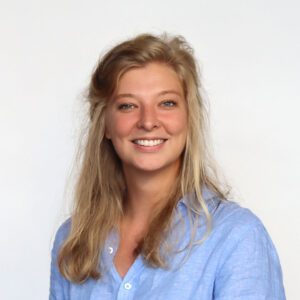
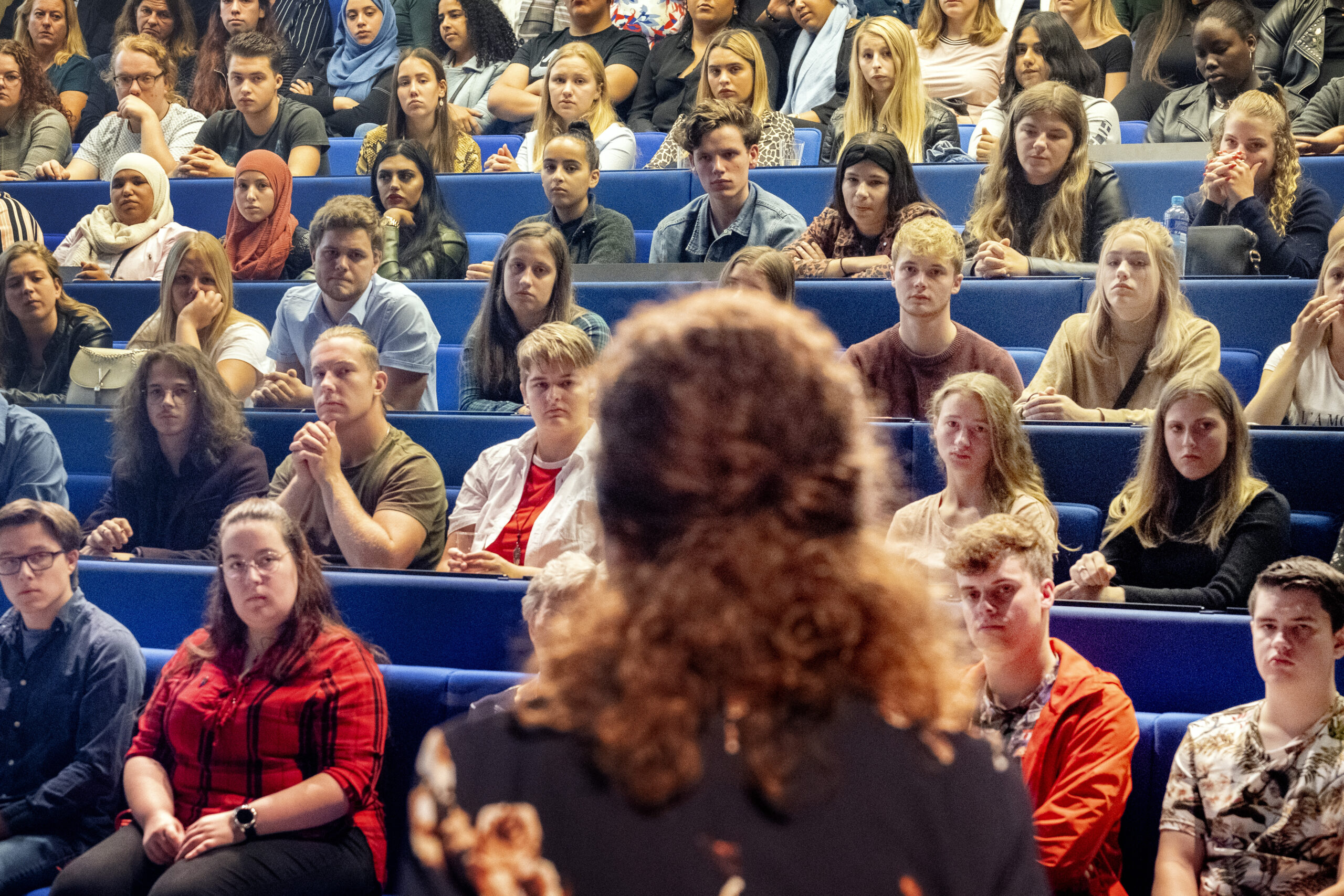
Tweede Kamerlid Lisa van Ginneken (D66) gaat in gesprek met de studenten van het Regio College Zaandam over vrijheid, democratie en actief burgerschap.

Vrijheid is van levensbelang. Hoe vrij zijn we in een land dat te maken heeft met een toeslagenschandaal, een woningcrisis en een oorlog op Europees grondgebied? Vrijheden beschermen vereist gedeelde waarden en gezamenlijk vertrouwen in de democratie. Tegelijkertijd gedijt vrijheid ook bij meningsverschillen, bij frictie tussen de ideeën van de één en de ander. En dus bij het voeren van goede gesprekken.


Nationaal Gesprek over Vrijheid

Het Nationaal Gesprek over Vrijheid (NGOV) is een gesprek tussen studenten van het middelbaar beroepsonderwijs en bestuurlijk Nederland over burgerschap en democratie. In wat voor maatschappij willen we leven en hoe werken we hier samen naartoe? Kijk op de pagina van Nationaal Gesprek over Vrijheid voor meer informatie en komende editie.

Sprekers

Lisa van GinnekenTweede Kamerlid D66
Studenten van het Regio College

Nationaal Gesprek over Vrijheid: Marjolein Steffens

Wat is vrijheid voor jou, wat betekent dit voor de vrijheid van anderen, en hoe draag jij bij aan vrijheid?

programmamaker en moderator
Gefinancierd door
Wethouder Marjolein Steffens gaat in gesprek met de studenten van het Nova College in Hoofddorp over vrijheid, democratie en actief burgerschap.

Vrijheid is van levensbelang. Hoe vrij zijn we in een land dat te maken heeft met een toeslagenschandaal, een woningcrisis en een oorlog op Europees grondgebied? Vrijheden beschermen vereist gedeelde waarden en gezamenlijk vertrouwen in de democratie. Tegelijkertijd gedijt vrijheid ook bij meningsverschillen, bij frictie tussen de ideeën van de één en de ander. En dus bij het voeren van goede gesprekken.


Nationaal Gesprek over Vrijheid

Het Nationaal Gesprek over Vrijheid (NGOV) is een gesprek tussen studenten van het middelbaar beroepsonderwijs en bestuurlijk Nederland over burgerschap en democratie. In wat voor maatschappij willen we leven en hoe werken we hier samen naartoe? Kijk op de pagina van Nationaal Gesprek over Vrijheid voor meer informatie en komende editie.

Sprekers

Marjolein Steffens Wethouder Haarlemmermeer
Studenten van het Nova College

Plein Publiek: Sunny Bergman

Programmamaker
Live stream vanaf 16.55 uur
Elke vrijdag interviewen programmamakers van De Balie inspirerende makers – van cabaretiers tot schrijvers. Begin je weekend onder het genot van een borrel in de Pleinzaal, met uitzicht over het Leidseplein. Luister mee, in intieme sfeer, naar een goed gesprek over het makerschap en de kunst. Met deze week documentairemaker en schrijver Sunny Bergman.

De afgelopen jaren is Sunny Bergman in haar duistere familiegeschiedenis gedoken. Dit resulteerde in het boek: Mijn nazi-opa. Programmamaker Rokhaya Seck gaat met Bergman in gesprek over de ontdekkingen die ze opdeed over haar grootvader die ze nooit gekend heeft.

Op Bevrijdingsdag spreken we over het verleden dat altijd doorwerkt in het heden. Sunny Bergman staat erom bekend haar persoonlijke leven aan groot maatschappelijke thema’s te koppelen. Hoe voelt het voor haarzelf en haar familie dat zij deze persoonlijke verhalen openbaart? En wat heeft dit familieonderzoek haar geleerd?


Kijk of luister mee

Plein Publiek heeft ook plek voor haastige reizigers in de spits. Via Radio Plein Publiek kun je gemakkelijk vanuit de trein of de auto meeluisteren. Vind je jezelf onverwachts thuis voor de buis? Kijk dan live mee met De Balie TV.

Sprekers

Sunny BergmanDocumentairemaker en schrijver (foto: Raymond van Mil)

Ook in De Balie:

vr 12 mei / 20:00
Politiek & Democratie

Authors Panama Papers: In search of the most wanted arms dealer in the world

This evening, we will talk with Frederik Obermaier about their new true crime novel, The Chinese Phantom. About one of the most shrewd and unscrupulous arms dealers in the world.

Meer Info Tickets
za 13 mei / 20:00
Politiek & Democratie

Maxim Osipov presents: Russian poetry in exile

In this programme, Maxim Osipov engages in conversation with Russian poet Dmirty Vedenyapin – who lived in exile – about 20th century Russian poetry in exile.

Meer Info Tickets
Maxim Osipov marit breuker
di 9 mei / 20:00
Politiek & Democratie

Een medicijn is geen designertas

Artsen zonder Grenzen pleit al jaren voor betere toegang tot medicijnen wereldwijd. Wat ligt er ten grondslag aan dure medicijnen?

Meer Info Tickets